
How Decentralized Identifiers (DIDs) Work on Blockchain
DIDs let you own your digital identity on blockchain - no passwords, no middlemen. Learn how they work, where they’re used, and why they’re the future of online identity.
Read MoreWhen you log into a website, you’re handing over your personal data to someone else. But what if you could own your identity instead? That’s the promise of blockchain identity, a system where users control their own digital credentials using decentralized technology. Also known as self-sovereign identity, it removes middlemen like banks, social media platforms, or government databases from managing who you are online. Instead of letting companies store your name, email, or ID number, you hold it securely on a blockchain—only sharing what you choose, when you choose.
Why does this matter for crypto users? Because every time you trade on an exchange, join a DeFi protocol, or claim an airdrop, you’re being asked to prove who you are. Most platforms still use old-school methods: email verification, KYC forms, government IDs. But those systems are leaky. We’ve seen exchanges like Kraken, a regulated crypto platform that blocks users in 14 countries due to compliance rules restrict access based on location, and others like Kyrrex, a crypto exchange with FinCEN registration and MiCA compliance require strict identity checks. With blockchain identity, you could verify your age or citizenship once, then reuse that proof everywhere—without giving away your full name, address, or passport number.
This isn’t just about privacy. It’s about control. Right now, if a scam site like Bitcoin.me, a fake crypto exchange designed to steal cryptocurrency tricks you into uploading your ID, your personal data is gone forever. But with blockchain identity, you sign proofs with your private key—no one else can copy or reuse them. Even if a platform gets hacked, your identity stays safe because it’s not stored on their servers.
Some projects are already testing this. The hybrid blockchain, a model combining private data control with public transparency lets businesses verify users without exposing raw data. And as countries like the UAE, a jurisdiction building one of the world’s clearest crypto frameworks roll out digital ID systems, blockchain identity will become the bridge between real-world law and on-chain activity.
What you’ll find below are real examples of how identity plays out in crypto—some good, most bad. You’ll see platforms that demand too much, scams that steal your docs, and a few honest attempts to give you back control. There’s no magic fix yet, but understanding blockchain identity helps you spot the traps and find the tools that actually work. This isn’t theory. It’s your next move in crypto.
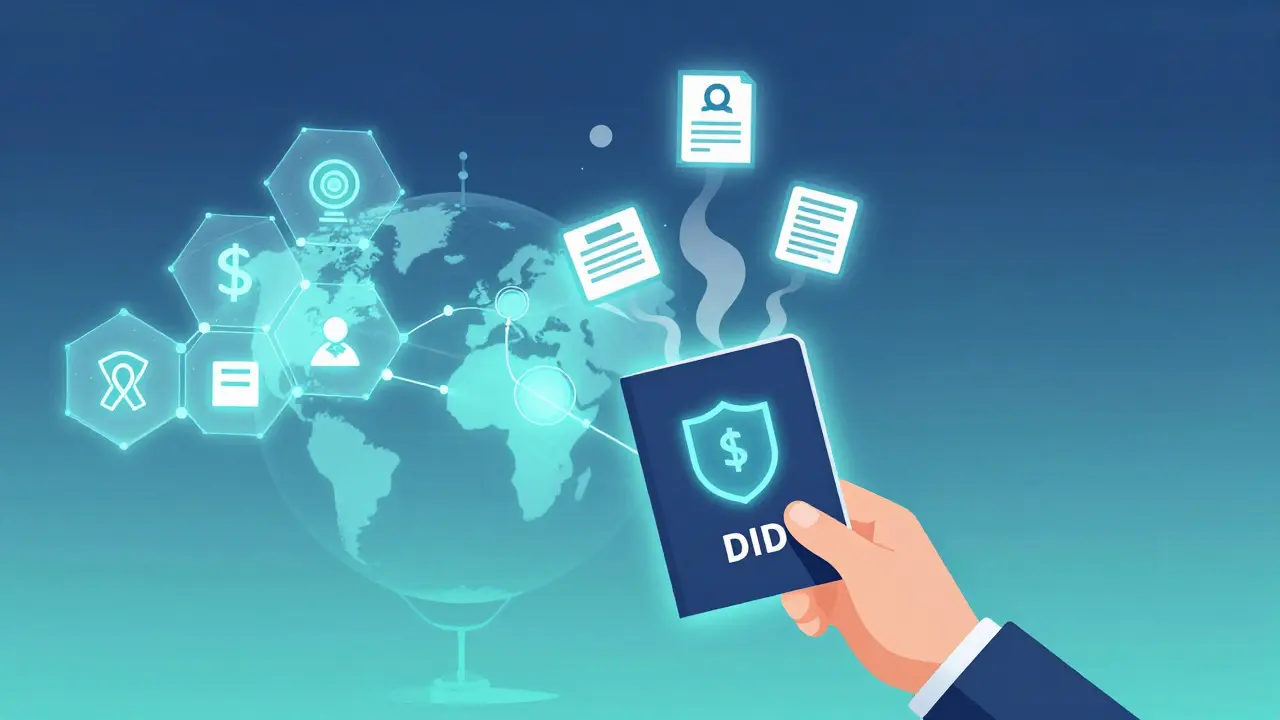
DIDs let you own your digital identity on blockchain - no passwords, no middlemen. Learn how they work, where they’re used, and why they’re the future of online identity.
Read More
Digital identity NFTs are blockchain-based credentials that let you control your online identity without relying on passwords or central companies. They offer privacy, security, and cross-platform access - but come with key management risks.
Read More
Blockchain-based identity verification lets you control your personal data with cryptographic keys instead of relying on centralized databases. Faster, safer, and private - it’s already used by banks, hospitals, and governments.
Read More