SUSHI token: What It Is, How It Works, and Why It Matters in DeFi
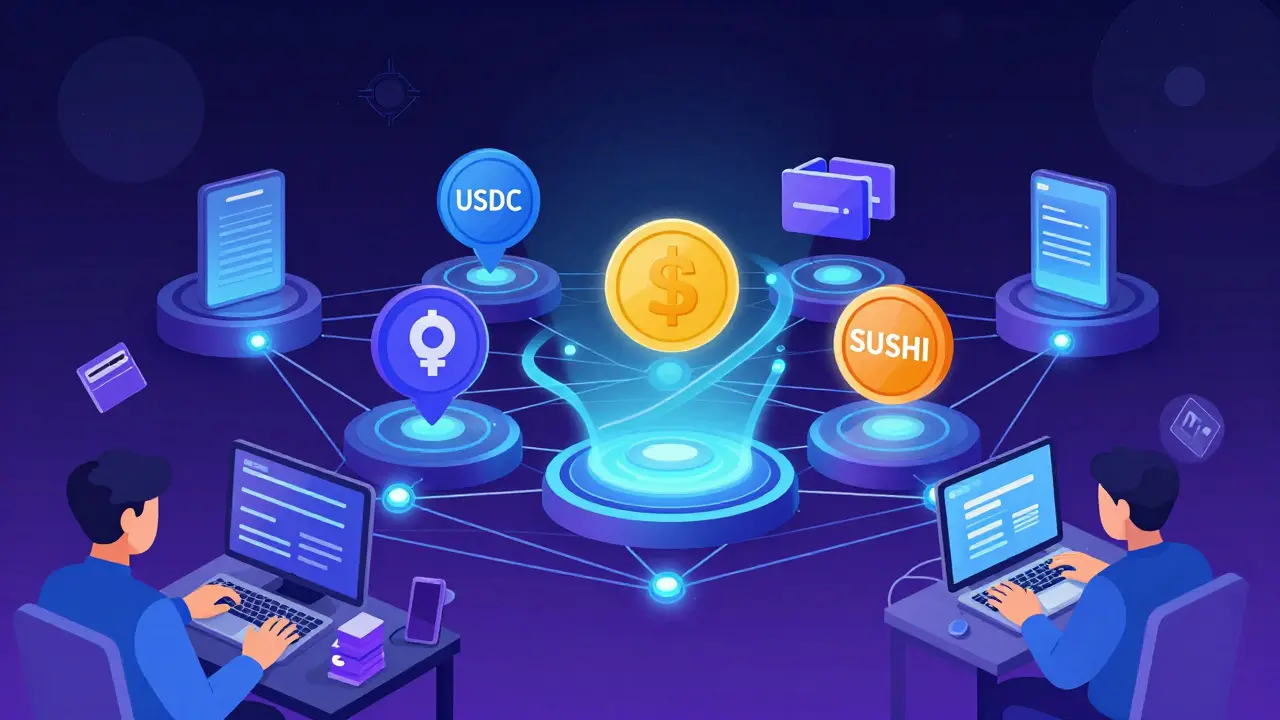
When you hear SUSHI token, the native governance and incentive token of the SushiSwap decentralized exchange. Also known as SushiSwap token, it was created in 2020 as a fork of Uniswap but quickly evolved into something bigger — a community-driven DeFi ecosystem with staking, lending, and yield farming built around it. Unlike simple trading tokens, SUSHI isn’t just about price swings. It gives holders real power: voting on protocol upgrades, fee structures, and even which new tokens get listed. That’s rare in crypto — most projects are run by a small team behind closed doors. SUSHI put control in the hands of users.
That’s why SUSHI connects directly to SushiSwap, a decentralized exchange where users trade crypto without intermediaries, and to DeFi, the broader movement to replace banks with open-source financial software on blockchains. SushiSwap lets you swap tokens, earn interest by locking up your crypto, and even borrow against your holdings — all without a middleman. SUSHI rewards those who help keep the system running. For example, users who provide liquidity to trading pairs get SUSHI as a bonus, and those who hold it can vote to change how much they earn. It’s not magic — it’s code, but it works because people trust it enough to participate.
But here’s the truth: SUSHI’s peak hype is behind it. The token dropped over 90% from its all-time high, and many early adopters cashed out long ago. Still, it’s not dead. SushiSwap remains one of the most active DeFi platforms, especially for users who want to trade lesser-known tokens or farm yield in a community-governed space. It’s also a case study in how DeFi projects can pivot — from a quick copy of Uniswap to a multi-chain, multi-product platform with its own bridge, lending protocol, and mobile app. If you’re curious about how real DeFi governance works, SUSHI is one of the clearest examples out there.
The posts below don’t just talk about SUSHI — they show you what happens when DeFi projects go wrong, when exchanges disappear, when airdrops turn into scams, and when users lose money because they didn’t understand what they were really buying. You’ll see how SUSHI fits into the bigger picture: not as a get-rich-quick coin, but as a living piece of infrastructure. Some posts warn you about fake tokens pretending to be SUSHI. Others explain how governance tokens like this one can be hacked, manipulated, or abandoned. You’ll learn how to tell the difference between a token with real utility and one that’s just a digital ghost. This isn’t a hype page. It’s a practical look at what happens when crypto moves beyond speculation and into real systems — for better or worse.
SushiSwap on Polygon offers low-cost, fast crypto swaps with staking, lending, and governance. Learn how it compares to Uniswap and QuickSwap, and whether it's right for your DeFi strategy in 2026.
Read More
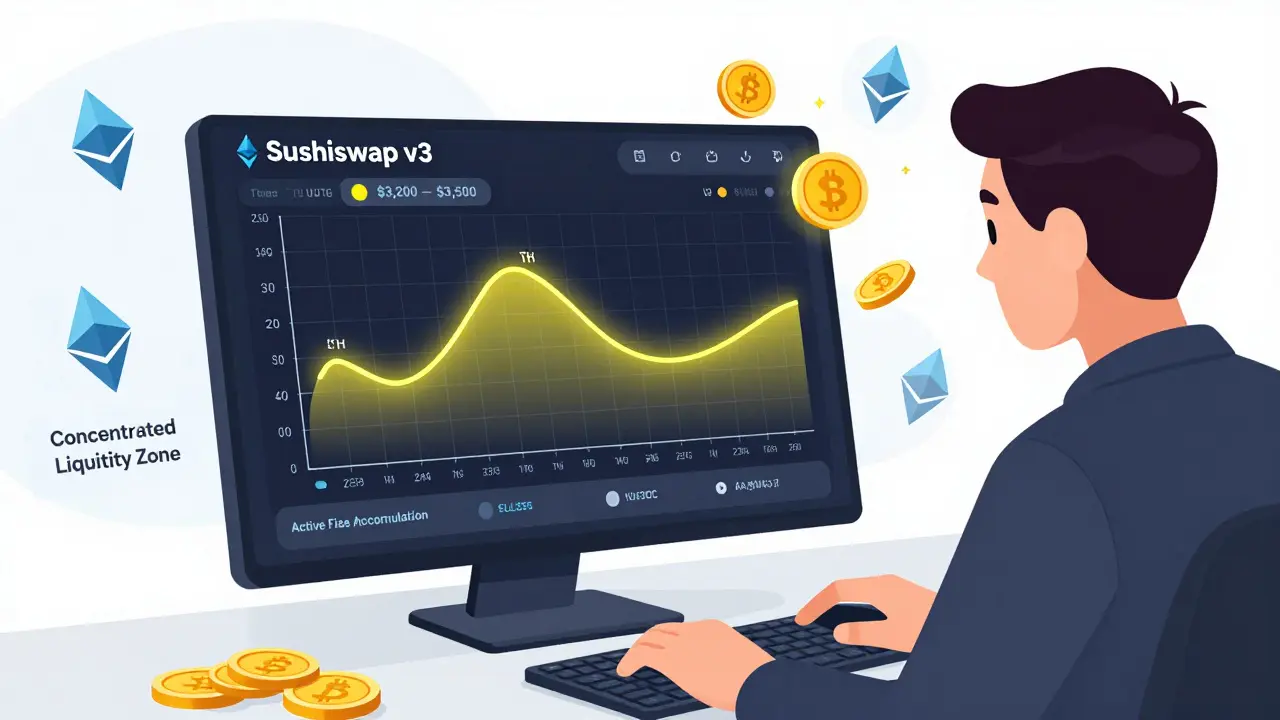
Sushiswap v3 on Ethereum offers concentrated liquidity, on-chain limit orders, and DCA features for active traders. Learn how it compares to Uniswap, where it shines, and the risks you need to know before using it.
Read More