WOOFi: What It Is and How It Fits Into Crypto Trading
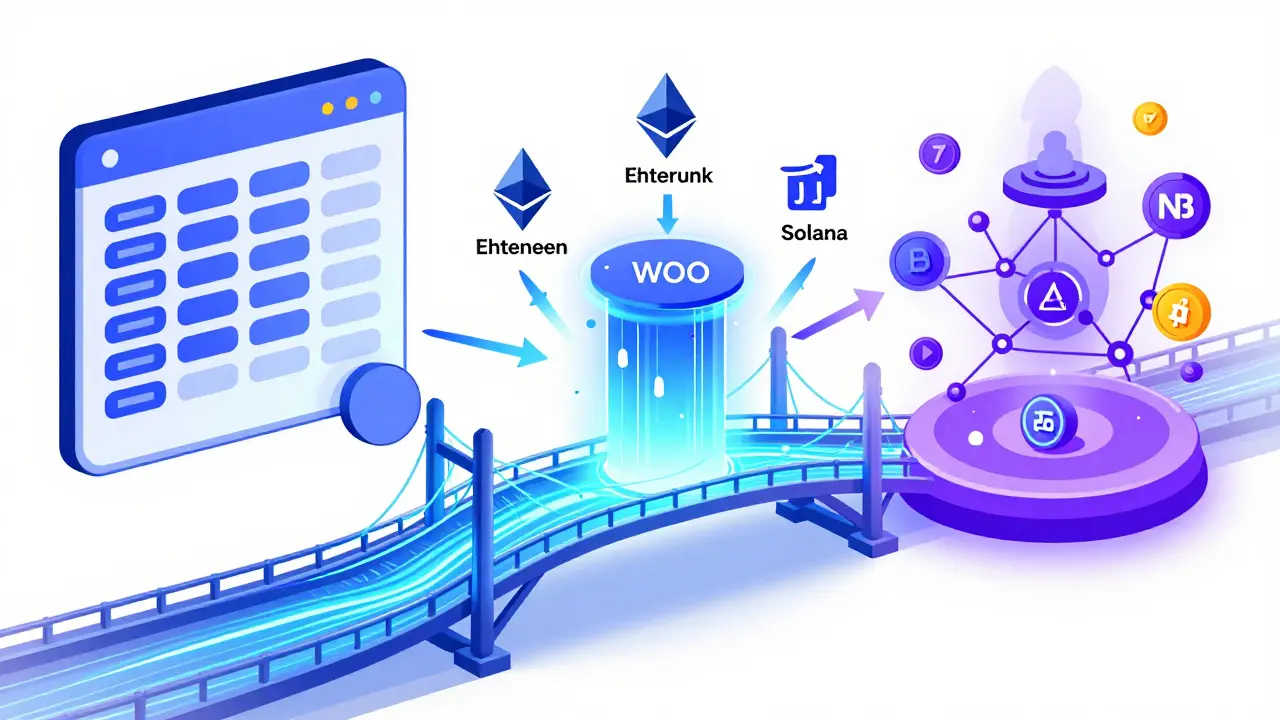
When you trade crypto on a decentralized exchange, you’re not just swapping tokens—you’re interacting with a WOOFi, a decentralized exchange built on the BNB Chain that lets users swap tokens with low fees and fast confirmations. Also known as WOOFi Swap, it’s designed for traders who want speed without sacrificing control over their funds. Unlike centralized platforms that hold your crypto, WOOFi connects you directly to liquidity pools. You trade peer-to-pool, not peer-to-platform. That means no KYC, no account freezes, and no middleman taking a cut beyond the standard swap fee.
WOOFi doesn’t operate in isolation. It’s part of a larger ecosystem called decentralized finance, a system of financial services built on blockchain that removes banks and brokers from the equation. Think of it like a digital ATM for crypto—except instead of cash, you’re swapping ETH for BNB, or USDT for a new altcoin. WOOFi’s strength lies in its integration with the BNB Chain, which keeps transaction costs low and speeds high. That’s why it’s popular among traders who do frequent swaps, especially those using tokens native to the BNB ecosystem.
It also ties into another key concept: blockchain trading, the act of buying, selling, or swapping digital assets directly on a public ledger without intermediaries. WOOFi makes this simple. You connect your wallet—like MetaMask or Trust Wallet—and start trading. No sign-up, no waiting. But here’s the catch: speed and low fees don’t mean safety by default. Many users lose money because they don’t check token contracts or fall for fake WOOFi phishing sites. That’s why the posts below cover real cases: from how WOOFi compares to other DEXs like Sushiswap, to how to spot fake airdrops pretending to be tied to it.
You’ll find reviews of exchanges that compete with WOOFi, like Persistence DEX and Kyrrex, and deep dives into how DeFi platforms handle liquidity and risk. There are warnings about scams that mimic WOOFi’s branding, and guides on how to use wallet security to protect your trades. You’ll also see how blockchain trading works in practice—whether you’re swapping tokens on a busy chain, staking LP tokens, or just trying to avoid MEV bots that front-run your trades.
WOOFi isn’t the biggest DEX. It doesn’t have the name recognition of Uniswap. But for traders on the BNB Chain who care about speed, low fees, and direct control, it’s a solid tool. The key isn’t just using it—it’s using it smartly. The posts below give you the real-world context you need to avoid common traps and make better trades. Whether you’re new to DeFi or looking to optimize your swaps, what follows isn’t hype. It’s what actually happened, who got burned, and how to stay safe.
WOO (WOO) is a liquidity network connecting CeFi and DeFi, offering zero-fee trading and deep order books. But after a $14M hack and SEC scrutiny, its future is uncertain. Here's what you need to know.
Read More