WOO Token: What It Is, How It Works, and Where It's Used
When you hear WOO token, the native utility token of the WOO Network, a blockchain infrastructure platform built for institutional-grade trading liquidity. Also known as WOO, it’s not just another crypto coin—it’s the fuel behind a system that connects exchanges, market makers, and traders to cut costs and improve execution. Unlike tokens that rely on hype or speculation, WOO was designed to solve real problems in crypto trading: high fees, poor liquidity, and slippage on small orders.
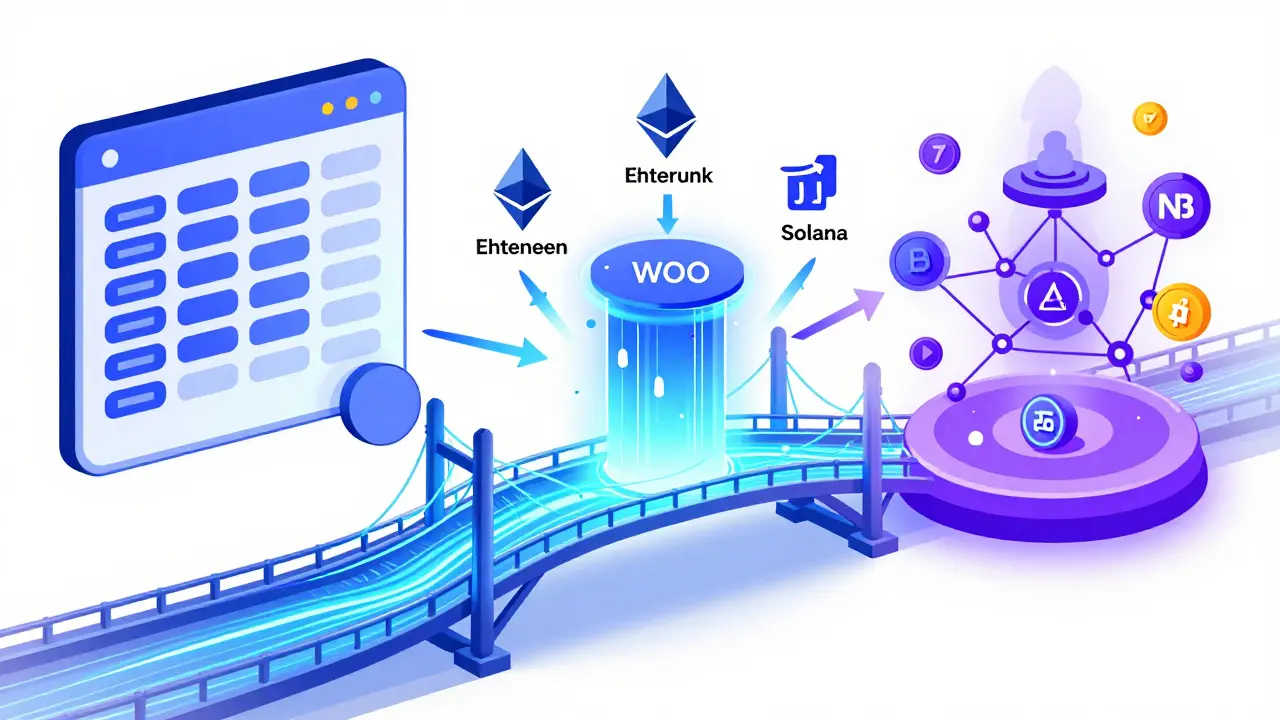
The WOO Network, a decentralized liquidity network that aggregates order flow from exchanges, hedge funds, and institutional traders. Also known as WOO X, it’s the engine that makes WOO token valuable doesn’t just sit on the blockchain—it actively pulls liquidity from hundreds of sources. This means when you trade on a platform using WOO Network, your order gets filled faster and at better prices because it’s not relying on one exchange’s order book. The token itself is used to pay for trading fees, earn rewards, and vote on network upgrades. Traders who use WOO X get zero-fee spot trading, while market makers earn WOO for providing liquidity. It’s a feedback loop: more users mean more liquidity, which means better trades, which attracts more users.
This isn’t theoretical. Platforms like KuCoin, Bitget, and others use WOO Network’s infrastructure behind the scenes. If you’ve ever placed a trade on a major exchange and noticed it executed smoothly even during volatility, there’s a good chance WOO was working in the background. The token also powers staking programs where holders earn a share of network fees—something you won’t find on most meme coins. It’s not about getting rich overnight. It’s about building a system where everyone who contributes gets paid fairly.
You’ll find posts here that dig into how WOO compares to other DeFi tokens, why some exchanges choose it over competitors, and how traders actually use it to save money. Some cover real-world trading results. Others break down the tokenomics that keep the network running. There are no fluff pieces here—just clear, no-nonsense breakdowns of how WOO works, who benefits, and whether it’s worth holding in your portfolio.
WOO (WOO) is a liquidity network connecting CeFi and DeFi, offering zero-fee trading and deep order books. But after a $14M hack and SEC scrutiny, its future is uncertain. Here's what you need to know.
Read More