WOO Network: What It Is, How It Works, and Why Traders Care
When you trade crypto on a decentralized exchange, WOO Network, a blockchain-based liquidity provider that connects traders, exchanges, and market makers. Also known as WOO X, it doesn’t just act as another exchange—it’s the hidden engine behind smooth trades on platforms like KuCoin, Bitget, and even DeFi apps. Unlike traditional exchanges that rely on thin order books, WOO Network pulls liquidity from dozens of sources at once, so your buy or sell order fills fast with almost no price slippage. This matters because when you’re trading Bitcoin or altcoins, even a 1% price shift can cost you money.
WOO Network’s core innovation is its liquidity pool, a shared reserve of assets funded by market makers and institutional traders. These participants get paid in WOO token, the native utility and governance coin of the network. It’s not just a reward—it’s what keeps the whole system running. Holders can stake WOO to earn fees, vote on upgrades, or get discounted trading fees on WOO X. And unlike many tokens that sit idle, WOO is actively used: over 30% of trading volume on WOO X comes from users paying fees in WOO. This creates a real feedback loop: more trading → more fee revenue → more demand for WOO → stronger network liquidity.
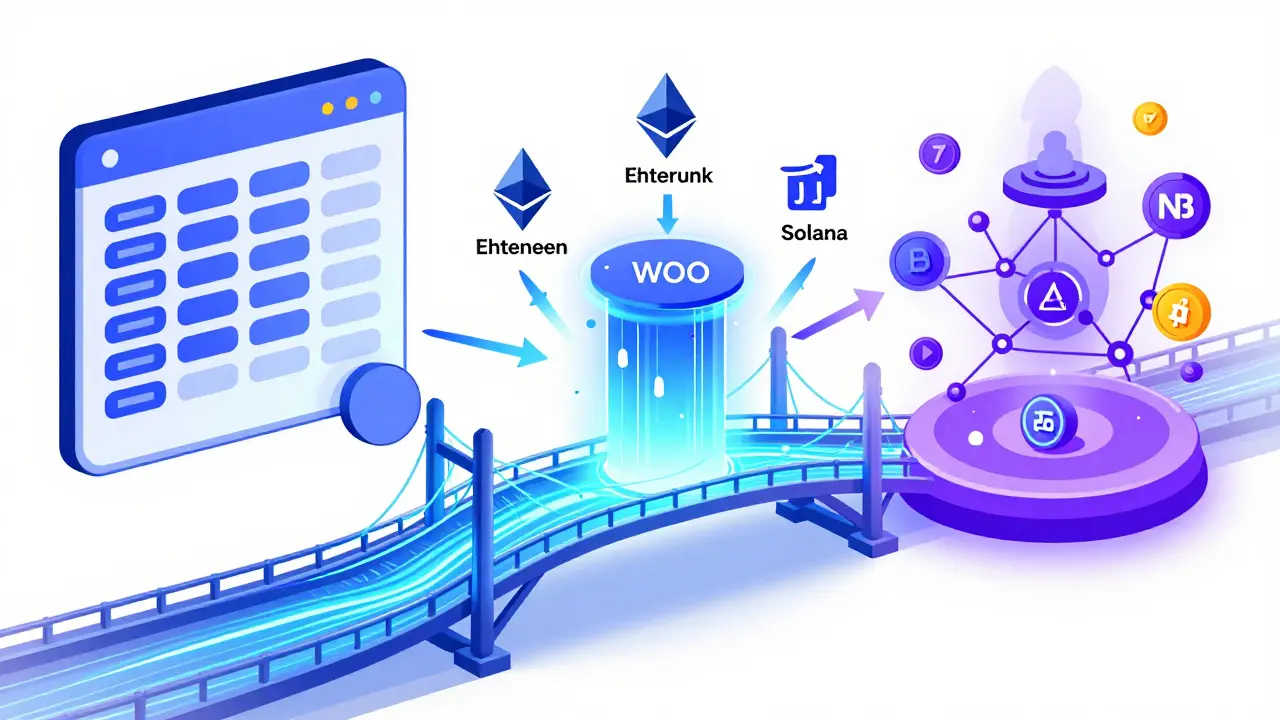
WOO Network also connects directly with blockchain liquidity, the ability to buy or sell assets quickly without affecting their price across chains like Ethereum, Solana, and BSC. That’s why traders use it for arbitrage, market-making, and high-frequency strategies—it’s built for speed and scale. You won’t find WOO on your grandma’s crypto app, but you’ll feel its impact when your trade executes instantly at the price you see.
What you’ll find below are real reviews and breakdowns of how WOO Network fits into the bigger picture: from its role in DeFi protocols to how traders actually use it to cut costs and avoid slippage. Some posts cover its integration with top exchanges. Others explain how the WOO token works under the hood. And a few expose the risks—because no system is perfect. This isn’t hype. It’s what happens when liquidity gets smarter.
WOO (WOO) is a liquidity network connecting CeFi and DeFi, offering zero-fee trading and deep order books. But after a $14M hack and SEC scrutiny, its future is uncertain. Here's what you need to know.
Read More