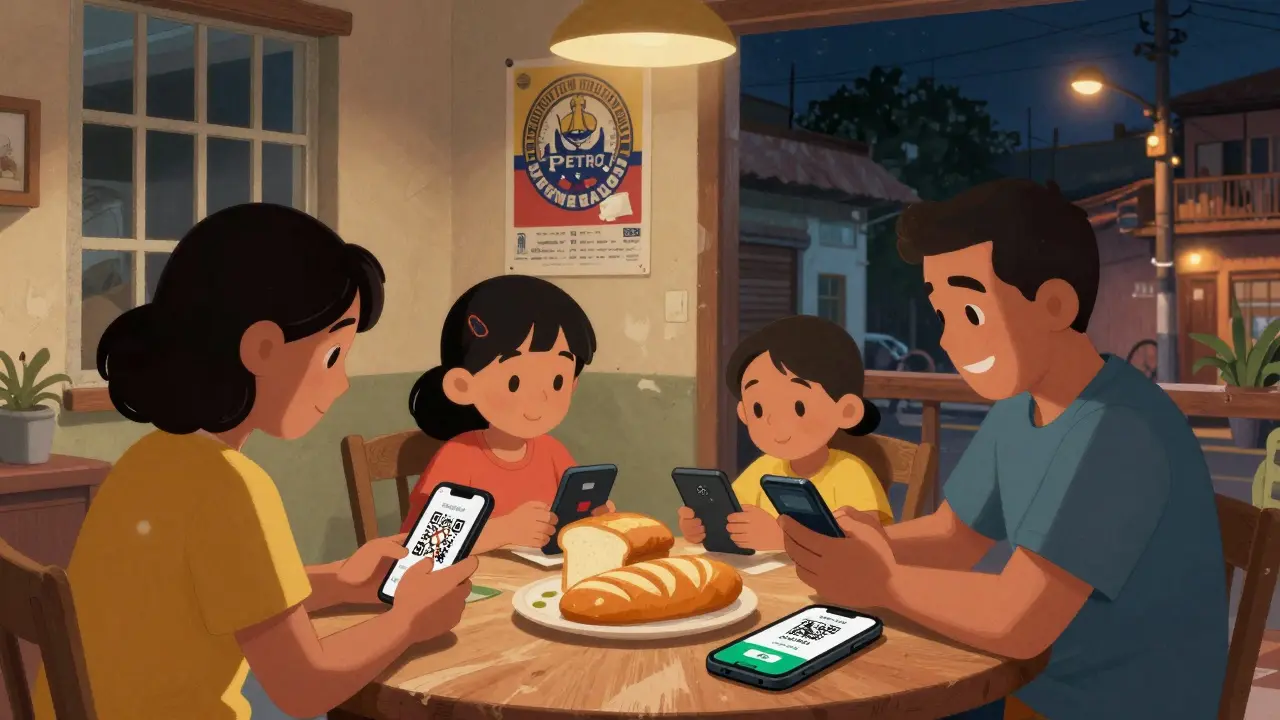
USDT Venezuela: How Tether Works in Venezuela's Crypto Economy
When people in Venezuela need to protect their savings from hyperinflation, they don’t turn to the bolívar—they turn to USDT, a stablecoin pegged to the U.S. dollar that acts as a digital alternative to cash. Also known as Tether, it’s not just a crypto coin—it’s a survival tool. Unlike volatile Bitcoin or Ethereum, USDT holds its value. That’s why it’s traded on street corners, WhatsApp groups, and peer-to-peer platforms across the country.
USDT in Venezuela isn’t just about trading. It’s how families buy food, pay rent, and send money abroad. Banks are unreliable, inflation hits 200%+ annually, and the government doesn’t trust digital finance. But USDT? It works. People use platforms like P2P crypto Venezuela, peer-to-peer networks where individuals trade crypto directly without banks to swap bolívares for USDT. You don’t need a bank account. You just need a phone and a trusted buyer. This system has grown so fast that Venezuela now ranks among the top countries for USDT trading volume globally.
But it’s not risk-free. Scammers set up fake P2P ads. Some wallets get hacked. Others get frozen when authorities crack down. And while USDT is stable, the people using it aren’t protected by law. If you send USDT to a scammer, there’s no chargeback. If the government blocks a platform, your funds might vanish overnight. Still, for millions, it’s the only option. That’s why guides on safe USDT trading, verified P2P platforms, and wallet security are so common in this space.
You’ll find posts here that break down exactly how Venezuelans use USDT daily, which apps work best, how to avoid scams, and why some exchanges block Venezuelan users. You’ll also see how USDT connects to broader crypto trends—like how it’s used to buy other coins, how it bypasses capital controls, and why it’s become more trusted than the national currency. This isn’t theory. It’s real life. And what you’re about to read comes from people who’ve lived it.
Amid hyperinflation and banking collapse, Venezuelans turned to Bitcoin and USDT to survive. Over 4 million now use crypto for daily purchases, remittances, and savings-bypassing a broken financial system.
Read More