
What is UniFarm (UFARM) Crypto Coin - Full Overview
A detailed look at UniFarm (UFARM) - its purpose, tokenomics, staking mechanics, multi‑chain deployment, benefits, risks, and future roadmap.
Read MoreWhen working with UniFarm, a decentralized aggregator that auto‑optimizes your crypto deposits across multiple liquidity pools. Also known as UniFarm Protocol, it lets users earn passive returns without constantly moving funds. The platform sits inside the broader DeFi, the ecosystem of financial services built on blockchain smart contracts and pulls reward rates from dozens of farms. UniFarm therefore — as a single‑click entry point — encompasses automated yield farming, which means it handles the math, gas fees, and timing that would otherwise require manual swaps. To get started you simply connect a wallet, choose a deposit token, and let the protocol route your assets to the highest‑earning pool. This hands‑off approach removes the need for constant monitoring, but it still requires you to provide liquidity, which is the core input that powers the reward engine.
At its heart, UniFarm leverages Liquidity Mining, the process of supplying assets to a pool in exchange for native rewards. When you deposit, your funds are locked in a smart‑contract‑based pool, and the protocol mints reward tokens based on the pool’s performance and the overall tokenomics of the farm. These reward tokens often have built‑in mechanisms like emission schedules, burn rates, or governance rights that affect long‑term value. UniFarm reads these parameters in real time, compares expected APRs, and shifts capital to where the math predicts the best net gain after fees. The smart contracts behind the scenes are audited, but they still carry the usual blockchain risks—code bugs, oracle failures, or unexpected governance changes can impact payouts. Beyond raw percentages, UniFarm’s tokenomics layer adds another decision factor: some farms distribute additional tokens that can be staked for extra yields, while others lock rewards for a vesting period. Understanding how each reward token’s supply curve works helps you predict future price pressure. UniFarm abstracts this complexity, but savvy users still benefit from checking the underlying pool’s token distribution model, especially when new projects launch with high initial incentives that may taper quickly.
The ecosystem around UniFarm also includes decentralized exchanges (DEX, platforms that enable peer‑to‑peer trading without a central intermediary) where the harvested tokens are often swapped for stablecoins or reinvested. Because the protocol automatically routes trades through the most efficient DEX routes, you avoid slippage that would eat into returns. Risk management is built‑in: you can set a maximum exposure limit, pause earnings, or withdraw at any time. Community governance also plays a role; token holders can vote on fee structures, add new farms, or adjust the auto‑compounding algorithm. All these pieces—DeFi, liquidity mining, tokenomics, smart contracts, and DEX integration—connect to form a cohesive system that makes UniFarm a practical entry point for both beginners and seasoned yield farmers. Below you’ll find a curated list of articles that dig deeper into each element, from security audits and fee breakdowns to step‑by‑step guides on maximizing your farmed rewards.
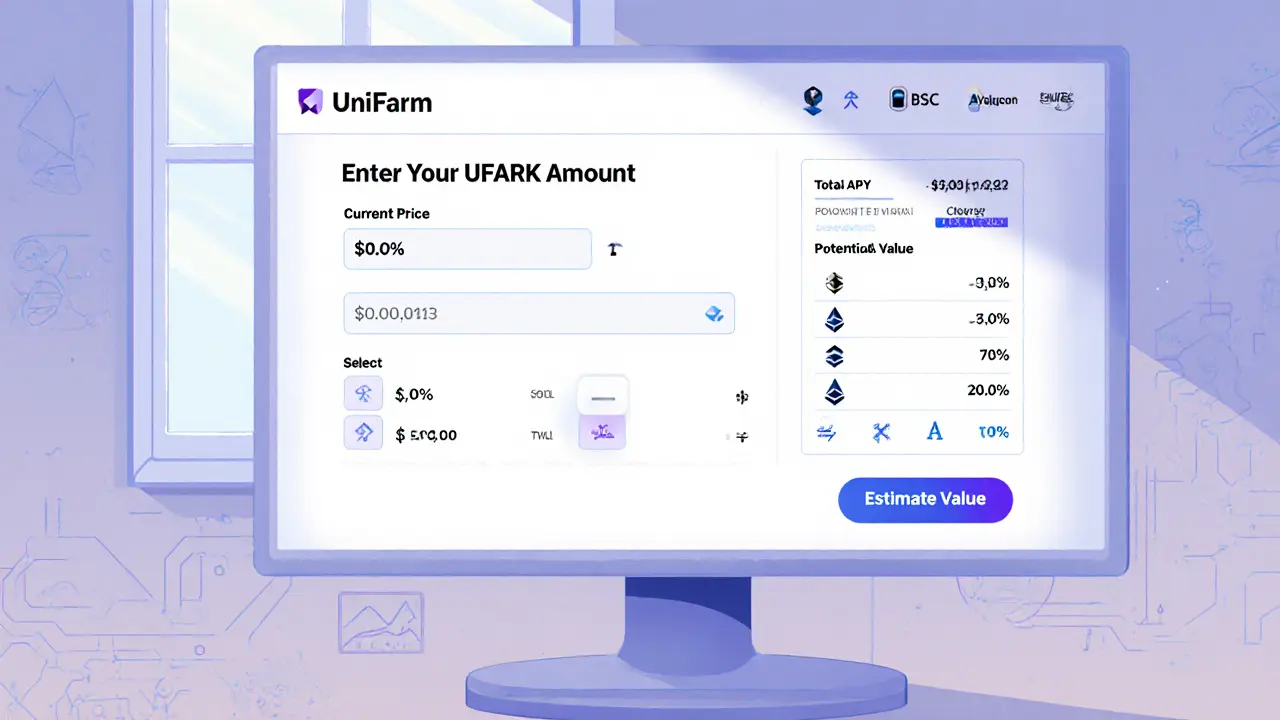
A detailed look at UniFarm (UFARM) - its purpose, tokenomics, staking mechanics, multi‑chain deployment, benefits, risks, and future roadmap.
Read More