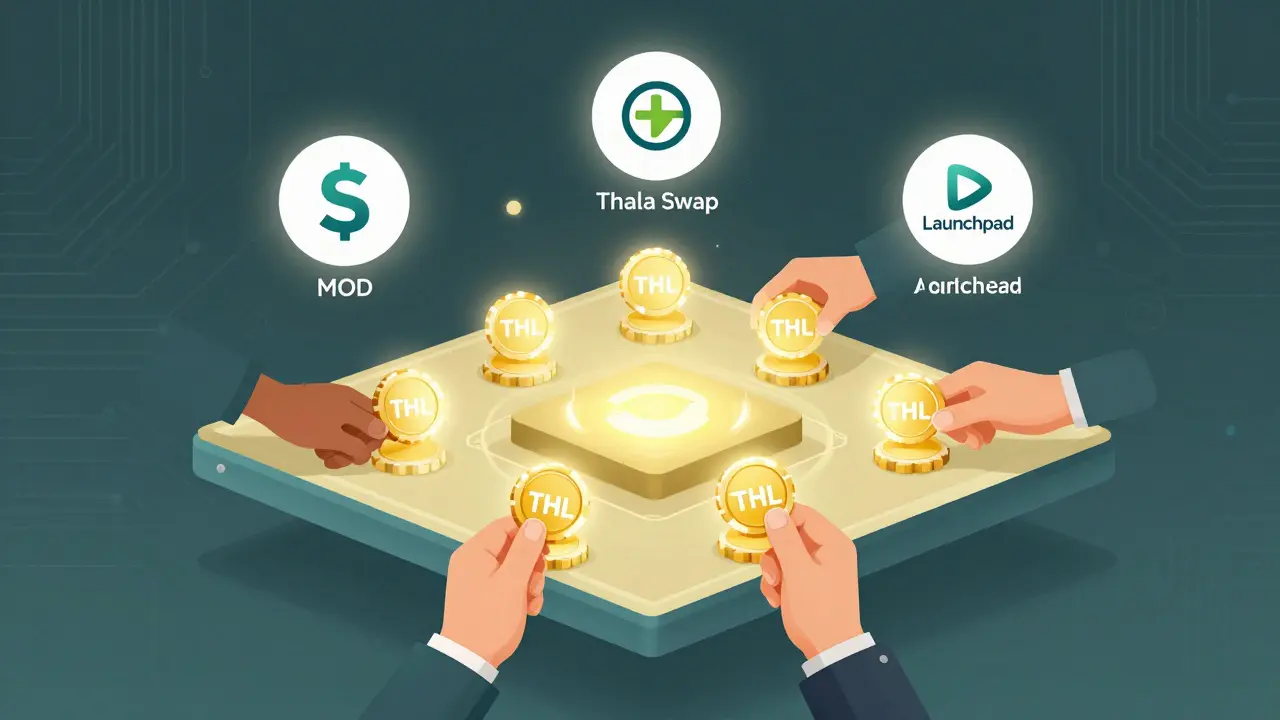
Thala Crypto: What It Is, Why It’s Not Real, and How to Spot Fake Crypto Projects
When you hear Thala crypto, a token with no trading activity, no team, and no blockchain presence. Also known as zero-volume crypto, it’s one of thousands of digital ghosts designed to trick investors into thinking they’ve found the next big thing. The truth? Thala crypto doesn’t exist as a functional project. No exchange lists it. No wallet supports it. No community talks about it. It’s just a name on a scammer’s list, with a fake market cap and zero buyers.
Thala crypto is part of a much bigger pattern—fake crypto projects, digital illusions built to steal money through fake airdrops, phishing sites, and pump-and-dump schemes. These projects often copy names from real ones, use vague whitepapers, and promise free tokens to lure you into connecting your wallet. Once you do, your crypto vanishes. This isn’t rare. In 2025, over 70% of new tokens listed on free trackers like CoinMarketCap had zero trading volume. Most were scams.
Why do people fall for this? Because the pitch sounds real. They say, "Join the early community," "Limited airdrop spots," or "Official launch coming soon." But real projects don’t need hype to prove themselves—they show code, teams, audits, and liquidity. Crypto airdrop scams, fake giveaways that trick you into paying gas fees or sharing private keys are the most common trap. If you’re asked to send crypto to claim free tokens, it’s a scam. Always check trading volume on CoinGecko or DEX Screener. If it’s $0, walk away.
Thala crypto isn’t an investment. It’s a warning. The same red flags show up in zero-volume tokens, digital assets with no buyers, no sellers, and no reason to exist like ICG, FAN8, CSHIP, and IMM. They all look the same: no website, no social media activity, no team members, no roadmap. Just a token name and a fake price chart.
Here’s how to protect yourself: Never connect your wallet to a site offering free tokens unless you’ve verified the project independently. Check the contract address on Etherscan or BscScan. Look for audits from reputable firms like CertiK or Hacken. If the project has no GitHub, no Twitter, and no Telegram with active users, it’s dead. And if someone tells you Thala crypto is "about to explode," they’re trying to sell you a ghost.
The crypto space is full of real innovation—DeFi, NFTs, blockchain identity, regulated exchanges. But it’s also full of con artists. Thala crypto isn’t the first fake token, and it won’t be the last. What matters is how you respond. Learn to spot the signs. Trust data, not promises. And if something sounds too good to be true? It is.
Below, you’ll find real breakdowns of exactly how these scams work, which tokens are dead, which exchanges to avoid, and how to find legitimate opportunities without losing your money.
Thala (THL) is a governance token for the Aptos DeFi protocol, powering Thala Swap and Move Dollar. With a 93% price drop since its peak, it's high-risk and low-liquidity. Understand what THL actually does before investing.
Read More