
What is MAon? Understanding Mastercard Tokenized Stock on Ondo Finance
MAon is a Solana-based token representing Mastercard stock. Learn how it works, risks, market data, and regulatory challenges for investors.
Read MoreWhen working with Solana token, a digital asset built on the Solana blockchain that follows the SPL standard. Also known as SOL token, it powers transactions, staking, and smart‑contract interactions across the network.
Built on the Solana blockchain, a high‑throughput, low‑fee layer‑1 protocol, the Solana token follows the SPL token standard, Solana’s equivalent of ERC‑20. This means every token on Solana shares the same basic rules for transfer, approval, and balance tracking. The token supplies 500 million units at launch, with a modest inflation rate that rewards validators who secure the network. Because the supply is known and inflation is predictable, traders can model price moves with relative ease.
Want to own some? You can buy the Solana token on most major exchanges, from Binance to Coinbase, and store it in any wallet that supports SPL assets. Popular choices include Phantom, Sollet, and Ledger hardware wallets. When you deposit into a wallet, you’ll see the token appear under its contract address, making it easy to track balances and send payments. Most wallets also let you scan a QR code, so you don’t have to copy long strings by hand.
Staking is where the token shows its utility. By delegating your holdings to a validator, you earn a share of the block rewards. The more SOL you stake, the higher your return, though you should spread delegations across reputable validators to avoid downtime. Staking also grants you a voice in protocol upgrades, because validators who hold more SOL get more voting weight. This blend of earning and governance keeps the ecosystem healthy and gives token holders an active role.
The rise of Solana DeFi, decentralized finance apps built on Solana has turned the token into a fuel for dozens of services. Decentralized exchanges like Serum and Raydium let you swap SOL for other SPL tokens instantly, while lending platforms such as Solend let you earn interest by supplying SOL as collateral. Because transaction fees are a fraction of a cent, users can move large volumes without eroding profits, which is a key advantage over older blockchains.
Beyond finance, the Solana token underpins the booming NFT scene. Artists mint collections on Solana because the low fees let them price works competitively. Marketplaces like Magic Eden and Solanart showcase thousands of NFTs, each payable in SOL, creating a feedback loop where NFT sales drive demand for the token. Looking ahead, upgrades to the network aim to boost throughput even further, while new layer‑2 solutions promise to expand use cases. As the ecosystem matures, expect more games, social apps, and real‑world integrations to rely on SOL.
Below you’ll find a curated collection of articles that dive deeper into each of these areas—whether you’re hunting the best exchange, learning how to stake safely, or exploring the hottest DeFi projects on Solana.
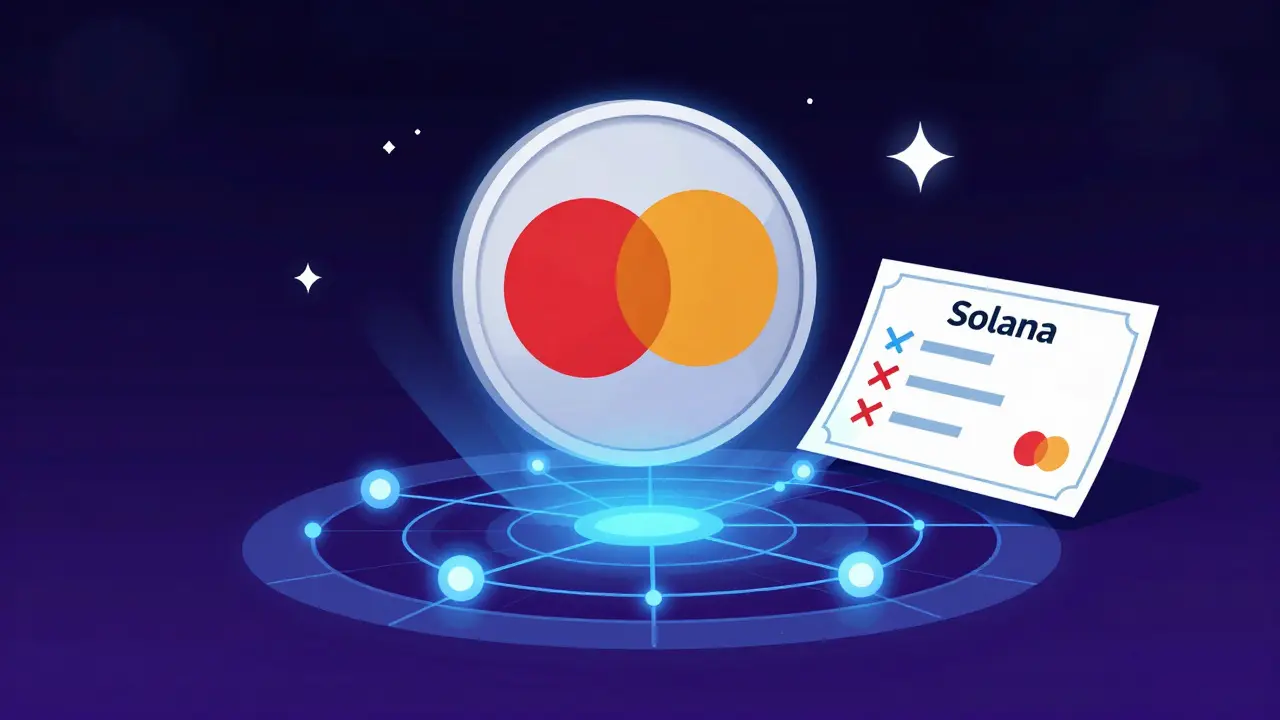
MAon is a Solana-based token representing Mastercard stock. Learn how it works, risks, market data, and regulatory challenges for investors.
Read More
A clear, conversational guide to Miniature Woolly Mammoth (WOOLLY) crypto coin-what it is, how it works on Ethereum and Solana, where to trade, price trends, and key risks.
Read More