
What is MAon? Understanding Mastercard Tokenized Stock on Ondo Finance

On February 4, 2026, MAon is a Solana-based token created by Ondo Finance that provides economic exposure to Mastercard stock. It trades at $524.79 on Phemex-but this isn't actual Mastercard stock. Let's break down what MAon really is, how it works, and whether it's worth your investment.
What MAon Actually Is
MAon is a tokenized version of Mastercard stock. Created by Ondo Finance, it gives investors exposure to Mastercard's performance without owning shares. The token trades on Solana blockchain with contract address EsVHcyRxXFJCLMiuYLWhoDygrNe1BJGpYeZ17X7ondo. Unlike real stock, MAon doesn't grant voting rights or direct dividends-any dividend payments are reinvested into the token by Ondo Finance.
How MAon Works
Ondo Finance holds actual Mastercard shares in a special purpose vehicle (SPV). MAon tokens represent ownership in this SPV. When you buy MAon, you're buying a share of the SPV's holdings. The token price closely tracks Mastercard stock but trades 24/7 on crypto exchanges. Settlement happens in seconds on Solana blockchain, unlike traditional T+2 settlement. However, MAon holders don't get shareholder benefits like voting rights.
Who Can Invest in MAon
MAon is only available to accredited investors meeting Ondo Finance's requirements. In the US, retail investors can't access MAon due to SEC restrictions. Ondo Finance requires a minimum net worth of $100,000 for accredited status. Globally, 72% of MAon holders are from regions with restricted access to US equities-like Southeast Asia (41%), Latin America (23%), and the Middle East (8%). This makes MAon popular for international investors seeking exposure to blue-chip stocks. To buy MAon, you need a Solana-compatible wallet like Phantom wallet connected to exchanges such as Coinbase, Phemex, or Crypto.com.

Key Risks and Limitations
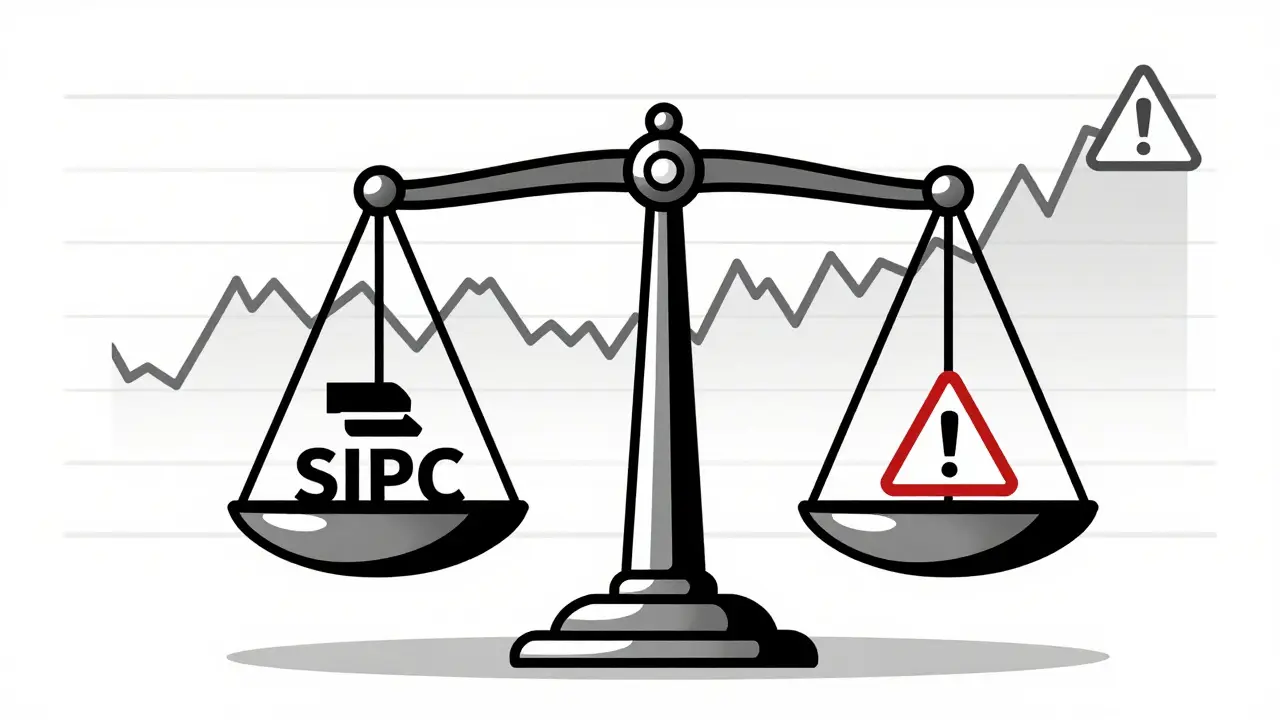
SIPC insurance protects traditional stock investors, but MAon offers no such protection. Regulatory gray areas also exist-Ondo Finance uses Cayman Islands SPVs to hold assets, which may create tax complications. Market volatility is another risk; on February 4, 2026, MAon showed a -2.50% decline despite a +0.68% daily gain. Liquidity issues are common too-$2.37 million daily volume means slippage during large trades. Unlike traditional stocks, MAon lacks direct shareholder rights and is subject to cryptocurrency-like price swings. A Reddit user 'StockLover87' reported losing 3% on a $500 position due to weekend slippage when traditional markets were closed.
How MAon Compares to Other Tokenized Stocks
| Feature | MAon | Traditional MA Stock |
|---|---|---|
| Ownership Type | Digital token representing economic exposure | Actual equity share |
| Trading Hours | 24/7 | Market hours only |
| Minimum Investment | $1 | $1000+ for fractional shares |
| Settlement Time | Seconds | T+2 days |
| Insurance | No SIPC protection | SIPC insured |
| Regulatory Oversight | Gray area | SEC regulated |
Other tokenized stocks like AMZon (Amazon) and APPLon (Apple) operate similarly but with different underlying assets. MAon specifically targets Mastercard stock, while platforms like Matrixdock offer Ethereum-based alternatives. However, Ondo Finance holds 68% market share in tokenized single stocks according to Jump Crypto's February 2026 analysis.
Current Market Status
As of February 4, 2026, MAon trades between $524.79 (Phemex) and $527.75 (Crypto.com). Daily volume is $2.37 million, with market capitalization around $1.09 million. That's tiny compared to Mastercard's $420 billion market cap. CoinMarketCap's speculative January 10, 2026 report predicted a price target of $650, citing Mastercard's blockchain settlement pilots. However, Gartner's February 2026 prediction warns only 30% of tokenized stock offerings will survive regulatory scrutiny by 2028. MAon's market rank is #3,660 by Kriptomat's metrics, showing how niche this asset class remains. The Ethereum blockchain integration planned for Q2 2026 could change this, but adoption remains limited.
Future Outlook
Ondo Finance plans to integrate with Circle's CCTP for Ethereum blockchain bridge capabilities in Q2 2026. This could expand MAon's accessibility beyond Solana. Staking rewards for MAon holders are scheduled for Q3 2026. However, regulatory hurdles loom large. The EU's MiCA regulations taking effect in June 2026 may create new compliance paths, but US regulators remain cautious. Dr. Elena Rodriguez, Chief Crypto Analyst at Blockchain Research Institute, warned in January 2026 that "tokenized stocks operate in regulatory gray areas, particularly regarding how dividend distributions are handled across jurisdictions." Michael Casey from CoinDesk noted MAon's $1.09 million market cap is minuscule compared to Mastercard's $420 billion-showing extremely limited adoption so far.
Is MAon a real stock?
No, MAon is not actual Mastercard stock. It's a Solana blockchain token that tracks Mastercard's stock price. While it provides economic exposure similar to holding MA shares, it doesn't grant ownership rights like voting or direct dividend payments. Instead, Ondo Finance reinvests dividends into the token.
Can I buy MAon in the US?
No, US retail investors can't access MAon due to SEC restrictions. Only accredited investors meeting Ondo Finance's $100,000 net worth requirement can buy it. This makes MAon unavailable to most US-based individuals.
What are the main risks of holding MAon?
MAon lacks SIPC insurance protection, meaning no government-backed safeguards if Ondo Finance fails. Regulatory uncertainty is another risk-using Cayman Islands SPVs may create tax complications. Market volatility is high; MAon can swing wildly during traditional market closures. Liquidity issues also exist with only $2.37 million daily volume, leading to slippage during large trades.
How do dividends work with MAon?
Unlike traditional stocks, MAon holders don't receive direct dividend payments. Ondo Finance reinvests all dividends into the token, increasing the token's value. This process happens automatically but may take up to 14.3 days on average, as reported by Crypto.com user data.
Is MAon available to retail investors globally?
Yes, but with restrictions. MAon is accessible to retail investors outside the US, particularly in Southeast Asia (41% of holders), Latin America (23%), and the Middle East (8%). However, all investors must meet Ondo Finance's accredited investor requirements, including a $100,000 minimum net worth.
What's the difference between MAon and other tokenized stocks?
MAon specifically represents Mastercard stock, while others like AMZon (Amazon) or APPLon (Apple) track different companies. All operate on blockchain platforms but vary by underlying assets and technical specs. Ondo Finance's MAon uses Solana blockchain, whereas Matrixdock uses Ethereum for its tokenized stocks. Each has unique liquidity, fees, and regulatory handling.
19 Comments
MAon is a tokenized version of Mastercard stock, but it's not actual stock. You don't get voting rights or direct dividents. Ondo Finance reinvests the dividents into the token. However, there's no SIPC insurance, which means if Ondo fails, you lose everything. Regulatory gray areas exist because they use Cayman Islands SPV's. Market volatility is high, and on Feb 4, MAon dropped 2.5% while Mastercard rose 0.68%. Daily volume is only $2.37M, leading to slippage. US retail investors can't access MAon due to SEC rules; only accredited investors with $100k net worth can. It's available in Southeast Asia (41%), Latin America (23%), and Middle East (8%). The market cap is $1.09M vs Mastercard's $420B. Ondo plans to integrate with Ethereum in Q2 2026, but regulatory hurdles remain. Dr. Elena Rodriguez warned about regulatory gray areas. Michael Casey noted the tiny market cap. Tokenized stocks like AMZon and APPLon exist but each has different specs. MAon's market rank is #3,660. It's a niche asset class. I think it's too risky for most people. The lack of insurance and regulatory uncertainty makes it dangerous. I wouldn't invest in it. But hey, maybe for those who can afford to lose money. But seriously, the risks outweigh the rewards. The whole thing feels like a scam waiting to happen. And the price volatility is just too much for my taste.
People are being too hasty to dismiss MAon. Yes, it's not real stock, but it offers 24/7 trading and faster settlement. The market cap is small, but that's because it's new. Ondo Finance is legit. The SEC restrictions are for retail investors, but accredited ones can benefit. The tokenized stock space is growing. Why are people so negative? The daily volume is increasing. It's a promising asset class. The risks are manageable. The Cayman Islands SPV is standard practice. SIPC insurance isn't the only protection. Other tokenized stocks like AMZon are doing well. MAon could be a good investment if you do your research. Don't be a hater. The future of finance is tokenized assets. This is the next big thing.
MAon is an interesting innovation! It's great that it provides access to Mastercard stock for international investors. However, it's important to understand the risks. The lack of SIPC insurance is a concern. But Ondo Finance is transparent about the structure. The 24/7 trading is a huge advantage. For accredited investors, this could be a smart move. I think it's worth considering, but with caution. Always do your own research. The market cap is small, but growth is possible. The regulatory hurdles are being addressed. Let's keep an eye on it! It's exciting to see how this evolves. But safety first-don't invest more than you can afford to lose.
The philosophical underpinnings of tokenized stocks like MAon present a fascinating conundrum. On one hand, it democratizes access to traditional equities via blockchain technology. On the other, the regulatory ambiguity introduces existential risks. The SPV structure in Cayman Islands is a pragmatic solution but lacks transparency. The absence of SIPC insurance underscores the systemic vulnerabilities. However, the 24/7 trading and near-instant settlement are undeniable advantages. The market cap disparity between MAon and Mastercard itself is a testament to nascent adoption. As we navigate this new paradigm, the interplay between innovation and regulation will determine its longevity.
MAon is intriguing! It's great that it allows access to Mastercard stock for international investors. However, the lack of SIPC insurance is a big red flag. I wonder how the dividends are reinvested exactly-does it increase the token price directly? The daily volume of $2.37M seems low, but maybe it's growing. What's the current liquidity like? I'm curious about the Ethereum integration in Q2 2026-will that help with adoption? Also, the SEC restrictions for US retail investors make sense, but it's a shame. Maybe there's a way to make it more accessible. Overall, it's a promising development, but needs more clarity.
MAon is a cool concept! It's awesome that it opens up Mastercard stock to people worldwide. Sure, there are risks like no SIPC insurance and regulatory gray areas, but innovation always has risks. The 24/7 trading is a game-changer! The settlement time is seconds-way better than T+2. I think this is the future of finance. The market cap is small now, but it's growing. Ondo Finance seems legit. Let's see how it evolves. The tokenized stock space is exciting! It's a brave new world. Keep an eye on it-this could be huge!
So MAon is like a tokenized version of Mastercard stock? Cool. Not real stock, no voting rights, dividends get reinvested. No SIPC insurance-so if Ondo fails, you're screwed. Regulatory gray areas? Yeah, Cayman Islands SPV. Daily volume is $2.37M? That's tiny. US retail can't access it. But hey, for accredited investors outside the US, maybe. It's a niche product. I wouldn't touch it with a ten-foot pole, but if you're into high-risk stuff, go for it. Just don't say I didn't warn you.
MAon is a total scam! 🤦♂️ No SIPC insurance? Regulatory gray areas? Daily volume of $2.37M? That's laughable. US retail investors can't even access it. This is a classic pump-and-dump scheme. Ondo Finance is just another shady crypto project. The market cap is $1.09M vs Mastercard's $420B-what a joke! 🤡 They're using Cayman Islands SPVs to avoid taxes. It's all a front. Avoid this at all costs. 🚨
MAon presents an interesting case study in tokenization. It provides exposure to Mastercard stock for international investors, particularly in Southeast Asia and Latin America. However, the lack of SIPC insurance and regulatory uncertainty are significant concerns. The 24/7 trading is a plus, but the low daily volume suggests liquidity issues. Ondo Finance's SPV structure in Cayman Islands is common in finance, but transparency could be better. The market cap disparity is stark. While it's a niche asset, it's worth monitoring for future developments.
MAon is a poorly structured financial product. The lack of SIPC insurance is inexcusable. Regulatory gray areas? Cayman Islands SPVs? This is a recipe for disaster. Daily volume of $2.37M? That's pathetic liquidity. US retail investors excluded? Typical. This isn't investing-it's gambling with no safety net. Avoid MAon like the plague. It's a joke.
MAon is a fringe product for the uneducated masses. Only accredited investors can access it, which is proper. But the lack of SIPC insurance and regulatory uncertainty makes it a high-risk, low-reward proposition. The market cap of $1.09M versus Mastercard's $420B is laughable. This tokenized stock nonsense is a distraction from real financial instruments. Stick to traditional markets if you want stability.
MAon is a government scam! 🤔 They're using Cayman Islands SPVs to hide the truth. No SIPC insurance? That's a red flag. The daily volume is too low-probably manipulated. US retail can't buy it because they don't want people to know. This is part of a larger plan to control finances. 🤯 Tokenized stocks are a trap. Avoid at all costs. 😡
MAon is such an exciting development! It's amazing how blockchain is making traditional stocks accessible globally. The 24/7 trading and instant settlement are game-changers. Sure, there are risks like no SIPC insurance, but that's part of innovation. The market cap is small now, but growth potential is huge. Ondo Finance is doing great work. Let's see how it evolves! It's a brave new world for investors. Keep an eye on it!
Tokenized stocks are a scam. Period. No SIPC insurance. Regulatory gray areas. Low volume. US retail excluded. Avoid MAon like the plague.
MAon is not real stock. No voting rights. No SIPC. Cayman Islands SPV. Low volume. US retail can't buy it. It's risky. Avoid.
MAon represents the confluence of traditional finance and blockchain innovation. The SPV structure in Cayman Islands is a strategic move for regulatory arbitrage. However, the absence of SIPC insurance is a critical flaw. The market cap disparity between MAon and Mastercard is emblematic of nascent adoption. Yet, the 24/7 trading and near-instant settlement are revolutionary. 🌟 This is the future of finance-despite the regulatory hurdles. We must embrace this evolution while remaining vigilant. 💼
MAon is an interesting concept. It provides exposure to Mastercard stock for international investors. The 24/7 trading and quick settlement are advantages. However, the lack of SIPC insurance and regulatory uncertainties are concerns. The market cap is small, but it's a start. It's worth monitoring.
MAon offers a way for international investors to access Mastercard stock. However, it's important to understand the risks. No SIPC insurance means no government-backed protection. The regulatory environment is unclear. Daily volume is low. For accredited investors, it might be an option, but proceed with caution.
MAon is a complete waste of time. No SIPC insurance. Regulatory gray areas. Low volume. US retail excluded. It's a scam. Avoid.