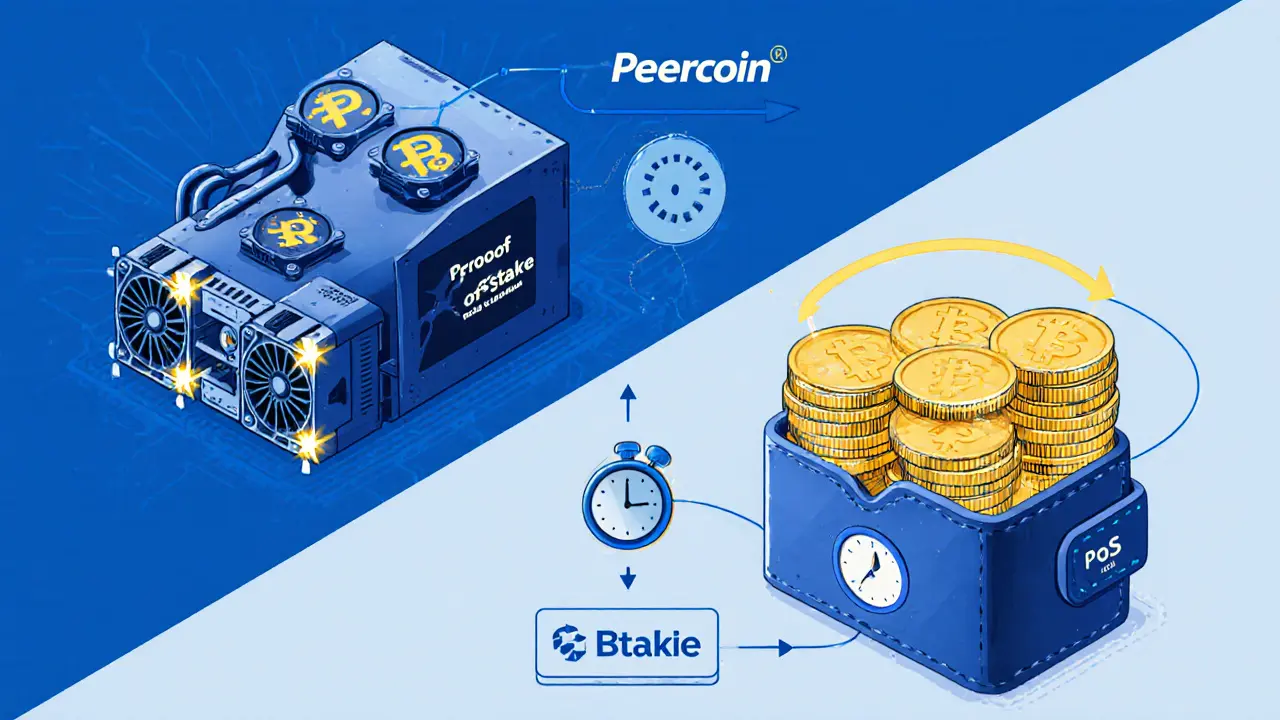
Peercoin: The Hybrid Crypto You Should Know
When talking about Peercoin, a cryptocurrency that blends proof‑of‑work and proof‑of‑stake to keep inflation low and energy use minimal. It’s also called PPC. In the same breath, cryptocurrency, digital money secured by cryptography and run on decentralized networks has exploded into a whole ecosystem, and proof‑of‑stake, a consensus method where holders lock coins to help validate transactions and earn rewards is a key driver behind many newer projects. Underpinning all of this is the blockchain, a distributed ledger that records every transaction in a transparent, tamper‑proof way. Together these pieces form the backbone of Peercoin’s unique value proposition.
Why Peercoin’s Hybrid Model Matters
Peercoin was launched in 2012, making it one of the earliest coins to experiment beyond pure proof‑of‑work. The hybrid model means miners still secure the network, but the proof‑of‑stake layer handles most transaction validation. This dual approach creates three clear advantages: first, it caps inflation at around 1% per year, so your holdings don’t get diluted quickly. Second, staking rewards are generated simply by holding PPC in a wallet, turning passive owners into active validators without expensive hardware. Third, the lower energy demand aligns with today’s sustainability concerns, a point that’s increasingly important for investors and regulators alike.
From a practical standpoint, the hybrid system also improves security. Proof‑of‑stake adds a cost‑to‑attack factor because an attacker would need to own a significant share of the coin, while proof‑of‑work still deters brute‑force attacks. This synergy has kept Peercoin on major exchange lists for years, giving traders easy access to buy, sell, or stake the asset. If you’re already comfortable with Bitcoin’s mining or Ethereum’s staking, Peercoin feels like a familiar bridge that lets you enjoy both worlds.
Staking on Peercoin is straightforward. Any wallet that supports the protocol—such as the official Peercoin wallet or popular multi‑coin apps—lets you lock up coins and start earning interest almost instantly. The reward rate hovers around 4‑5% annually, adjusted by network participation. Because rewards are paid out automatically, you don’t need to monitor complex smart‑contract conditions; you simply hold PPC, and the system takes care of the rest.
Beyond the tech, Peercoin’s community emphasizes long‑term stability over hype. While many altcoins chase rapid price spikes, PPC focuses on steady growth, low inflation, and utility as a spendable digital cash. That philosophy shows up in real‑world use cases: some merchants accept Peercoin for everyday purchases, and developers have built lightweight payment processors that tap into its fast confirmation times.
So what can you expect when you explore the articles below? We’ve gathered reviews of crypto exchanges, deep dives into airdrop mechanics, and analyses of market trends—all of which mention or impact Peercoin in some way. Whether you’re hunting the best platform to stake PPC, looking for a secure exchange to trade it, or just want to understand where Peercoin fits in the broader crypto landscape, the collection gives you actionable insights without the fluff.
Ready to see how Peercoin stacks up against other assets, where to find the lowest fees, and what the future might hold? Dive into the posts below for practical tips, detailed reviews, and up‑to‑date market commentary.
Peercoin (PPC) is the first proof‑of‑stake crypto, combining Bitcoin’s hash with low‑energy staking. Learn how it works, its economics, staking steps, and current market outlook.
Read More