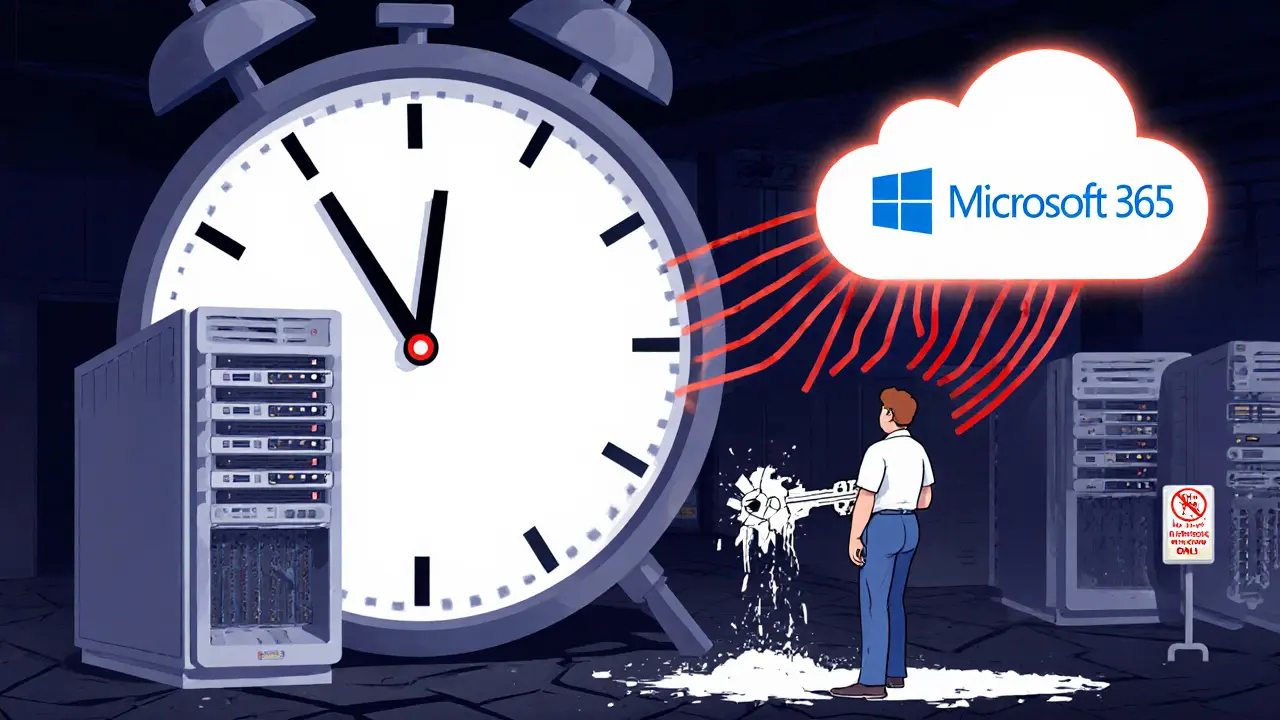
On-Premises Email: What It Is and Why It Still Matters in 2025
When you hear on-premises email, a system where an organization hosts and manages its own email servers locally instead of using cloud services like Gmail or Microsoft 365. Also known as self-hosted email, it gives full control over data, access, and security—but at a cost. Many companies switched to cloud email for simplicity and lower costs, but some still stick with on-premises email because they can’t risk leaving sensitive data outside their walls.
This isn’t just about old-school tech. email server, the physical or virtual machine running email software like Microsoft Exchange or Postfix is still the backbone for banks, government agencies, and defense contractors. These groups need to meet strict compliance rules—HIPAA, GDPR, or FedRAMP—that require data to stay inside their own network. A breach in the cloud could mean legal trouble; a breach on-site means they can respond faster and track exactly what happened.
email security, the set of practices and tools protecting email from spam, phishing, and unauthorized access works differently on-premises. You don’t rely on a provider’s filters—you build your own. That means installing firewalls, scanning every attachment, logging every login, and training staff yourself. It’s harder, but for some, it’s the only way to sleep at night. Meanwhile, email infrastructure, the full stack of hardware, software, and networks that deliver email within an organization becomes a mission-critical asset. If your email server goes down, your business stops. No cloud fallback. No quick restart. You fix it—or you wait.
Most small and mid-sized businesses don’t need this level of control. They use cloud email because it’s cheaper, easier to update, and scales with their team. But if you’re handling financial records, patient data, or classified projects, on-premises email isn’t nostalgia—it’s a calculated choice. The trade-off is clear: more control, more responsibility, more headaches. But for the right organizations, that’s the price of safety.
What you’ll find in the posts below aren’t guides on setting up Exchange servers or configuring SMTP relays. Instead, you’ll see real-world stories about companies that tried to cut corners with cloud email and got burned. You’ll read about failed migrations, compliance fines, and the hidden costs of outsourcing trust. You’ll also see how some firms are now hybridizing—keeping core email on-site while using cloud tools for collaboration. This isn’t about choosing one side over the other. It’s about understanding what your business really needs to protect—and who you’re willing to trust with it.
Microsoft is ending perpetual licenses for Exchange Server. Starting in 2025, you must pay an annual subscription or migrate to Exchange Online. No extended updates. No exceptions. Here's what you need to know.
Read More