Move Dollar: What It Really Means in Crypto and Trading
When people talk about Move Dollar, a term used to describe the practical movement of value in digital finance, especially through crypto and stablecoins. It's not a currency you can buy—it's what happens when money flows from one wallet to another, across borders, without banks in the middle. Think of it like sending cash to a friend overseas, but faster, cheaper, and without waiting days for a wire to clear. This idea shows up everywhere in crypto: Venezuelans using USDT to buy groceries, Nigerians trading Naira for Bitcoin on P2P platforms, or someone in the UAE paying for a service with a stablecoin instead of a credit card.
The real power of Move Dollar comes from how it bypasses broken systems. In countries with hyperinflation or banking restrictions, moving money isn’t about profit—it’s about survival. That’s why Bitcoin and USDT became lifelines in Venezuela, and why P2P trading exploded in Nigeria. These aren’t speculative plays—they’re daily tools. And behind every one of those transactions is the quiet, invisible act of moving dollar value digitally. It’s not about the name on the token; it’s about the function: getting value where it’s needed, when it’s needed.
This concept ties directly to stablecoin adoption, the growing use of digital currencies pegged to the U.S. dollar for real-world spending and savings. USDT and similar tokens aren’t just trading pairs—they’re the actual currency people use to move value across unstable economies. It also connects to blockchain payments, the use of decentralized ledgers to transfer funds without intermediaries, which is what makes cross-border transfers possible without fees or delays. And it’s why exchanges like Kyrrex and Binance.US focus on regulatory compliance—they’re trying to make these movements legal and safe.
What you’ll find in the posts below isn’t a list of coins called Move Dollar. It’s the real stories behind the movement. You’ll see how fake airdrops like FAN8 and CSHIP try to trick people into thinking value is being created, when in reality, it’s just disappearing into scams. You’ll read about exchanges that shut down because they let people move money without oversight, and others that survived because they made that movement secure and legal. You’ll learn how front-running bots steal from traders during these transfers, and how identity systems on blockchain are trying to make the whole process safer. This isn’t theory. It’s what’s happening right now, in real time, as people around the world choose to move their dollars differently.
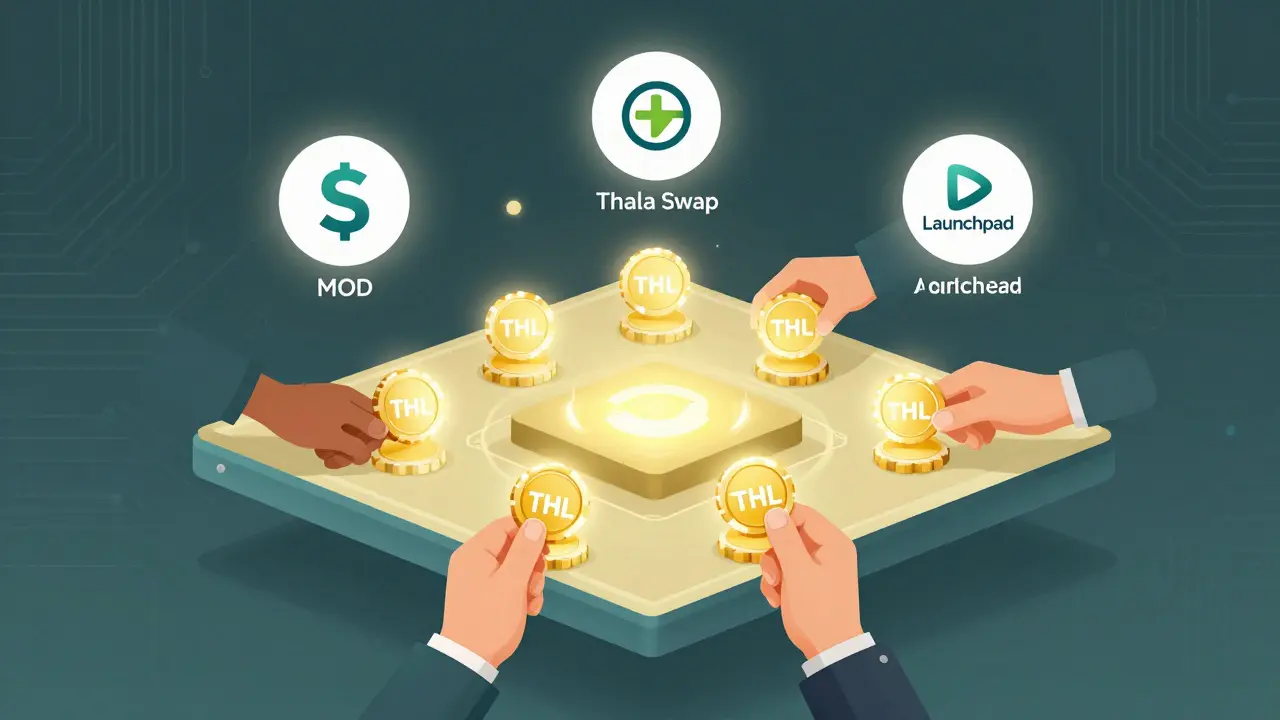
Thala (THL) is a governance token for the Aptos DeFi protocol, powering Thala Swap and Move Dollar. With a 93% price drop since its peak, it's high-risk and low-liquidity. Understand what THL actually does before investing.
Read More