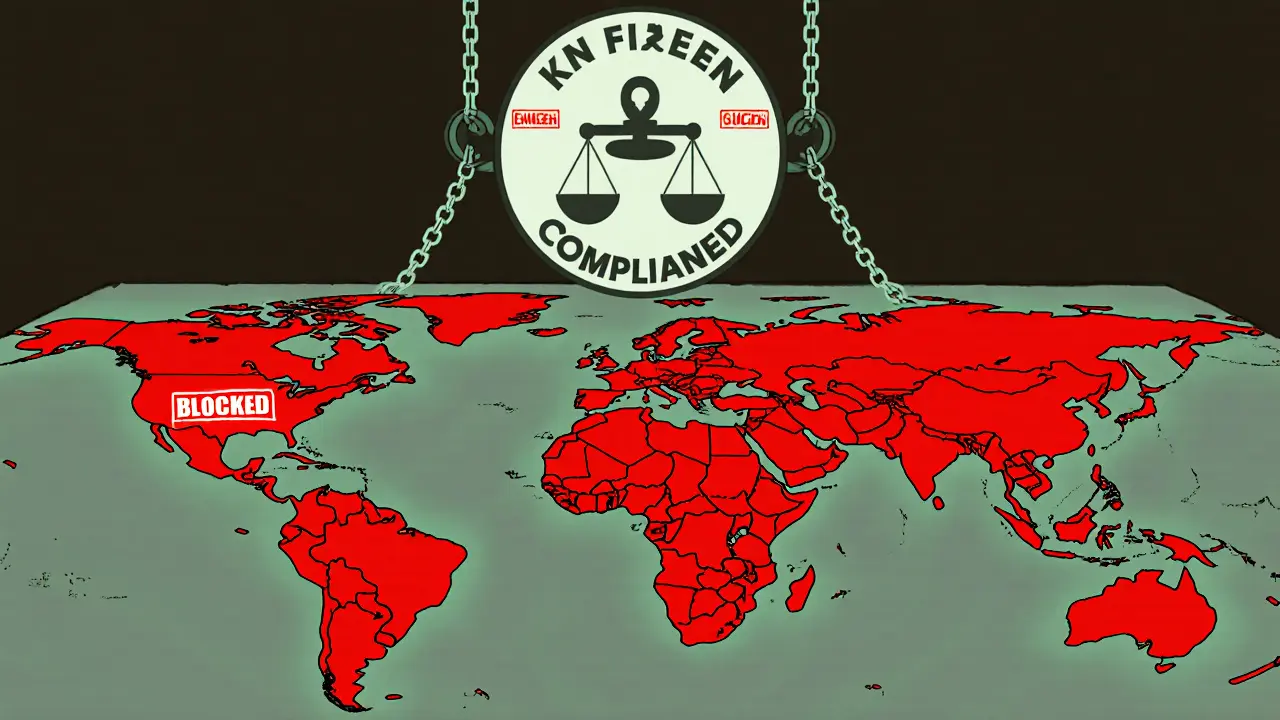
Kraken MiCA Delisting: What It Means for Crypto Traders
When Kraken MiCA delisting, the process by which Kraken removes certain crypto assets from its platform to comply with the European Union’s Markets in Crypto-Assets regulation. Also known as MiCA-compliant delisting, it’s not about shutting down tokens—it’s about following legal boundaries set by the EU in 2024. This isn’t random. It’s a direct response to MiCA’s strict rules on token classification, transparency, and issuer responsibility. If a token doesn’t have a clear whitepaper, audited team, or legal structure, Kraken has to pull it—no exceptions.
Related to this are MiCA regulation, the EU’s comprehensive framework that forces crypto exchanges to verify every asset they list. This regulation treats some tokens like securities, others as utility tokens, and some as completely unapproved. That’s why platforms like Kraken crypto, one of the largest global exchanges with a strong presence in Europe. Also known as Kraken exchange, it had to choose between keeping users in the EU or keeping risky tokens on the board. They picked compliance. And you’re seeing the same pattern with crypto exchange delisting, the removal of assets from platforms due to legal, technical, or liquidity issues. Also known as exchange delisting, it happened to GCOX, OPNX, and Coinviva—not because they were scams, but because they couldn’t meet basic legal standards.
What does this mean for you? If you’re trading in Europe, you’re now seeing fewer altcoins, but more legitimacy. The tokens left on Kraken are the ones with real documentation, audited code, and legal backing. That’s a good thing. It’s also why you’ll find posts here about dead coins like UniWorld and Almeedex—they’re the opposite of what MiCA wants. The market is cleaning up. And exchanges like Kraken aren’t being punished—they’re being forced to grow up.
You’ll notice the posts below focus on exchanges that failed to adapt: OPNX trying to trade bankruptcy claims, GCOX fading without users, Coinviva disappearing entirely. These aren’t just cautionary tales—they’re proof that MiCA isn’t just a rulebook. It’s a turning point. The days of listing any token with a website and a Discord are over. If you’re holding a token that vanished from Kraken after mid-2024, it’s not a glitch. It’s the new system working.
What comes next? More delistings. More clarity. And fewer chances to gamble on nothing. The posts ahead break down exactly which tokens got cut, why they failed, and how to spot the next wave of compliant assets before they’re listed. No fluff. No hype. Just what’s real—and what’s gone for good.
Kraken blocks crypto trading in 14 countries and imposes strict rules in the U.S., Europe, Australia, and Japan due to regulatory compliance. Learn which coins are banned, why stablecoins were delisted in Europe, and how Kraken tracks your location.
Read More