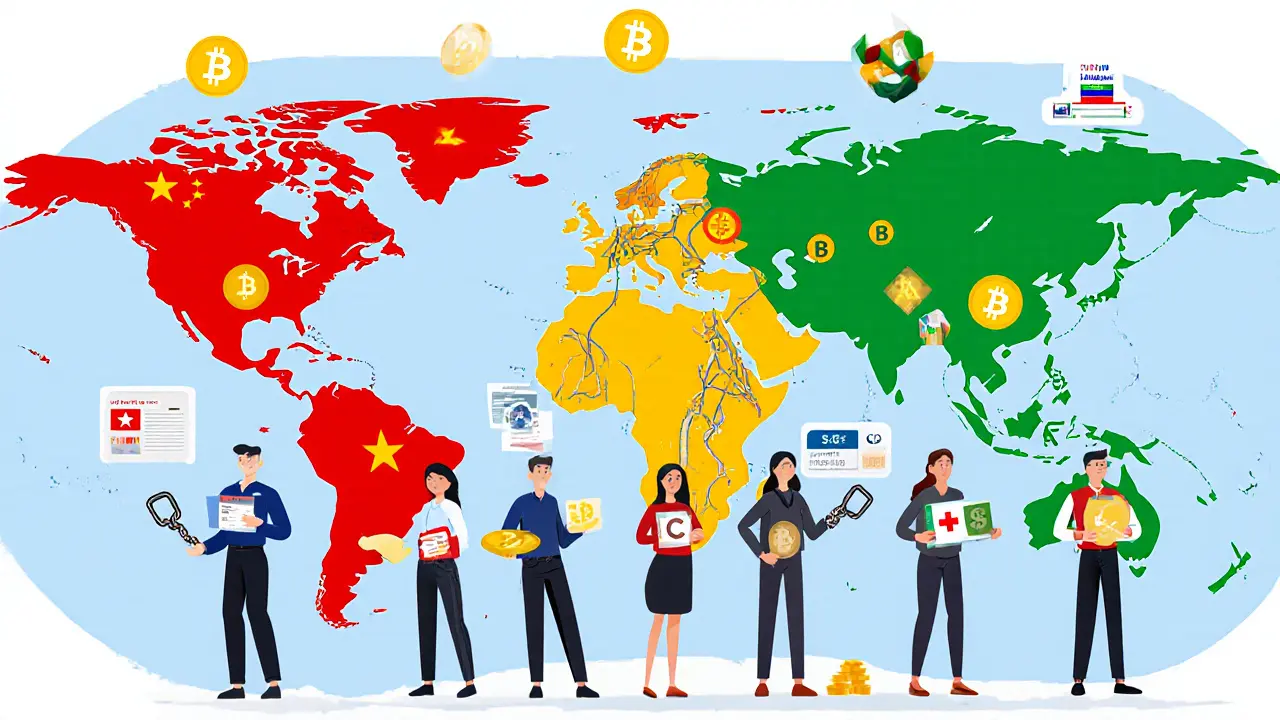
Jurisdiction Crypto Rules: What Countries Allow, Block, or Restrict Crypto Trading
When you trade crypto, you’re not just dealing with markets—you’re navigating jurisdiction crypto rules, the legal frameworks that determine where and how you can buy, hold, or sell digital assets. Also known as crypto regulations by country, these rules vary wildly—from full bans to open banking access—and they directly impact your ability to trade safely. A coin you can buy in Australia might be frozen in Nepal. A platform you trust in Cyprus could be shut down overnight because it didn’t follow local licensing rules. These aren’t abstract policies—they’re real walls that can lock you out of your funds or land you in legal trouble.
Think about crypto banking laws, how traditional banks interact with crypto firms under national financial oversight. In Cyprus, banks now have to follow MiCA rules, making it harder for crypto firms to open accounts. In China, even P2P trading is pushed underground, with traders risking fines or worse to move money. Meanwhile, Australia’s new rules force exchanges to get licensed by ASIC, giving users more protection but also fewer unregulated options. These aren’t just compliance checklists—they change what tools you can use and where you can store your assets. Then there’s crypto asset forfeiture, when governments seize your crypto over suspected illegal activity. Nepal’s Muluki Criminal Code lets authorities freeze holdings without a trial. Syria’s users only recently got relief under OFAC sanctions, but even then, they can’t legally import mining gear. These aren’t hypothetical risks—they’ve happened to real people, and they’re still happening today. Even so-called decentralized platforms like dYdX block users based on location. Why? Because they’re forced to comply with local laws—or lose access to global banking partners. You can’t escape jurisdiction by using a wallet. If your bank won’t touch your crypto, or your country bans exchanges, your coins might as well be locked in a vault with no key.
What you’ll find below is a collection of real-world cases showing exactly how these rules play out: from JPEX’s collapse under Hong Kong’s crackdown, to Nepal’s asset seizures, to how Syrian traders gained limited access after OFAC adjustments. You’ll see why Cyprus banks now reject crypto firms, why China’s underground market still moves $86 billion a year, and how Australia’s new consumer laws changed the game for everyday traders. These aren’t theoretical debates. They’re the rules that decide whether your next trade is legal, safe, or a gamble with your money.
Crypto laws vary wildly by country in 2025. From 30% taxes in India to outright bans in China, knowing your jurisdiction’s rules isn't optional-it's essential to avoid fines, seizures, or criminal charges.
Read More