
What is UniFarm (UFARM) Crypto Coin - Full Overview
A detailed look at UniFarm (UFARM) - its purpose, tokenomics, staking mechanics, multi‑chain deployment, benefits, risks, and future roadmap.
Read MoreWhen diving into DeFi staking, the process of locking crypto assets in a protocol to earn rewards. Also known as staking in decentralized finance, it lets holders support network security while collecting a steady stream of yield. Yield farming, earning returns by providing liquidity to DeFi pools is a close cousin – both rely on smart contracts to distribute incentives. Liquidity mining, the practice of rewarding users for supplying assets that power trading pairs often fuels these rewards, and Governance tokens, coins that let holders vote on protocol upgrades can boost staking returns by granting extra fees or bonus emissions. In short, DeFi staking encompasses yield farming, needs liquidity mining, and is influenced by governance tokens.
Why do people lock up their crypto instead of trading it? First, the passive income stream can outpace traditional savings rates, especially when a protocol offers high annual percentage yields (APY). Second, staking often reduces circulating supply, which can support token price. Third, many projects tie voting power to staked amounts, so participants get a say in future upgrades – a true blend of financial and governance rights. But staking isn’t free money; you trade liquidity for reward. If the market drops sharply, the value of your locked assets can erode faster than the rewards you earn. Understanding tokenomics – the supply schedule, inflation rate, and reward distribution – is essential before you commit. Look for clear emission formulas, lock‑up periods, and any slashing penalties that could cut your earnings if you act improperly.
Ready to try it out? Begin by picking a reputable protocol. Check whether the smart contract has been audited by a known firm, and scan community forums for recent bugs or exploits. Next, decide which asset you’ll stake. Native tokens like ETH, SOL, or ATOM often earn the highest rates, but many platforms accept stablecoins (USDC, DAI) for lower‑risk, predictable yields. After you’ve chosen, connect a non‑custodial wallet – MetaMask, Trust Wallet, or Ledger – to the staking interface. Follow the on‑screen steps: approve the token, confirm the amount, and lock it for the desired period. Most dashboards display real‑time APY, compounding frequency, and an estimate of your future rewards, letting you compare options side by side.
Don’t forget the security basics. Keep your private keys offline, enable two‑factor authentication on the wallet app, and consider using a hardware wallet for larger balances. Remember that while the protocol handles the reward distribution, you remain responsible for safeguarding your signing keys. If the platform offers a withdrawal grace period, factor that into your cash‑flow planning – many projects require a week or more before you can reclaim your assets.
Finally, monitor your position regularly. Changes in total value locked (TVL) can shift the APY, and governance proposals may alter reward structures. Some users set up alerts on analytics sites to catch sudden drops or new voting opportunities. By staying engaged, you can adjust your stake, rebalance into higher‑yield pools, or exit before a protocol faces security trouble.
Below you’ll find a curated list of articles that dive deeper into each of these areas – from detailed reviews of crypto exchanges that list staking pairs, to step‑by‑step guides on claiming airdrops tied to staking rewards, and analyses of current market conditions that affect yield calculations. Whether you’re a newcomer looking for a simple guide or an experienced trader hunting the best APY, the posts ahead give you the practical tools you need to make informed decisions and maximize your passive crypto income.
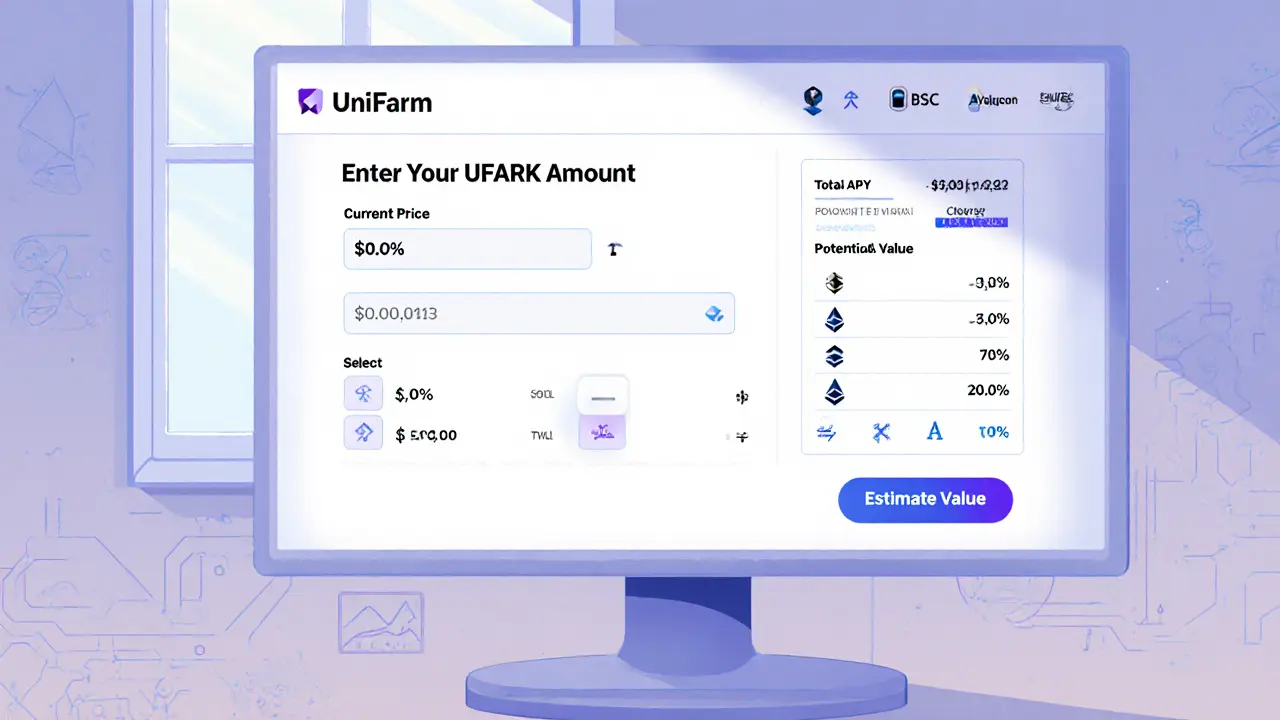
A detailed look at UniFarm (UFARM) - its purpose, tokenomics, staking mechanics, multi‑chain deployment, benefits, risks, and future roadmap.
Read More