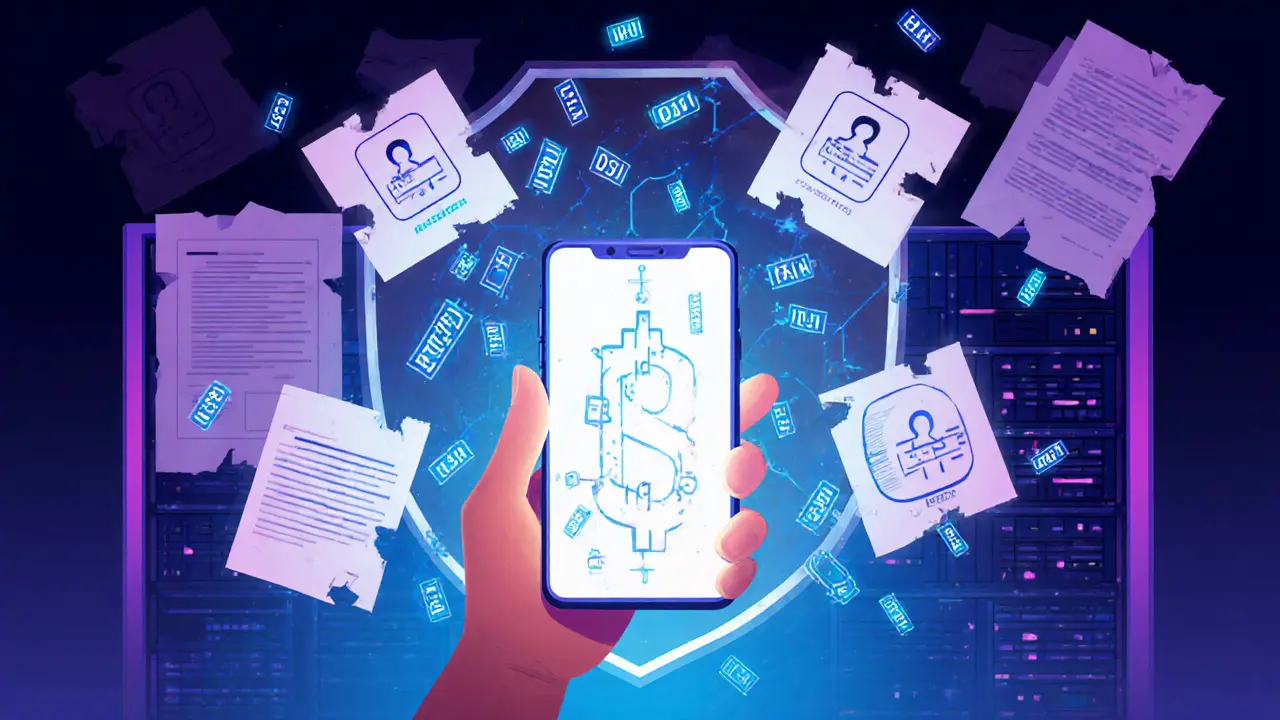
Decentralized Identity: What It Is and Why It Matters for Crypto Users
When you log into a website using Google or Facebook, you’re giving away pieces of who you are—your name, email, maybe even your location. But what if you could own your identity instead? That’s the idea behind decentralized identity, a system where you control your personal data using blockchain-based credentials instead of relying on centralized companies. Also known as self-sovereign identity, it lets you prove who you are without handing over your entire digital life. This isn’t science fiction—it’s already being used in crypto exchanges, airdrops, and Web3 apps to keep users safe and private.
Decentralized identity works by turning your personal info into encrypted digital credentials stored on your device, not on a server. You can share just enough to verify your age, wallet ownership, or KYC status—without exposing your full name, address, or ID number. Think of it like showing a driver’s license to prove you’re over 21, but only the date of birth is visible, not your home address or photo. This is why platforms like Kyrrex and other regulated exchanges are starting to adopt it: it cuts fraud, reduces compliance costs, and gives users real privacy. Related concepts like blockchain identity, a digital identity anchored to a public ledger that can’t be altered or deleted without your permission and Web3 identity, an identity system built for decentralized applications where users aren’t tracked or sold as data are just different names for the same shift: away from corporate control, toward user ownership.
You’ll see this theme pop up across the posts below. Some cover fake airdrops that ask for your private keys—scams that wouldn’t work if decentralized identity was widely used. Others highlight exchanges like Kyrrex that use real regulation and identity verification without storing your data. There are also posts about jurisdictional rules, like those in the UAE or Cyprus, where knowing your identity status affects what you can trade. Even the dead projects like UniWorld or OPNX failed partly because they didn’t build trust through transparent, user-owned systems. What’s clear? If you’re active in crypto, your identity is your most valuable asset—and right now, most people are still letting companies hold it for them. Below, you’ll find real-world examples of how decentralized identity is being used, abused, or ignored—and what you need to know to protect yourself.
Blockchain-based identity verification lets you control your personal data with cryptographic keys instead of relying on centralized databases. Faster, safer, and private - it’s already used by banks, hospitals, and governments.
Read More