
Understanding the Kimchi Premium and Its Role in the Korean Crypto Market
Explore why cryptocurrencies trade at higher prices in South Korea, how the Kimchi premium is calculated, and what it means for traders and regulators in 2025.
Read MoreWhen working with cryptocurrency arbitrage, the practice of buying a digital asset on one market and selling it on another to capture price differences. Also known as crypto arbitrage, it leverages the natural price spread that occurs between crypto exchanges, platforms where users trade digital assets. Successful arbitrage depends on low trading fees, costs charged by exchanges for each transaction and ample liquidity, the ability to buy or sell large amounts without moving the market. In short, you need a market where the asset is cheap, another where it’s pricey, and a cheap way to move it between the two.
Cryptocurrency arbitrage isn’t just about spotting a cheap coin. It’s a chain of decisions: pick the right exchanges, calculate the real spread after fees, and act fast enough before the gap closes. latency matters—a few milliseconds can turn a profitable trade into a loss. Many traders use automated to monitor dozens of order books in real time; the bots can execute split‑second orders that humans can’t match. But even a manual trader can benefit from a solid framework: start with high‑volume pairs like BTC/USD or ETH/USDT, where price data is abundant and spreads are narrower yet more reliable. Then check each exchange’s withdrawal and deposit times; a slow blockchain can erode your edge.
First, evaluate exchange fees, both maker and taker fees, plus withdrawal costs. A 0.1% fee on each leg might seem tiny, but it can eat up a 0.3% spread, leaving you flat. Second, assess liquidity depth, how much volume sits at each price level. Shallow order books force you to accept worse prices, shrinking the effective spread. Third, watch the price spread, the difference between the highest bid and the lowest ask across markets in real time; a consistent 0.5% gap is a good target after fees. Fourth, factor in network congestion; high gas fees on Ethereum can turn a neat arbitrage into a loss. Finally, stay aware of regulatory quirks—some jurisdictions restrict cross‑border transfers, which can block certain arbitrage routes.
The posts below dive deep into each of these pieces. You’ll find exchange reviews that break down fee structures, guides on using bots safely, and case studies that illustrate how liquidity and spread interact in real markets. Whether you’re a seasoned trader looking to tighten your edge or a newcomer curious about the basics, the collection gives you actionable insight to start or improve your arbitrage game.
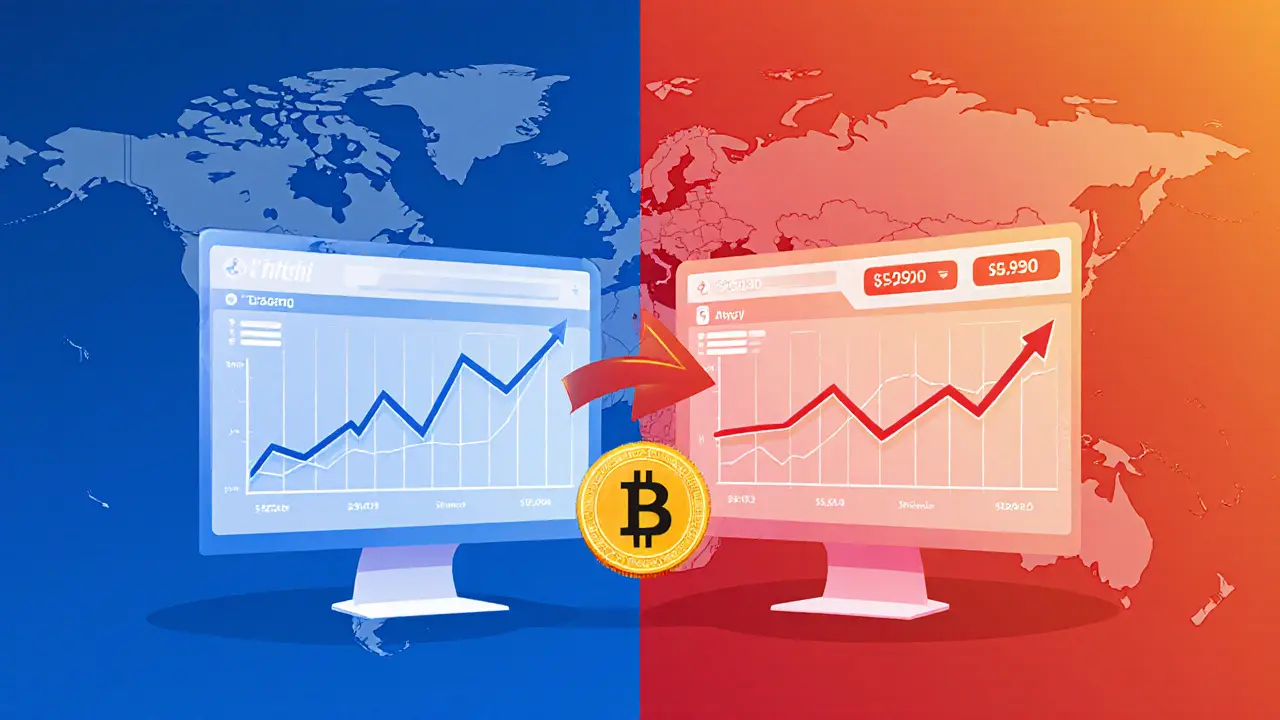
Explore why cryptocurrencies trade at higher prices in South Korea, how the Kimchi premium is calculated, and what it means for traders and regulators in 2025.
Read More