Cryptocurrency Airdrop: How Free Tokens Reach Your Wallet
When exploring cryptocurrency airdrop, a marketing method where blockchain projects send free tokens to community members. Also called free token giveaway, it helps new projects build awareness and reward early supporters.
A token distribution, the process of allocating newly minted coins to a set of addresses is the engine behind every airdrop. Most projects tie distribution to specific actions—holding a certain coin, joining a Telegram group, or completing a KYC check. This airdrop eligibility creates a direct link between user behavior and the chance to receive free assets.
Key Players and How They Connect
Every airdrop involves at least three entities. First, the blockchain project, the team launching a new token or upgrading an existing protocol designs the giveaway rules. Second, the crypto wallet, the software or hardware where users store their private keys receives the tokens. Finally, the airdrop eligibility criteria, the checklist users must meet to qualify determines who gets the reward. The relationship can be expressed as: "A cryptocurrency airdrop encompasses token distribution, requires a crypto wallet, and is driven by a blockchain project's eligibility rules."
In practice, projects announce airdrops on social media, Discord, or dedicated airdrop aggregators. They often publish a snapshot date—when the blockchain is scanned to see who meets the criteria. After the snapshot, the distribution contract sends the free tokens directly to eligible wallets. Because the process is automated, it scales from a handful of participants to millions of users in minutes.
Why do projects bother? Airdrops boost visibility, incubate a community, and can create immediate liquidity for a new token. For users, they represent a low‑risk way to test a project's technology and potentially profit if the token’s price rises. However, the free nature also attracts scammers. Fake airdrop pages harvest private keys, and phishing links lure users into signing malicious transactions. That’s why robust wallet security and verification of the project's legitimacy are non‑negotiable steps.
When you decide to claim an airdrop, follow a simple checklist: verify the project's official channels, use a reputable non‑custodial wallet, never share your seed phrase, and double‑check contract addresses on explorers like Etherscan. Many projects also require a small amount of gas to complete the claim, so keep a modest reserve of native blockchain tokens (ETH, BNB, etc.) handy.
Our collection below covers real‑world examples, from the TopGoal x CoinMarketCap NFT giveaway to the Maiar EarnDrop from MultiversX. You'll find step‑by‑step claim guides, risk assessments, and insights on how each airdrop fits into the broader token distribution strategy. Use this roundup to spot genuine opportunities, avoid pitfalls, and make the most of free token events.
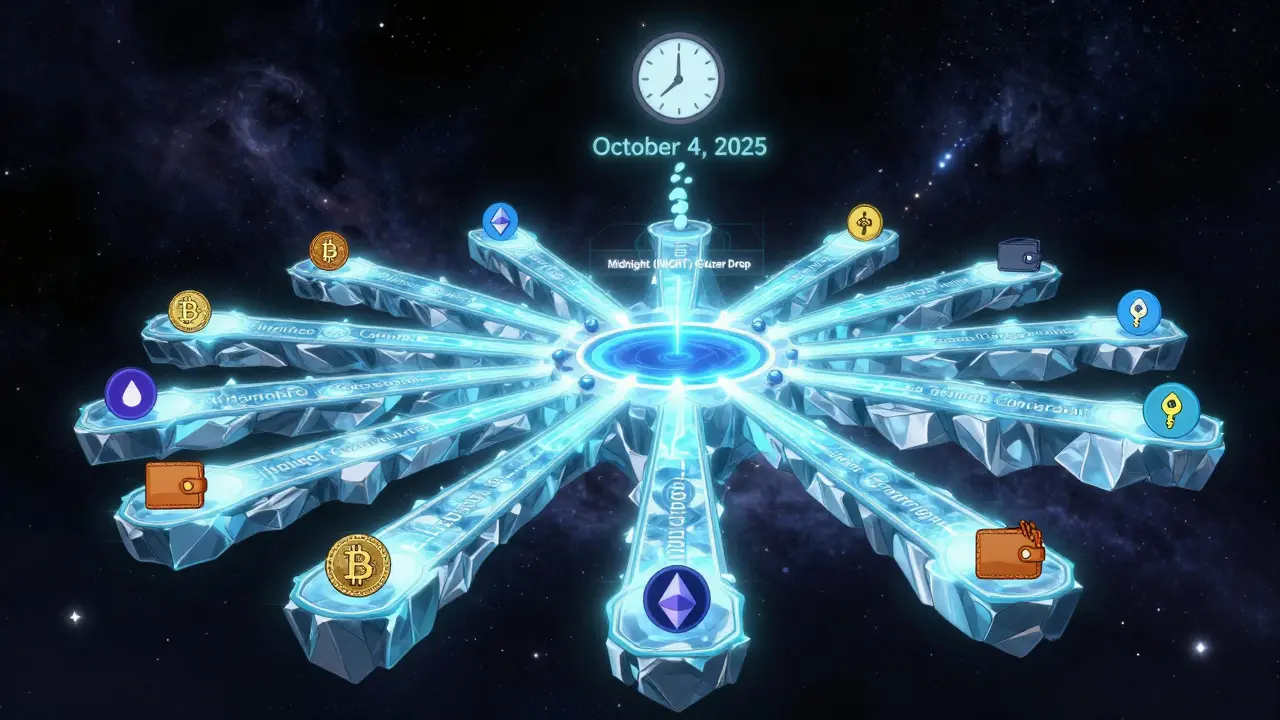
The Midnight (NIGHT) airdrop by Cardano’s Glacier Drop distributed 24 billion tokens across eight blockchains in 2025. With strict eligibility, vesting schedules, and a three-phase recovery system, it wasn’t a giveaway - it was a network launch. If you missed the deadline, here’s what’s still possible.
Read More
Learn the full details of Bit2Me's 2025 B2M airdrops, eligibility rules, claim steps, and tips to maximize your rewards.
Read More
A deep look at the Space Misfits CROWN (SMCW) airdrop: how it worked, distribution details, token performance, and why the project stalled.
Read More