
Midnight (NIGHT) Airdrop by Cardano: How the Glacier Drop Worked and Why It Mattered
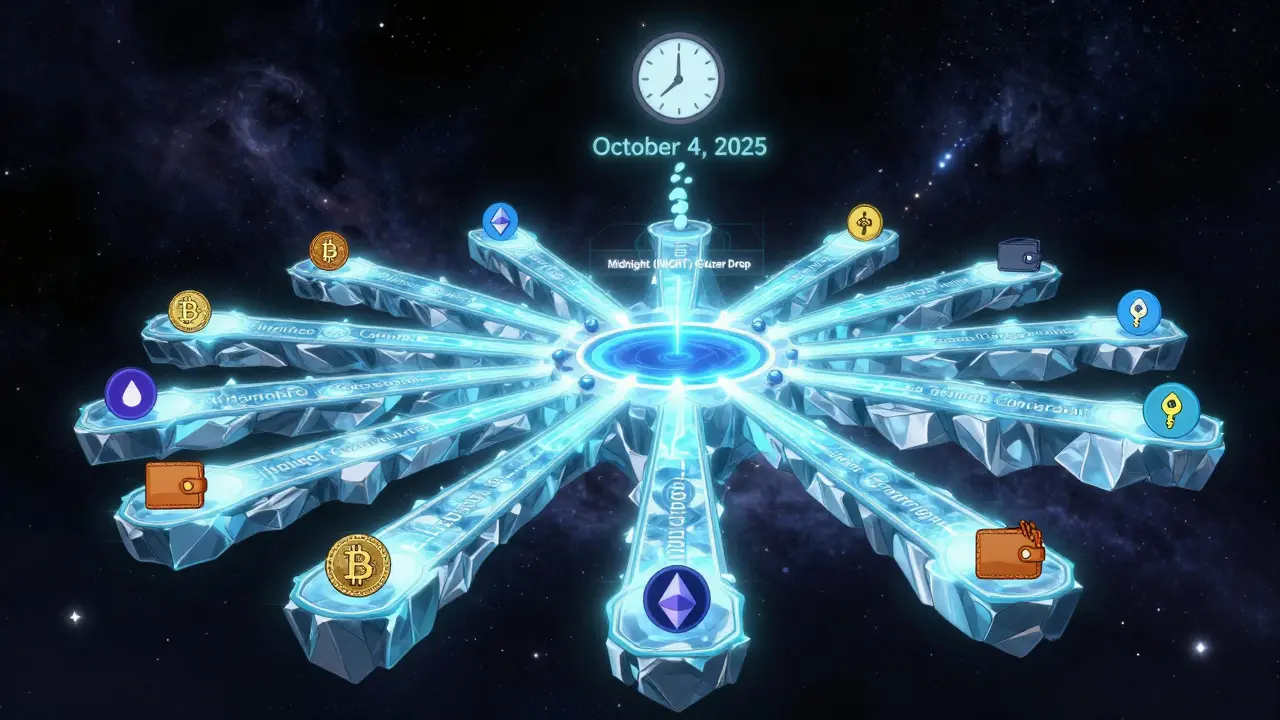
The Midnight (NIGHT) airdrop wasn’t just another token giveaway. It was one of the most carefully designed, cross-chain distribution events in crypto history - and it’s already over. Launched in August 2025 as part of the Glacier Drop, this airdrop distributed 24 billion NIGHT tokens to over 34 million eligible wallet addresses across eight major blockchains. But here’s the twist: if you didn’t claim your tokens by October 4, 2025, you missed the window. And unlike most airdrops, there’s no second chance to just buy in. This wasn’t about flipping coins. It was about building a privacy-first blockchain from the ground up - and it needed real users, not speculators.
Who Got the NIGHT Tokens?
The Glacier Drop didn’t pick winners based on social media followers or meme contests. It used cold, hard math. On June 11, 2025, at a random, undisclosed time, a snapshot was taken of wallets holding at least $100 worth of any of eight native cryptocurrencies: Bitcoin (BTC), Ethereum (ETH), Ripple (XRP), Solana (SOL), Avalanche (AVAX), BNB Chain (BNB), Brave (BAT), and Cardano (ADA). That’s it. No extra steps. No surveys. No Discord roles. If your wallet hit the $100 threshold on that day, you qualified. The allocation wasn’t even. Half of the 24 billion NIGHT tokens - 12 billion - went exclusively to Cardano holders. That’s because Midnight is built as a privacy sidechain on Cardano. Bitcoin holders got 20%, or 4.8 billion tokens. The remaining 30% was split among Ethereum, XRP, Solana, Avalanche, BNB Chain, and BAT holders based on how much they held at snapshot time. So someone with $500 in ADA got more than someone with $500 in ETH, because ADA had a bigger slice of the pie. And here’s the catch: you had to control your own keys. If your crypto was sitting on Binance, Coinbase, or Kraken, you didn’t get anything - unless your exchange decided to claim on your behalf. And almost none did. That’s why, even though 34 million addresses were eligible, far fewer people actually claimed. Self-custody isn’t just a buzzword here - it was the rule.How to Claim (And Why Most People Couldn’t)
Claiming wasn’t a click-and-go process. You had to do two things:- Sign a message proving you owned the wallet that qualified - without moving any funds.
- Provide a brand-new Cardano wallet address to receive the NIGHT tokens.
What Happens to Unclaimed Tokens?
The project didn’t just burn the unclaimed tokens. That would’ve been lazy. Instead, they created a three-phase system to keep distributing them:- Phase 1: Glacier Drop - The initial 60-day claim period. Closed.
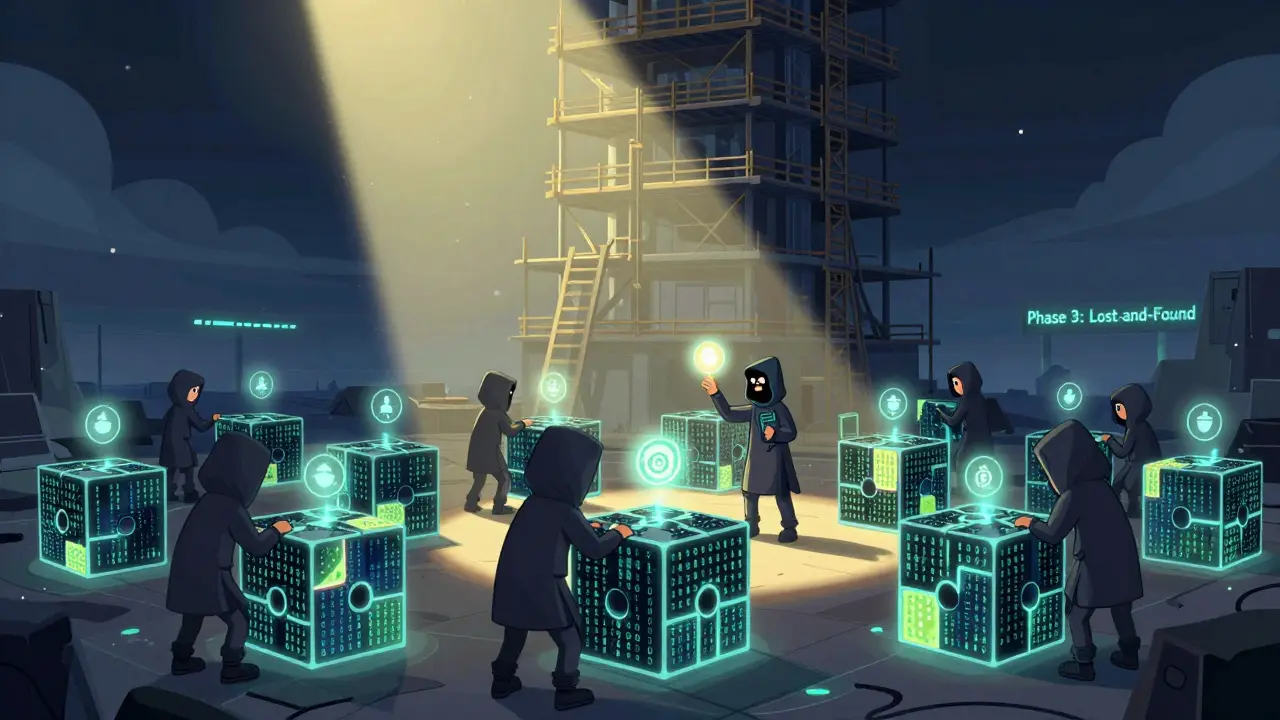
- Phase 2: Scavenger Mine - Now live. Users solve public computational puzzles to earn unclaimed NIGHT tokens. Think of it like mining, but instead of hashing, you’re helping build network infrastructure. The harder the puzzle, the more you earn. This phase turns passive holders into active contributors.
- Phase 3: Lost-and-Found - After mainnet launch, any leftover tokens will be available to those who missed both earlier phases. This is the final safety net.
The Vesting Schedule: No Instant Cashouts
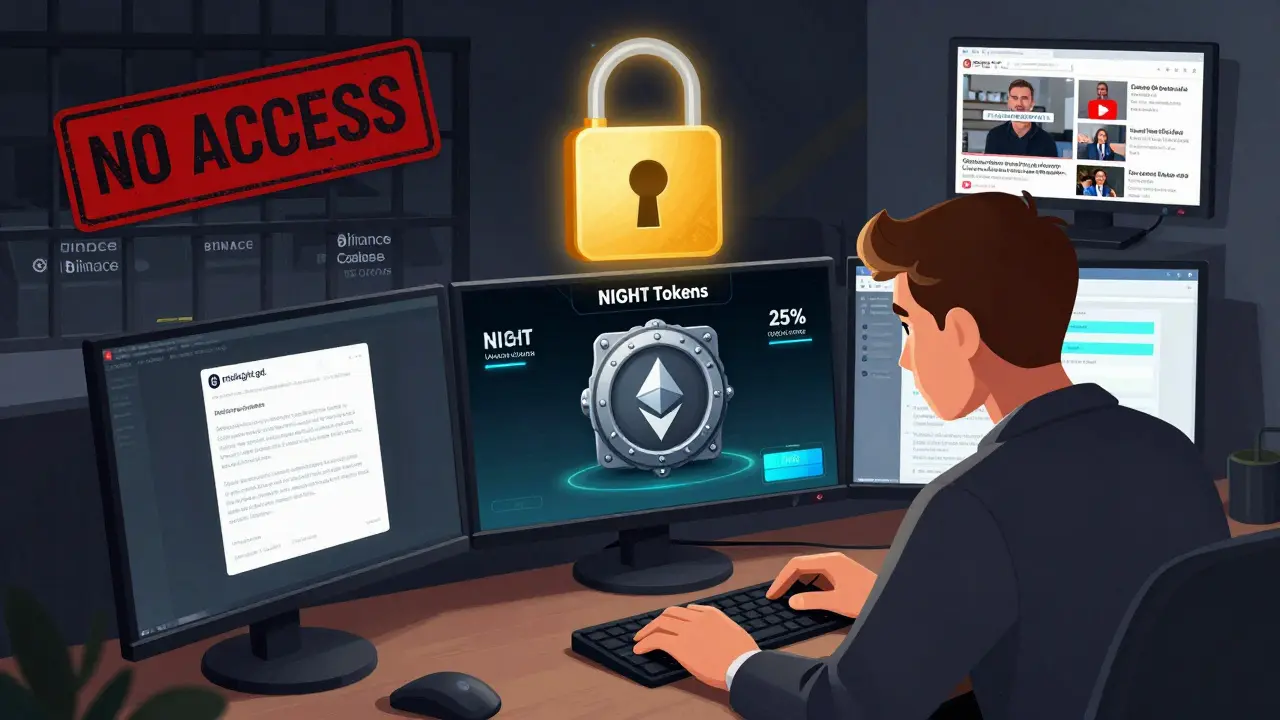
Here’s where Midnight really breaks from the pack. Most airdrops give you all your tokens at once. Then you sell. Then the price crashes. Then the project dies. Midnight’s solution? Lock it all up. Every claimed NIGHT token is locked in a Cardano smart contract. It doesn’t unlock all at once. Instead, 25% becomes available every 90 days - over 360 days total. And here’s the kicker: the unlock dates are randomized. You don’t know exactly when your next 25% will drop. That prevents coordinated selling. No one can plan a dump. No whale can time the market. This isn’t just about price stability. It’s about alignment. If you’re holding NIGHT, you’re betting on the network’s long-term success - not flipping it for a quick profit. The project wants you to run nodes, vote on governance, and build apps with DUST, the network’s transaction fuel. And it’s structured to make that the most profitable path.Why This Airdrop Was Different
Most crypto airdrops are marketing stunts. Midnight’s was a network bootstrapping tool.- Cross-chain targeting - Only a handful of projects have ever tried to airdrop across eight blockchains. Midnight did it cleanly.
- Algorithmic fairness - No subjective criteria. Just dollar value at snapshot time.
- Self-custody enforcement - No exchanges. No middlemen. Just you and your keys.
- Extended vesting - No immediate sell-off pressure. No pump-and-dump.
- Three-phase distribution - Even if you missed the first window, you still had a path to earn tokens by contributing.
What’s Next for Midnight?
The mainnet hasn’t launched yet. That’s the next big milestone. Once it does, the 360-day vesting schedule will officially begin. Until then, NIGHT tokens are locked. You can’t trade them. You can’t move them. You can only wait. Meanwhile, the testnet is live. Developers are building privacy-preserving apps on it. The DUST token system - used to pay for transactions - is being stress-tested. The goal? A blockchain where you can transact privately without sacrificing compliance, speed, or usability. Midnight calls this "rational privacy." Not anonymity. Not secrecy. Just the ability to control what you share - and when.Final Reality Check
If you held $100 or more in ADA, BTC, or any of the other eight chains on June 11, 2025 - you were eligible. But if you didn’t claim by October 4, 2025, you lost your chance. That’s harsh. But it’s also honest. The project didn’t promise easy money. It promised a role in something bigger. The real winners of the Glacier Drop aren’t the ones who cashed out. They’re the ones who stayed. The ones who set up their Cardano wallets. The ones who solved the Scavenger Mine puzzles. The ones who are now waiting for mainnet to launch - not because they think NIGHT will hit $100, but because they believe in what it’s building. This airdrop didn’t create millionaires. It created contributors.Was the Midnight airdrop only for Cardano holders?
No. While 50% of the 24 billion NIGHT tokens were reserved for Cardano (ADA) holders, the airdrop also included holders of Bitcoin, Ethereum, Solana, Ripple, Avalanche, BNB Chain, and Brave (BAT). Eligibility was based on holding at least $100 worth of any of these assets in a self-custody wallet on June 11, 2025. However, all claimed tokens were sent to a Cardano wallet, so even non-Cardano users had to set up a Cardano wallet to receive their allocation.
Can I still claim my Midnight (NIGHT) tokens?
The main claiming window for the Glacier Drop closed on October 4, 2025. If you didn’t claim by then, you missed the initial distribution. However, unclaimed tokens are being redistributed through Phase 2: the Scavenger Mine. To earn these tokens, you must solve public computational puzzles that help build Midnight’s network infrastructure. This phase is active now and offers a legitimate way to earn NIGHT tokens without having participated in the original snapshot.
Why did I need a Cardano wallet to claim if I held Bitcoin or Ethereum?
Midnight Network is a privacy-focused sidechain built on top of Cardano. Although the airdrop targeted holders across eight blockchains, the NIGHT token operates exclusively on Cardano. To receive and hold your tokens, you needed a Cardano wallet address. This design choice ensured technical consistency and allowed the project to leverage Cardano’s smart contract capabilities for vesting and security. It also encouraged non-Cardano users to engage with the ecosystem.
What happens if I didn’t claim during the Glacier Drop? Do I lose everything?
No. Unclaimed tokens didn’t vanish. They moved into Phase 2: the Scavenger Mine. In this phase, participants earn NIGHT tokens by solving computational puzzles that help secure and launch the Midnight network. This isn’t a reward for luck - it’s a reward for contribution. If you’re still interested in earning NIGHT, you can participate in the Scavenger Mine now. Any tokens that remain after this phase will go into Phase 3: Lost-and-Found, which opens after mainnet launch.
Are Midnight (NIGHT) tokens tradable yet?
No. All claimed NIGHT tokens are locked in a Cardano smart contract. They unlock in four equal installments over 360 days after the Midnight mainnet launches - not after the claim date. Each 25% unlock happens at a randomized time within the 90-day window to prevent coordinated selling. Until mainnet goes live, the tokens are non-transferable and cannot be traded on any exchange. This vesting schedule is intentional - it’s designed to reduce speculation and encourage long-term network participation.
Why did the airdrop require self-custody wallets?
The Midnight team required self-custody to ensure that only real users - not bots or exchange-controlled accounts - could claim tokens. Centralized exchanges like Coinbase or Binance typically don’t support third-party airdrops because they don’t have access to users’ private keys. This policy filtered out fake accounts and ensured that the 24 billion tokens went to individuals who actually controlled their assets. It also aligned with the project’s core philosophy: true privacy and decentralization require personal responsibility.
24 Comments
they’re watching your wallet movements. every time you claim, they log your IP. this isn’t airdrop - it’s surveillance with a crypto veneer. you think you’re getting free tokens? you’re just feeding their data farm.
this is so cool 🌌✨ i set up my Cardano wallet just for this and solved 3 puzzles in the scavenger mine! feeling like a crypto ninja now 😎
the structural ontology of this distribution paradigm is fundamentally antithetical to centralized liquidity vectors. by enforcing self-custody + randomized vesting, they’ve engineered a meta-liquidity trap that incentivizes network participation over rent-seeking. it’s not an airdrop - it’s a cryptoeconomic attractor.
I’ve been helping new users set up their wallets through Discord threads. It’s amazing how many people didn’t realize they needed to generate a fresh Cardano address. I made a simple step-by-step guide - happy to share if anyone’s stuck.
i didnt claim cause i thought it was scam lol but now i see the scavenger mine is real. trying it today. fingers crossed
WHY DIDN’T THEY SEND IT TO MY BITCOIN WALLET?? I HAD $500 IN BTC AND NOW I’M OUT?? THIS IS A SCAM. I SPENT HOURS RESEARCHING AND THEY JUST IGNORED ME??
i got the tokens but i still dont know if i should hold or not. the vesting schedule is wild. 90 days? randomized? feels like playing roulette with my future.
cardano is the only real chain. why even include btc or eth? theyre just noise. america and india should stop pretending theyre part of crypto. this is cardano’s moment. respect the chain
honestly? i just clicked claim and forgot about it. then saw the notification 3 days before deadline. i made it. barely. still waiting for mainnet. no stress.
this whole thing is a front. the ‘scavenger mine’? it’s just a honeypot. they’re harvesting your CPU power to mine something else. they don’t care about privacy - they want your hardware. don’t be fooled.
i’m a bitcoin guy. never used cardano. set up a wallet, signed the message, and boom - 1.2 billion NIGHT. felt like winning the lottery. now i’m learning how to run a node. this is actually fun.
I DID IT!!! 🎉 I was one of the 12 million who didn’t claim at first… then I saw the scavenger mine and went FULL ON. Solved 7 puzzles. Got 450M tokens. My life changed. I’m not rich… but I’m part of something real. THANK YOU MIDNIGHT 🙏💙
sooo… i missed it. like… 2 days too late. now i’m just sitting here watching everyone else get excited. i feel so left out. like i missed prom. again.
I’ve been thinking about this for weeks. The real innovation isn’t the airdrop - it’s the vesting. Randomized unlocks prevent manipulation. It’s not about price. It’s about alignment. When your incentives are tied to network health, not short-term profit, you stop being a speculator and start being a steward. That’s rare. That’s beautiful. That’s the future.
if you didn’t claim, you’re not a crypto user. you’re a spectator. and spectators don’t get to complain when the game ends. this wasn’t a gift - it was a test. you failed. move on.
The implementation of a randomized vesting schedule, while theoretically sound, introduces an unacceptable level of opacity in financial governance. One cannot reasonably be expected to engage in long-term economic planning under conditions of probabilistic uncertainty. This is not innovation - it is obfuscation.
you think this is fair? only 50% to cardano? what about solana? eth? you’re just promoting one chain. this is centralization disguised as decentralization. pathetic.
I’ve been working on privacy apps on the testnet. The DUST token system is actually elegant - small fees, low latency, no bloat. It’s not flashy, but it works. If you’re still waiting for mainnet, don’t just sit there. Try building something. Even a tiny dApp helps. You’ll feel something real.
scavenger mine is genius. solved one puzzle yesterday. got 120M tokens. didn’t even need a rig. just my laptop. feels good to earn it. not just get it.
you think you're smart for claiming? i had 200k in ada. i didn't claim. why? because i knew they'd use it to fund surveillance tools. you're being played. the real token is your data.
i didn’t get any tokens but i’m still cheering for this. it’s the first airdrop that actually made me believe in crypto again. not because of money - because of thought. thank you for building something that cares.
the ‘glacier drop’ is a psyop. the snapshot time was never random. it was pre-set to target specific wallets. the ‘self-custody’ rule? a filter to exclude retail. this was designed for whales. they just made it look fair.
i missed it. no big deal. next time i’ll be ready. crypto’s a marathon. this was just a speed bump.
to anyone who didn’t claim: don’t beat yourself up. you didn’t fail. you just weren’t ready. i’m here to help you through the scavenger mine. message me. no judgment. we’re all learning.