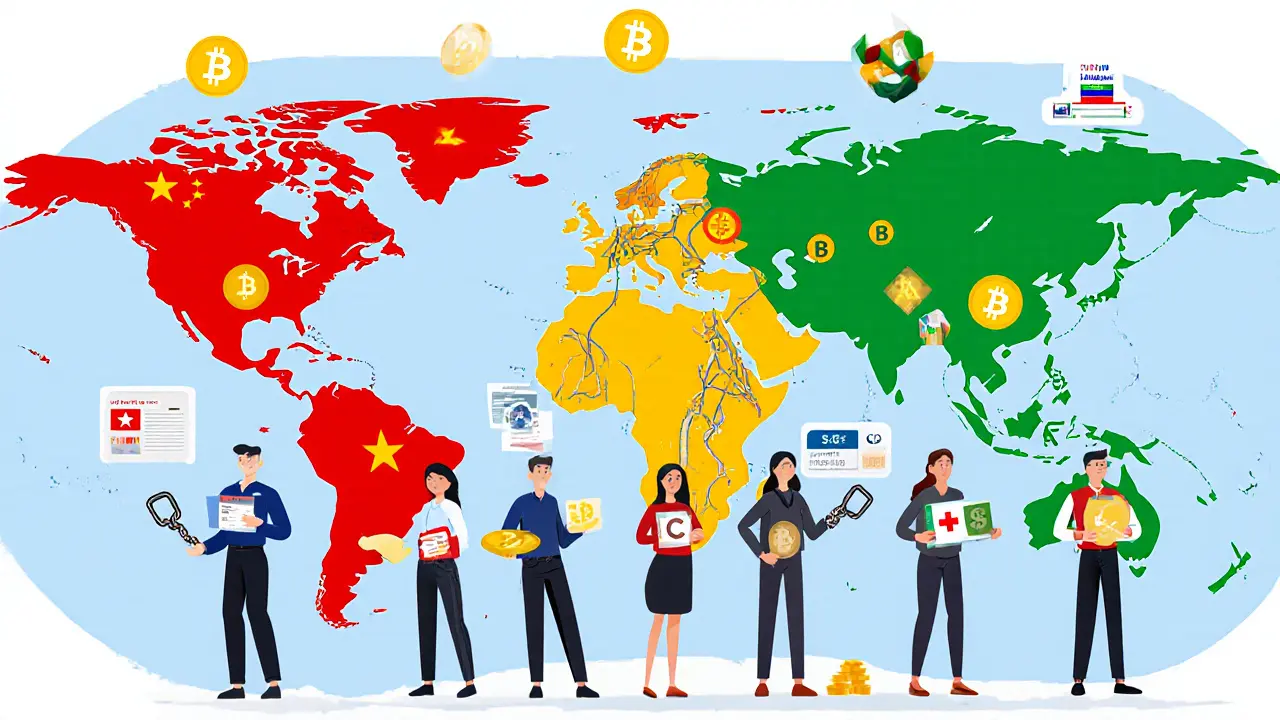
Crypto Legal Status: What’s Allowed, Banned, or Restricted Around the World
When you hear crypto legal status, the official rules that determine whether you can buy, trade, or hold digital assets in your country. Also known as cryptocurrency regulation, it’s not just paperwork—it’s what decides if your Bitcoin is safe or if you’re risking fines, seizures, or even jail. Some countries treat crypto like cash. Others treat it like contraband. And a few? They’re trying to build whole new financial systems around it.
Take Nepal, a country that outright bans crypto trading and allows authorities to seize digital assets under its criminal code. Or China, where exchanges are shut down but underground P2P trading still moves billions. Then there’s Australia, where platforms must be licensed by ASIC and follow strict anti-money laundering rules. These aren’t random policies—they’re responses to control, fear, or opportunity. And they change fast. What was legal last year might be a crime today.
The rules don’t just affect traders. Banks in Cyprus, a European hub with strict MiCA compliance rules, now block crypto deposits. In Syria, recent OFAC relief opened a narrow path for crypto access after years of sanctions. Even meme coins like Paco or MTG aren’t safe from legal scrutiny—no matter how silly they seem, regulators still track them. And if a platform like JPEX or AOFEX collapses, it’s the legal status of that exchange that determines whether users get anything back—or nothing at all.
You can’t just assume crypto is legal because you can buy it on an app. Many platforms operate in gray zones, especially in places like Indonesia or Turkey, where local rules clash with global ones. That’s why reviews of exchanges like Upbit Indonesia, Paribu, or Dsdaq often mention compliance—they’re not just talking about fees, they’re talking about safety under the law. Even decentralized platforms like dYdX block users based on geography, because they have to. No one wants to be the next BitParax, shut down overnight because they didn’t check the legal map.
What you’ll find below isn’t a list of opinions. It’s a collection of real, detailed reports on how crypto laws actually play out—from asset forfeiture in Nepal to consumer protection rules in Australia, from underground trading in China to banking restrictions in Cyprus. These aren’t theoretical guides. They’re field reports from people who’ve faced the consequences. Whether you’re holding a stablecoin, trading NFTs, or just trying to avoid a legal trap, what’s below will show you exactly where you stand—and what to watch out for next.
Crypto laws vary wildly by country in 2025. From 30% taxes in India to outright bans in China, knowing your jurisdiction’s rules isn't optional-it's essential to avoid fines, seizures, or criminal charges.
Read More