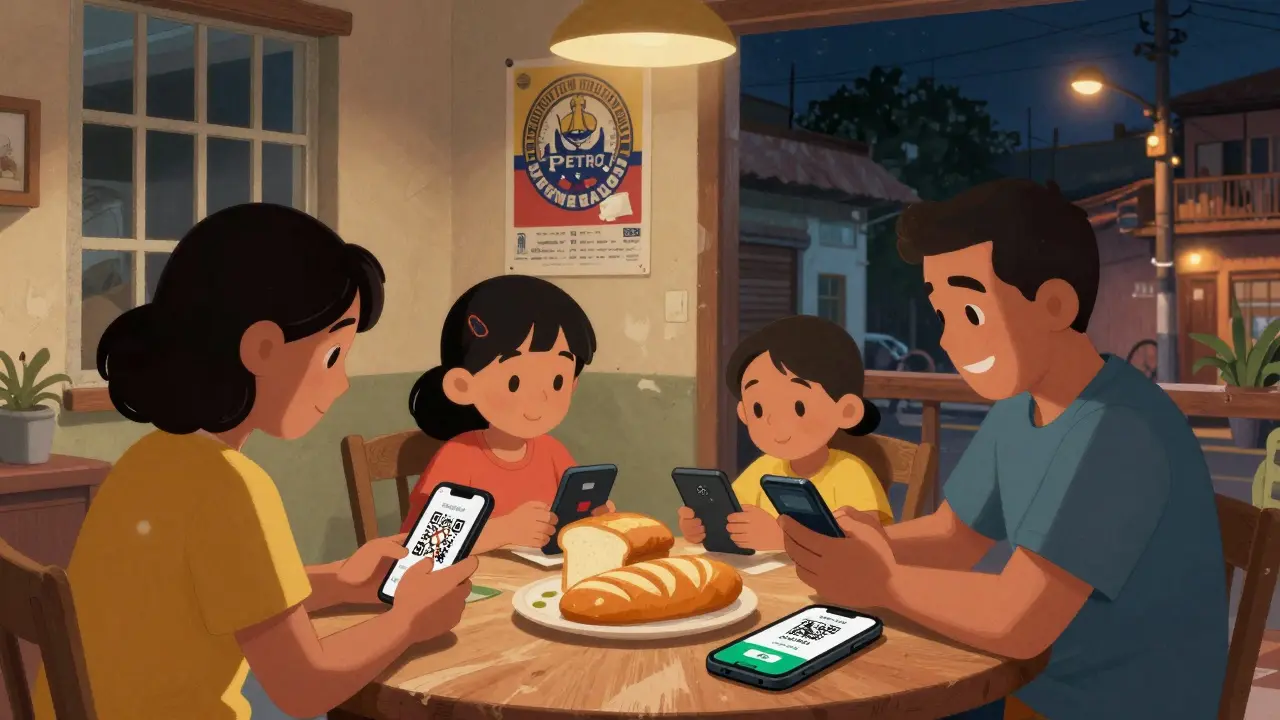
Crypto Adoption in Venezuela: How People Are Using Bitcoin and Crypto to Survive
When Venezuela’s economy crashed, crypto adoption in Venezuela, the widespread use of digital currencies like Bitcoin to bypass financial collapse. Also known as Bitcoin usage in Venezuela, it became a lifeline for millions without access to stable money or banking. With inflation hitting over 1,000,000% at its peak, the bolívar lost value faster than people could spend it. Salaries vanished overnight. Supermarkets ran out of basics. But in the shadows of Caracas and the barrios of Maracaibo, people turned to something foreign, decentralized, and unstoppable: Bitcoin, a peer-to-peer digital currency that operates without banks or government control. It didn’t need a bank account. It didn’t need approval. It just needed a phone and internet.
That’s where P2P crypto trading, direct peer-to-peer exchanges of cryptocurrency without intermediaries. Also known as crypto peer-to-peer networks, it became the backbone of survival in Venezuela. Platforms like Binance P2P and LocalBitcoins let people trade Bitcoin for cash—sometimes in person, sometimes through mobile top-ups. A teacher could sell 0.01 BTC for 500,000 bolívares and buy rice, eggs, or medicine. A mechanic could get paid in USDT and send it to family abroad. No central bank could freeze those transactions. No government could print more money to steal your savings. This wasn’t speculation—it was daily survival.
It wasn’t perfect. Internet outages killed trades. Scammers posed as buyers. Some people lost everything. But the movement kept growing. By 2025, over 20% of Venezuelan adults had used crypto in the past year. Banks stayed closed or charged insane fees. Crypto wallets? Free. Fast. Global. Even street vendors started accepting Bitcoin. The government tried to push its own digital currency, the Petro. No one trusted it. No one used it. Meanwhile, Bitcoin kept ticking. It became the de facto currency for essentials, remittances, and small business survival. And while the world watched, Venezuelans didn’t wait for permission—they built their own financial system, one transaction at a time.
Below, you’ll find real stories, tools, and warnings from people who’ve lived through this. You’ll see how crypto exchanges like Binance became essential, how scams target desperate users, and why hardware wallets matter more than ever. This isn’t about getting rich. It’s about staying alive.
Amid hyperinflation and banking collapse, Venezuelans turned to Bitcoin and USDT to survive. Over 4 million now use crypto for daily purchases, remittances, and savings-bypassing a broken financial system.
Read More