Cosmos DEX: What It Is, How It Works, and What You Need to Know
When you trade crypto on a Cosmos DEX, a decentralized exchange built on the Cosmos blockchain that lets users trade tokens directly without relying on centralized platforms. Also known as a Cosmos-based DEX, it runs on the Inter-Blockchain Communication (IBC) protocol, which lets different blockchains talk to each other securely. Unlike most DEXs that only work on one chain, like Ethereum, a Cosmos DEX lets you swap tokens from Cosmos, Osmosis, Juno, and even Bitcoin or Ethereum through bridges—all without handing your keys to anyone.
This matters because most crypto trading still happens on centralized exchanges like Binance or Coinbase, where you don’t really own your coins. With a Cosmos DEX, you hold your keys, you control your trades, and you’re not at risk if the platform gets hacked or shuts down—like what happened to BitForex or TradeOgre. The IBC protocol is the secret sauce here. It’s not just a fancy term—it’s what lets Osmosis, the most popular Cosmos DEX, connect to over 50 other chains. That means you can trade ATOM for USDT, then swap that into an Aptos token like THL, all in one wallet, without jumping between platforms.
But it’s not all smooth sailing. Many Cosmos DEXs still have low liquidity compared to Uniswap or Sushiswap, which means slippage can be high on big trades. That’s why traders who use Thala (THL) or other low-volume tokens on Cosmos often get burned. And while Cosmos DEXs are more secure than centralized exchanges, they’re not immune to exploits—front-running and MEV attacks still happen here too, just like on Ethereum. The difference? On Cosmos, you’re often trading tokens that have no real use case, like ICG or PNDR, which are just digital ghosts with zero volume. So while the tech is powerful, the market is still full of noise.
What you’ll find in these posts is real talk about what’s actually working. You’ll see reviews of exchanges that are still alive, like Kyrrex, and warnings about ones that vanished overnight, like TradeOgre. You’ll learn how to spot fake airdrops tied to Cosmos projects—because there are plenty. You’ll see how blockchain identity and regulation play into trading safely, especially in places like Nigeria or the UAE, where crypto use is growing fast. And you’ll get straight answers on whether Cosmos DEXs are worth your time in 2025, or if you’re better off sticking with something simpler.
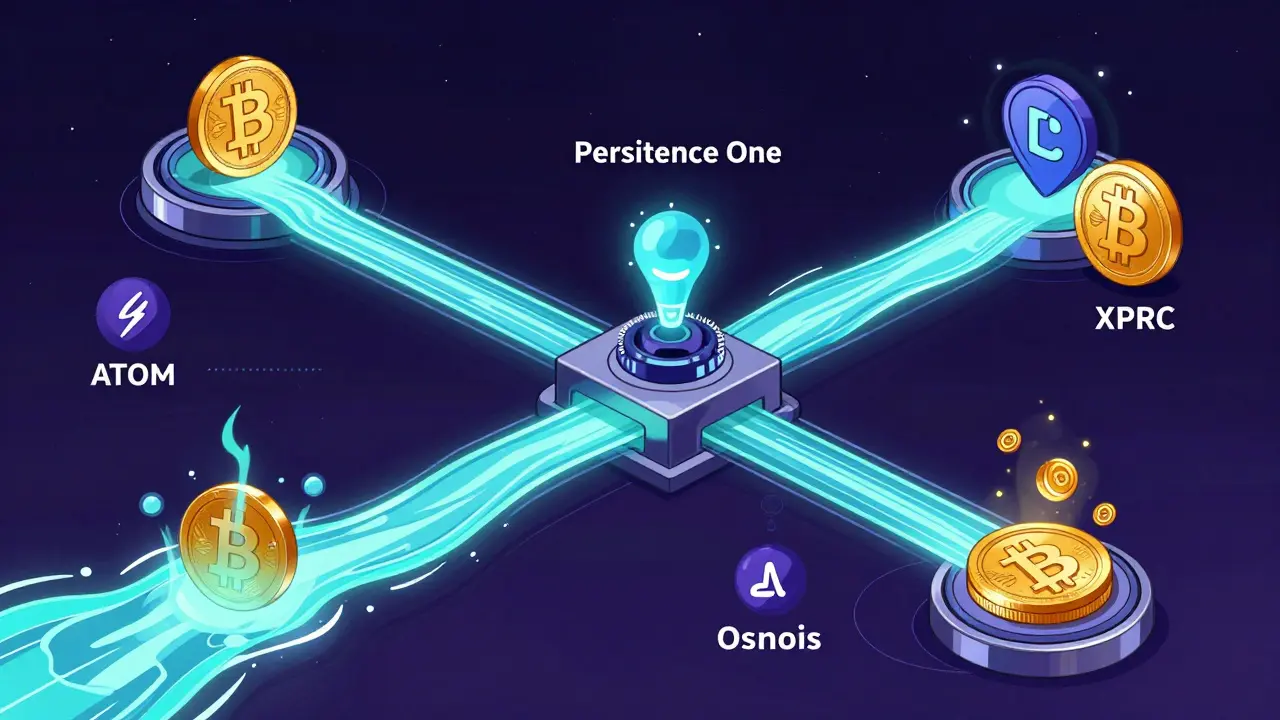
Persistence DEX is a niche decentralized exchange built for BTCFi and Cosmos ecosystem assets. With low volume but unique staking-integrated liquidity, it's ideal for XPRT holders and Bitcoin DeFi users seeking low-slippage swaps.
Read More