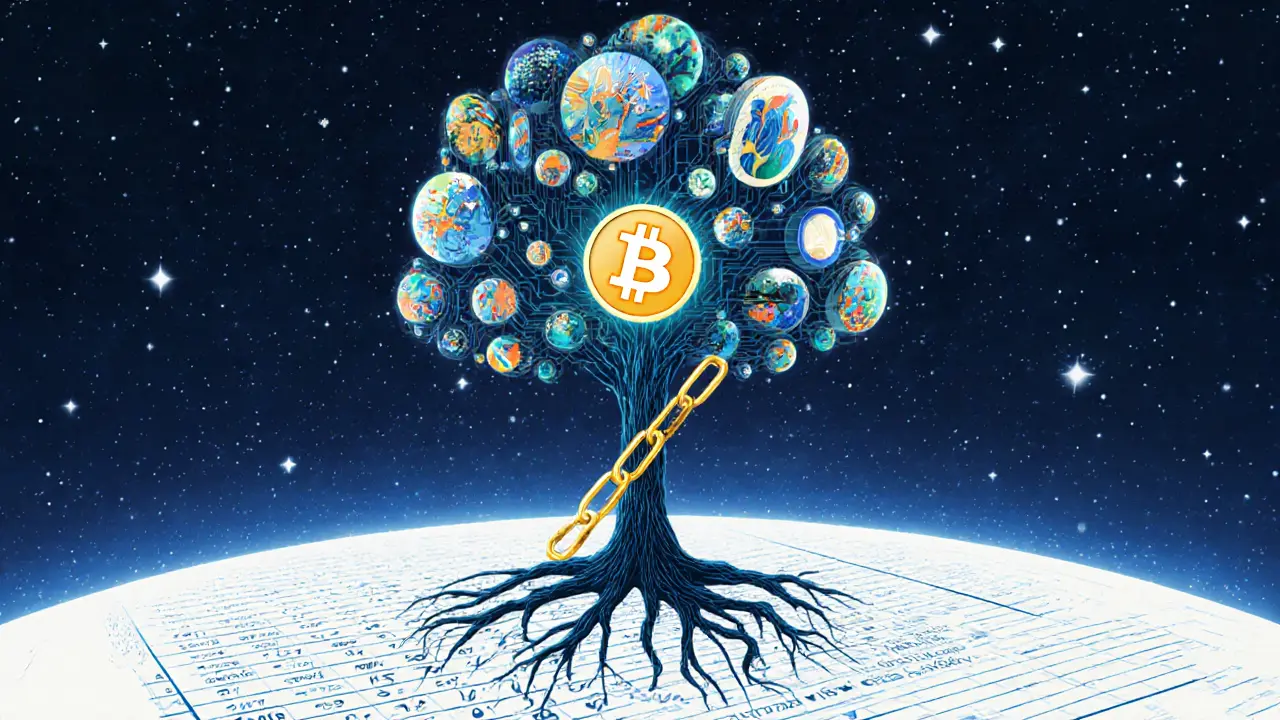
Arweave: The Permanent Blockchain for Data That Never Dies
When you upload something to the internet, it doesn’t last. Websites vanish, servers shut down, and links break. But Arweave, a blockchain designed to store data permanently with a one-time payment. Also known as the permaweb, it’s not just another crypto project—it’s a new way to keep information alive forever, no matter what happens to companies or platforms. Unlike Ethereum or Bitcoin, which focus on transactions, Arweave is built for storage. You pay once, and your file—whether it’s a website, video, or NFT metadata—is stored across thousands of computers for as long as the network exists. That’s not a promise. It’s built into the protocol.
How does it pull this off? Arweave uses a clever system called Proof of Access, a consensus mechanism that rewards miners for randomly retrieving old data blocks, proving they’re still stored. This keeps the network honest without wasting energy. Miners don’t just mine new blocks—they have to prove they’re holding onto old ones too. That’s why Arweave can offer permanent storage at a fixed cost. The Arweave token (PERM), the native currency used to pay for storage and reward miners. isn’t traded like a speculative asset—it’s the fuel that keeps the archive running.
Real projects are already using Arweave to survive when other platforms fail. NFTs hosted on Arweave don’t disappear if the marketplace shuts down. Decentralized apps built on it keep working even if the team abandons them. Even news sites and historical records are being archived there, immune to censorship or corporate decisions. That’s why you’ll find posts here about failed exchanges and dead tokens—because Arweave is the antidote to digital decay. What you’ll find below aren’t just reviews of broken platforms. They’re lessons in what happens when data isn’t permanent—and why Arweave matters more than ever.
The future of NFT data storage is shifting from static images to living digital assets powered by AI and permanent storage. Arweave, ERC-7857, and cross-chain interoperability are defining the next era of true digital ownership.
Read More