
Future of NFT Data Storage: How AI and Decentralized Networks Are Reshaping Digital Ownership
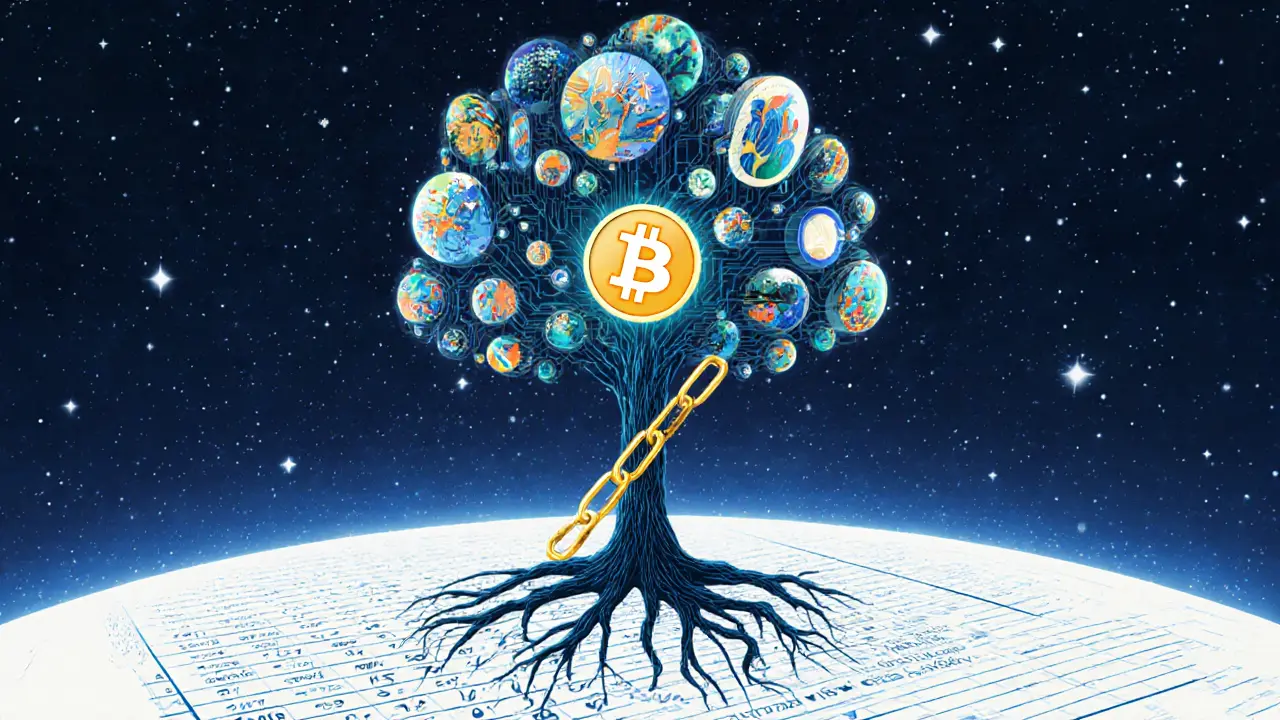
When you buy an NFT, you’re not really buying the image or video. You’re buying a digital receipt that points to something stored somewhere else - and that’s where things get messy. Most NFTs today store just a tiny link on the blockchain, while the actual artwork, music, or 3D model lives off-chain. That’s fine for a static JPEG, but what happens when your NFT starts changing? When it learns from you? When it talks back? The future of NFT data storage isn’t about bigger hard drives - it’s about building digital life.
Why On-Chain Storage Doesn’t Work Anymore
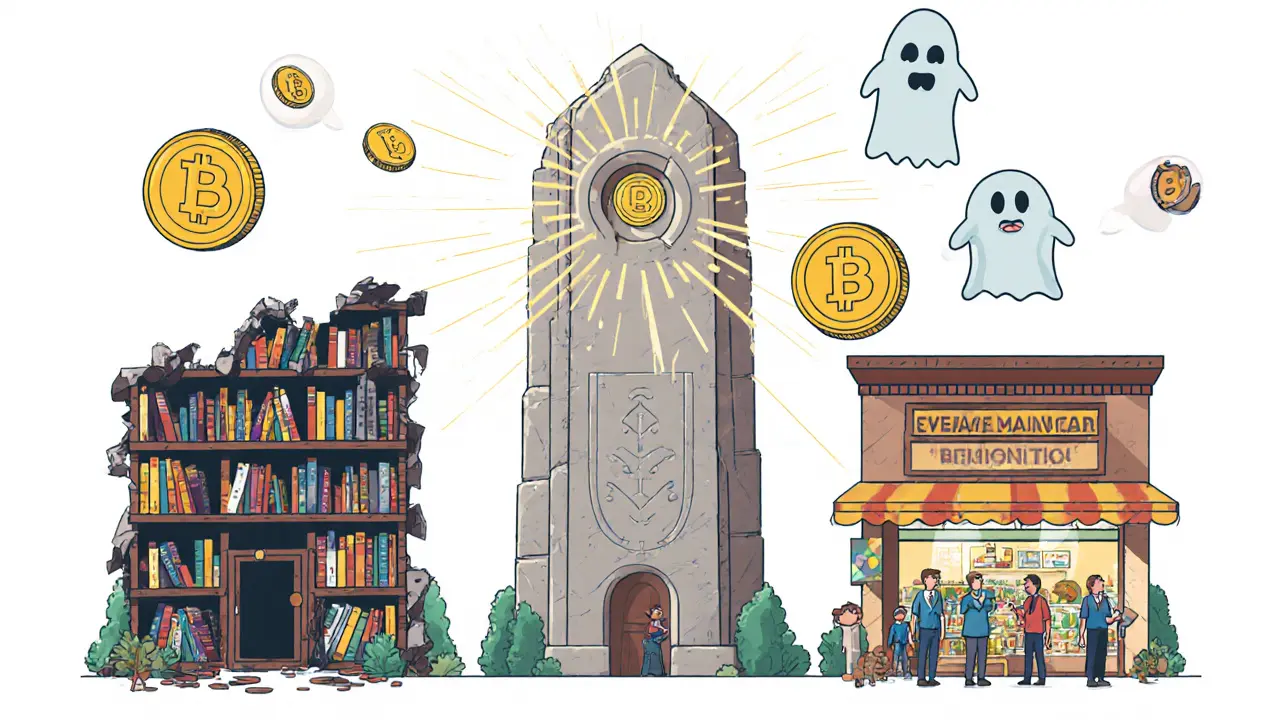
Storing a full 4K video or a 3D character model directly on Ethereum or Solana? That’s like trying to fit a shipping container into a backpack. Transaction fees would be astronomical, and the network would slow to a crawl. Even a simple 10MB file can cost hundreds of dollars to store on-chain. That’s why almost every NFT you’ve ever seen uses a hybrid system: the blockchain holds a cryptographic hash (like a digital fingerprint) and a tiny bit of metadata - name, owner, traits - while the real content sits elsewhere. This setup works... until it doesn’t. What if the server hosting your NFT’s image goes down? What if the company behind it shuts down? That’s happened before. Thousands of NFTs from early projects now show blank screens or broken links. The blockchain says you own it. But there’s nothing to see. That’s not ownership. That’s a ghost.The Three Pillars of Off-Chain Storage
Three decentralized systems are carrying the weight of NFT data today - and they’re not the same.- IPFS is like a peer-to-peer library. Files are stored across thousands of computers. If one goes offline, another can serve it. But here’s the catch: IPFS doesn’t guarantee long-term storage. If no one’s actively pinning your file, it disappears. Many NFT platforms still use IPFS - and many of those NFTs are already lost.
- Arweave takes a different approach. Pay once, store forever. You pay a small fee upfront to lock in permanent storage. Arweave’s blockchain pays miners to keep your data alive indefinitely. It’s the closest thing we have to digital immortality. Projects like Art Blocks and major gaming NFTs now use Arweave because they need their assets to outlive trends.
- Filecoin is a marketplace. You rent storage from people with spare hard drive space. It’s cheaper than Arweave for large files, but it’s not permanent. You have to keep paying. If you stop, your data gets deleted. It’s useful for temporary projects or testing, but not for something meant to last.
By 2025, Arweave is handling over 60% of high-value NFTs. Why? Because collectors and creators finally got tired of losing their digital art.
AI NFTs Are Changing Everything
The biggest shift isn’t in storage tech - it’s in what’s being stored. In 2024, AI-generated NFTs were a gimmick. In 2025, they’re the norm. Around 30% of new NFT projects now include AI elements. These aren’t just static images churned out by prompts. These are living NFTs. Imagine a digital pet NFT that learns your habits. It changes its appearance based on your mood. It reacts to your voice. It generates new art daily using your past interactions. That’s not one file. That’s hundreds of versions, logs, behavioral data, and dynamic textures - all needing to be stored, versioned, and linked back to your wallet. This is where traditional storage fails. You can’t just upload a ZIP file and call it done. You need a system that tracks changes over time, preserves history, and lets the NFT evolve without breaking its blockchain identity. Enter ERC-7857, the new standard from 0G Labs. It lets AI agents embedded in NFTs re-encrypt their data for new owners. If you sell your AI NFT, the new owner gets access to its personality and history - but only after they’re verified. The data doesn’t get copied. It gets transferred securely.Storage for AI NFTs isn’t just about space. It’s about state. It’s about continuity. It’s about trust.
Gaming Is the Real Driver
The NFT gaming market hit $472 billion in 2025. That’s not a typo. And it’s not about selling pixelated swords. It’s about true ownership. You don’t just own your sword in-game - you own it across games. You can take it from a fantasy RPG to a sci-fi shooter. You can rent it out. You can sell it to someone else on a different platform. That requires storage systems that work across blockchains. ERC-721 and ERC-1155 laid the groundwork. But now, you need interoperable storage. Your character’s appearance, stats, voice lines, and animation files must be accessible whether you’re on Ethereum, Polygon, or a private gaming chain. No more silos. No more locked-in assets. Companies like The Sandbox and Decentraland are already testing cross-chain storage gateways. They’re using Arweave as a base layer, with smart contracts that map asset IDs to their off-chain content. If you move your NFT from one world to another, the new system pulls the same data - no re-uploading, no re-creating. Just seamless transfer.Privacy, Compliance, and Enterprise Needs
NFTs aren’t just for artists and gamers anymore. Banks, universities, and brands are experimenting with them. A university might issue a diploma NFT. A brand might create a loyalty avatar that changes based on your purchases. But here’s the problem: you can’t put personal data like your name, email, or purchase history on a public blockchain. That’s illegal in most places. So where does it go? Off-chain - but securely linked. Modern NFT storage now includes zero-knowledge proofs and encrypted data vaults. The NFT on-chain says: “This person owns a verified diploma.” The real diploma data - your transcript, date, signature - lives in a private, encrypted vault. Only you (or the university) can decrypt it. The blockchain proves authenticity. The off-chain system keeps privacy. This hybrid model is becoming standard for enterprise NFTs. It’s not about hiding data. It’s about controlling access.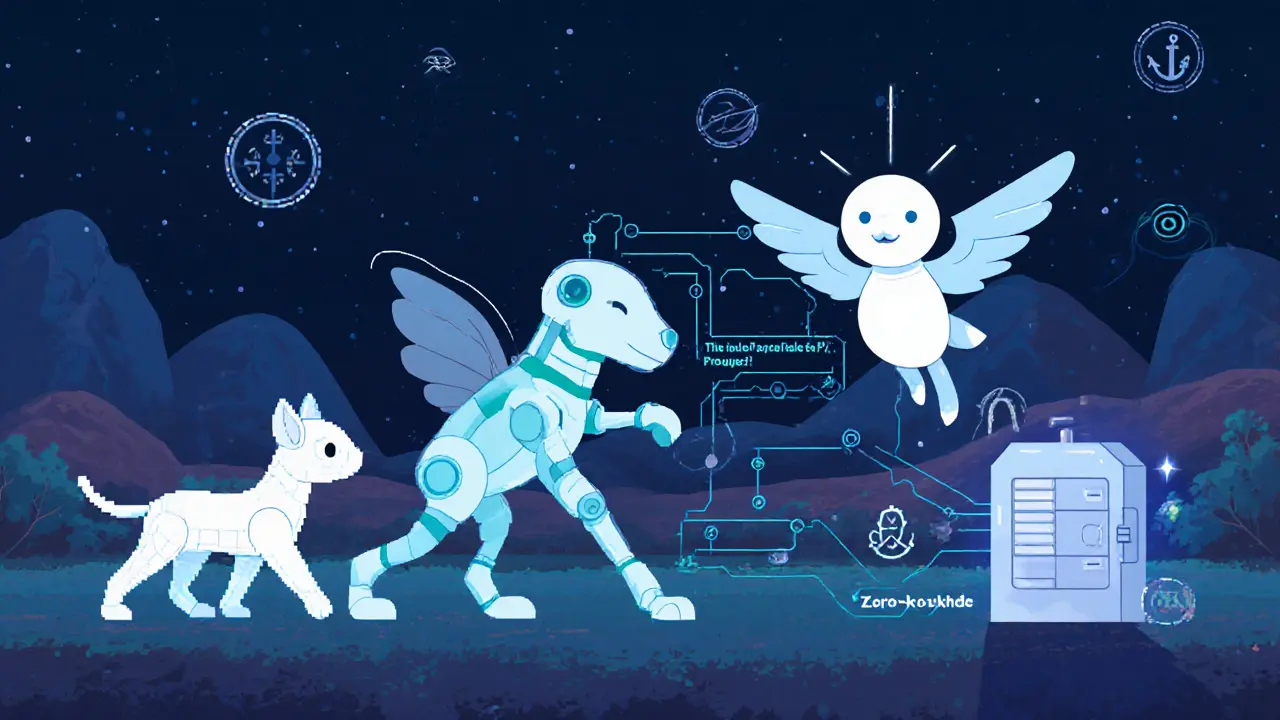
The End of Static Collectibles
The NFTs of 2021 were digital trading cards. The NFTs of 2026 are digital beings. They grow. They adapt. They interact. They earn. They learn. And they need storage that keeps up. Static images? Obsolete. Simple links to a single file? Not enough. The future belongs to systems that can handle:- Versioned data - every change to the NFT is recorded, not overwritten
- Dynamic content - real-time updates based on user behavior or external events
- Interoperable formats - assets that work across games, metaverses, and apps
- Encrypted state - personal or sensitive data kept private but verifiable
- Permanent backup - no more disappearing art
Arweave is leading in permanence. Filecoin is winning on cost. IPFS is fading unless it adds persistent pinning services. And AI is forcing every storage provider to rethink how data behaves - not just how it’s stored.
What Should You Do Now?
If you’re creating NFTs:- Use Arweave for anything meant to last - art, collectibles, diplomas, digital twins.
- Avoid IPFS unless you’re using a pinning service like Pinata or NFT.storage.
- For AI NFTs, demand ERC-7857 compliance. Ask: “How is the data transferred when sold?”
- For gaming assets, pick platforms that support cross-chain metadata.
If you’re buying NFTs:
- Check where the media is stored. Use a tool like NFTStorage.link to verify if the link is alive.
- If it’s on IPFS and you can’t find a pinning service, assume it’s at risk.
- Look for projects using Arweave - they’re betting on longevity.
The NFT market isn’t dying. It’s maturing. The hype is gone. The real builders are here. And they’re not storing JPEGs. They’re storing digital life.
Are NFTs still worth buying if the data is stored off-chain?
Yes - but only if the off-chain storage is permanent. The blockchain proves ownership. The off-chain storage proves you can actually see or use what you own. If the file disappears, your NFT becomes a placeholder. Always check if the project uses Arweave or a trusted pinning service. Avoid NFTs that rely on a single company’s server - those are risky.
What’s the difference between Arweave and IPFS for NFT storage?
IPFS is a network that finds and serves files, but doesn’t guarantee they’ll stay up. If no one is actively keeping a copy, the file vanishes. Arweave pays miners to store your data forever with a one-time fee. It’s like buying a library shelf vs. renting a bookshelf. For NFTs meant to last - art, collectibles, identity - Arweave is the only reliable choice today.
Can AI NFTs really change over time?
Yes. AI NFTs can generate new visuals, update traits based on user interaction, or even respond to real-world events. For example, an AI pet NFT might grow wings after you’ve held it for 30 days. That requires storing multiple versions of its data and linking them to its blockchain ID. ERC-7857 makes this possible by allowing secure, encrypted updates that only the owner or authorized AI agent can trigger.
Why is Filecoin not ideal for long-term NFT storage?
Filecoin is a rental market. You pay monthly or yearly to store data. If you stop paying, your files get deleted. That’s fine for temporary projects or testing, but not for digital assets meant to last decades. Arweave’s one-time payment model is far better for collectors and creators who want permanence. Filecoin’s cost savings are real - but so is the risk of losing your asset.
How do I check if my NFT’s storage is secure?
Go to the NFT’s metadata URL (usually found on OpenSea or LooksRare). Look at the link. If it starts with ipfs://, check if the project uses a pinning service like Pinata or NFT.storage. If it starts with arweave.net, it’s permanent. If it’s a regular website link like https://yourcompany.com/nft/123, it’s centralized and at high risk of disappearing. Use tools like NFTStorage.link or NFTCheck to verify.