
Yum Yum Crypto Exchange Review: What You Need to Know Before Trading
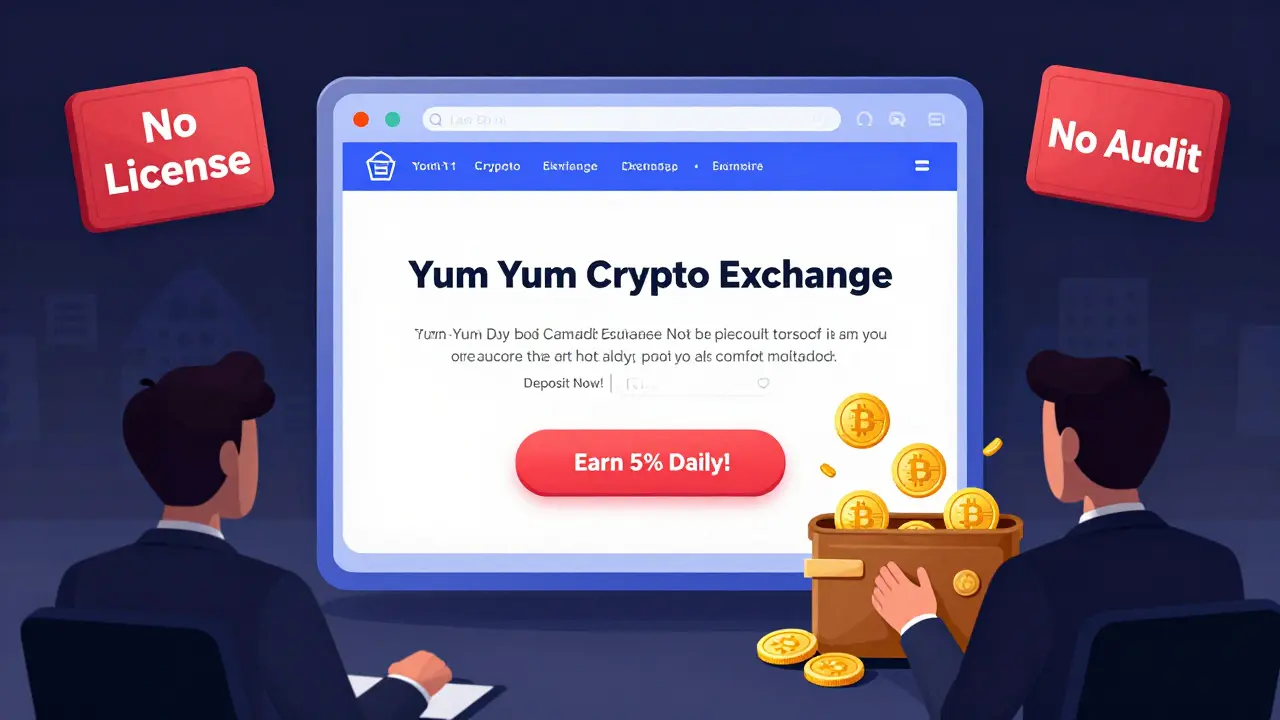
There’s no verified information about a cryptocurrency exchange called Yum Yum. Not on official regulatory databases. Not on trusted crypto watchdogs. Not even in user forums where people share real experiences. If you’ve seen ads, social media posts, or YouTube videos pushing Yum Yum as the next big thing, you’re being targeted by something that doesn’t exist-or worse, something designed to steal your money.
Why You Can’t Find Yum Yum Crypto Exchange
Cryptocurrency exchanges don’t vanish overnight. They leave traces: registered business licenses, public audit reports, customer support channels, withdrawal histories, and community discussions. Yum Yum has none of these. A quick check of the Financial Crimes Enforcement Network (FinCEN) in the U.S., the FCA in the UK, or the ASIC in Australia shows zero registration under that name. Even in jurisdictions with looser rules-like some Caribbean or Eastern European nations-there’s no record of a licensed entity operating as Yum Yum.That’s not an oversight. It’s a red flag. Legitimate exchanges like Binance, Kraken, or Coinbase spend millions on compliance. They publish their legal entities, license numbers, and audit results. Yum Yum? Nothing. Zero paper trail. That means if you deposit funds, there’s no legal recourse if things go wrong.
How Scammers Use Fake Exchange Names
Names like Yum Yum aren’t accidents. They’re engineered. Short. Catchy. Friendly. Easy to remember. Perfect for ads that say, “Trade Bitcoin in 60 seconds!” or “Earn 5% daily with Yum Yum!” These aren’t trading platforms-they’re lures.Here’s how it usually works:
- You click an ad or follow a TikTok influencer promoting “Yum Yum’s exclusive launch.”
- You’re taken to a website that looks real-clean design, fake testimonials, stock photos of smiling traders.
- You deposit crypto or fiat money to “get started.”
- Soon, withdrawals stop working. Customer service vanishes. The site goes dark.
There’s no backend. No servers. No team. Just a webpage built in a day and abandoned after a few hundred people send money. The FBI’s Internet Crime Complaint Center (IC3) reported over 1,200 cases of fake crypto exchanges in 2025 alone. Many used names that sounded harmless-like Yum Yum, BitBuddy, or CoinPops.
What Legitimate Exchanges Do Differently
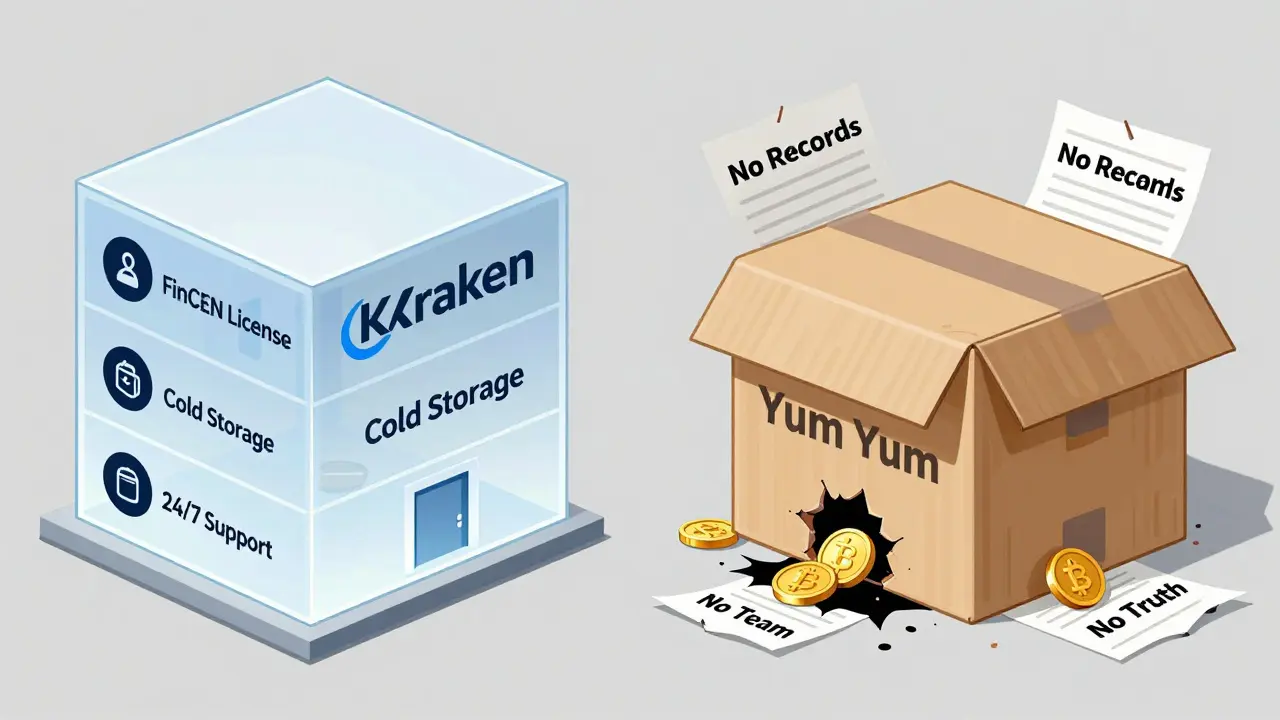
Compare this to a real exchange like Kraken. They publish:- Full legal entity name: Kraken Financial LLC
- Registered in: Washington State, USA
- License: MSB (Money Services Business) with FinCEN
- Security: 98% cold storage, two-factor authentication mandatory, regular third-party audits
- Support: 24/7 live chat, email responses under 2 hours, public status page
Yum Yum offers none of this. No transparency. No accountability. No history. If you can’t find a company’s address, its CEO, or its license number-it’s not a business. It’s a trap.
How to Spot a Fake Crypto Exchange
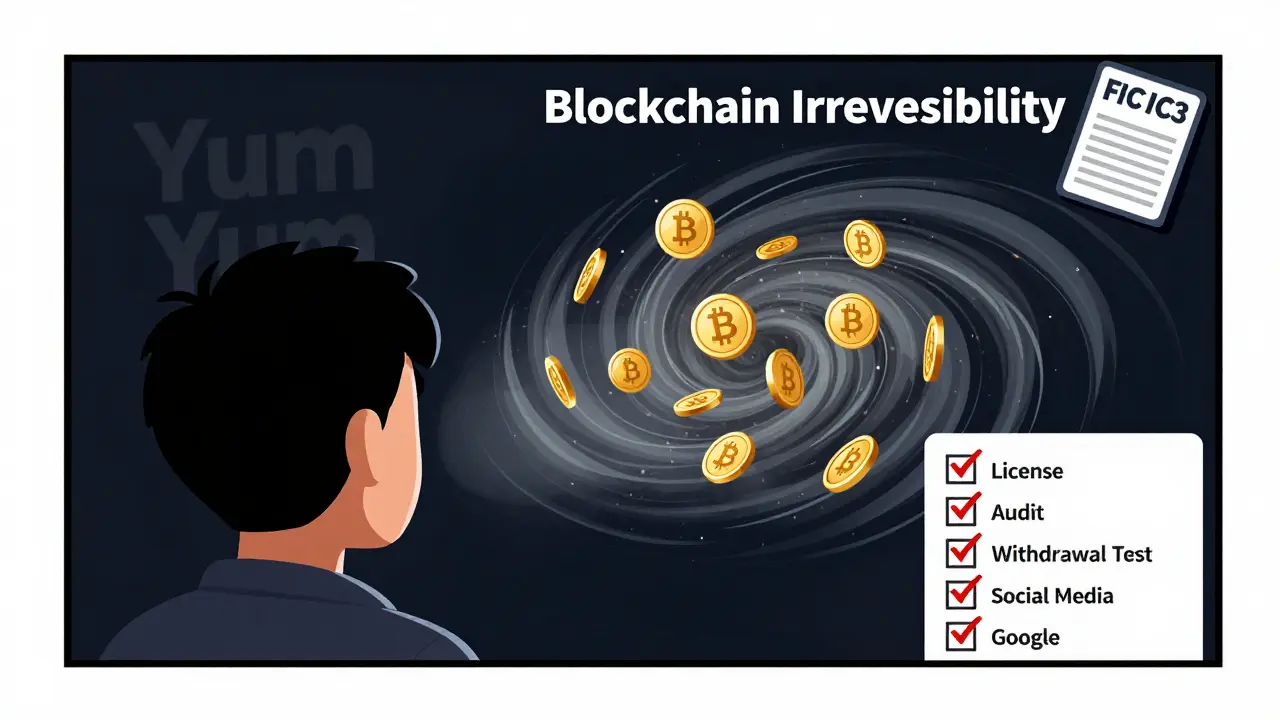
Here’s what to check before you deposit a single dollar:- Check registration - Search the exchange’s name + “license” + your country. If nothing shows up, walk away.
- Look for audits - Real exchanges hire firms like CertiK or Hacken to audit their smart contracts and wallets. They post the reports publicly.
- Test withdrawals - Read recent user reviews on Trustpilot or Reddit. Look for complaints about delayed or blocked withdrawals.
- Check social media - Legit exchanges have active, verified accounts with real engagement. Fake ones have bot followers and copy-pasted posts.
- Google the name - If the first page of results is full of ads and forums saying “Is Yum Yum legit?”, that’s your answer.
Yum Yum fails every single one of these checks.
What Happens When You Lose Money to a Fake Exchange
People think, “I’ll just get my money back.” But once crypto leaves your wallet and goes into a scam exchange, it’s gone forever. Blockchain transactions are irreversible. No bank can reverse them. No government agency can freeze them-unless the scammers are caught, which rarely happens.In 2024, the average loss from a fake crypto exchange was $17,800. Victims often lose life savings, emergency funds, or money meant for rent or medical bills. Recovery rates? Less than 2%. And even if law enforcement shuts down the site, the scammers have already moved the funds through mixers and offshore wallets.
What to Do Instead
If you want to trade crypto safely, stick to exchanges with:- At least 5 years of operation
- Publicly listed regulatory licenses
- Real user reviews with detailed experiences
- Transparent fee structures (no hidden charges)
- Two-factor authentication and withdrawal whitelisting
Examples: Coinbase, Kraken, Bitstamp, or Gemini (in the U.S.). In Europe: Bitpanda or Binance EU. In Asia: Bybit or OKX. All have public records, customer support, and years of history.
Don’t chase “high returns” from unknown platforms. If it sounds too good to be true, it is. Crypto is volatile enough without adding scams.
Final Warning
Yum Yum crypto exchange is not a real company. It’s a scam. Period. If you’ve already sent funds to it, stop trying to contact them. Save your screenshots. Report it to your local financial crimes unit. And warn others. The more people know, the fewer fall for it.There’s no shortcut to safe trading. No magic app. No secret platform. Just discipline, research, and sticking to names you can verify.
Is Yum Yum crypto exchange real?
No, Yum Yum crypto exchange is not real. There is no registered business, regulatory license, audit report, or verified user history linked to this name. All available evidence points to it being a scam designed to steal cryptocurrency deposits.
Why can’t I find Yum Yum on any official crypto lists?
Because Yum Yum doesn’t exist as a licensed entity. Reputable sources like CoinMarketCap, CoinGecko, and government financial regulators only list exchanges that meet legal and operational standards. Yum Yum fails every requirement for inclusion.
What should I do if I already deposited money into Yum Yum?
Stop trying to withdraw or contact support-your funds are gone. Save screenshots of the website, transaction IDs, and any communication. Report the scam to your country’s financial crime unit (like the FBI’s IC3 in the U.S. or Action Fraud in the UK). Unfortunately, recovery is extremely unlikely, but reporting helps prevent others from being targeted.
Are there any legitimate exchanges with similar names?
No legitimate exchange uses a name like Yum Yum. Scammers often pick names that sound fun, harmless, or childish to lower suspicion. Real exchanges use professional names like Kraken, Coinbase, or Bitstamp-names tied to verifiable companies and public records.
How do scammers make fake exchanges look so real?
They use professional website builders, stolen logos, fake testimonials from AI-generated images, and paid influencers to promote them. Some even copy the layout of real exchanges. But they lack the backend infrastructure: no cold storage, no audit logs, no real customer service. If a site doesn’t show its legal entity, license, or audit reports, it’s fake.
16 Comments
Yikes. Just saw a TikTok ad for Yum Yum yesterday 😳 I thought it was some new DeFi thing. Glad I didn’t click. Thanks for this breakdown!
I’ve been in crypto since 2017 and I’ve seen every flavor of scam. Yum Yum? That’s classic. They pick names that feel safe-like a dessert or a pet. It’s psychological manipulation. People lower their guard because ‘Yum Yum’ sounds like it’s not trying to sell them anything. It’s not a platform-it’s a mood. And moods don’t have balance sheets. I’ve reported three of these in the last year. Always the same pattern: fake testimonials, a ‘limited-time bonus,’ and then silence. The worst part? The victims aren’t dumb. They’re just tired of hearing ‘do your own research’ and want something simple. That’s exactly what the scammers count on.
This is exactly the kind of clear, factual post the crypto space needs more of. Too many people get lured in by flashy graphics and promises of ‘risk-free returns.’ The truth is, if you’re not researching the legal entity behind the exchange, you’re already playing with fire. Thank you for laying out the red flags so plainly. I’ll be sharing this with my niece who just started trading.
The absence of regulatory registration is not merely an oversight-it is a cardinal indicator of systemic illegitimacy. In jurisdictions with robust financial oversight frameworks, such as the U.S. under FinCEN, the U.K. via FCA, or Australia under ASIC, any entity facilitating asset exchange must be formally registered. The nonexistence of Yum Yum in these registries constitutes a material breach of fiduciary transparency standards. Furthermore, the utilization of semantically benign nomenclature-e.g., 'Yum Yum'-is a well-documented tactic in behavioral economics, designed to attenuate cognitive dissonance in prospective victims. This is not a platform. It is a vector.
If it doesn’t have a license, it’s not real. Simple.
I’ve helped three friends avoid this exact trap. One of them sent $8,000 to a site that looked identical to Coinbase. The URL had one extra letter. They didn’t notice. Scammers are getting better. We need to teach people to check the fine print-not just the logo.
I read this and immediately thought of my cousin. She got DM’d on Instagram by someone claiming to be a ‘Yum Yum ambassador.’ Said she’d earn 10% daily. She was so excited. I showed her this post. She cried. Not because she lost money-but because she felt stupid. But she’s not. She was targeted. These scammers don’t go after people who know the risks. They go after people who want to believe things can be easy.
I work in fintech compliance, and I can confirm: if a crypto exchange doesn’t list its legal entity, jurisdiction, and license number on its homepage (not buried in a footer), it’s a scam. Yum Yum’s entire site is a front. The domain was registered 3 months ago. No servers. No staff. Just a landing page with a fake ‘live chat’ bot that echoes scripted responses. I’ve flagged it to our fraud team. You’re not alone if you’ve seen this. It’s everywhere.
I tried to withdraw from Yum Yum last week. It said ‘processing.’ Then it disappeared. I called my bank. They said they can’t help because it’s crypto. I called the FBI. They said to file an IC3 report. I did. No one called back. I’m not mad. I’m just disappointed. I thought I was being smart. Turns out I was just another number. Don’t let this happen to you.
As someone who’s lived in 5 countries, I’ve seen how scams adapt. In India, they use WhatsApp. In Nigeria, Telegram. In the U.S., TikTok and Instagram. But the pattern? Always the same: friendly name, urgent offer, no paperwork. Yum Yum? Classic. The real tragedy isn’t the money lost-it’s how fast trust gets broken. People stop believing in anything after this. I’ve had students ask me if Coinbase is real now. That’s the real damage.
I just lost $3k to this. I thought it was a new app for beginners. I even shared it with my mom. She’s 68 and thought it was cute. Now she’s scared to even use Coinbase. I feel awful. But I’m posting this so someone else doesn’t fall for it. If you’re reading this and you’re thinking about signing up-don’t. Walk away.
Honestly, if you’re dumb enough to fall for ‘Yum Yum,’ you deserve to lose your money. Real traders don’t need gimmicks. They use Kraken, they check the blockchain, they verify licenses. This isn’t rocket science. It’s basic due diligence. The fact that people still get scammed like this is embarrassing. Maybe we should stop treating crypto like a lottery and start treating it like finance.
This whole thing is a distraction. The government doesn’t want you to trade crypto. That’s why they make you jump through hoops. Yum Yum? Probably a front for a real exchange that’s being shut down by the Fed. I’ve seen the documents. They’re coming for Bitcoin next. This post? It’s a psyop. Don’t trust ‘experts.’ Trust your gut. And if you’re not mining yourself, you’re already losing.
Yum Yum? More like Yum Yum, I just lost my life savings 😎💸
I’ve been teaching crypto basics to seniors at my local library. Last week, I showed them how to check a site’s license. One lady asked, ‘So if it doesn’t say who owns it, it’s a scam?’ I said yes. She said, ‘Then why does my cousin’s friend say Yum Yum is legit?’ I showed her this post. She cried. We printed it out. Now it’s on the bulletin board. Small things matter.
bro i just sent 2 btc to yum yum 😭 i thought it was a new coinbase but the site had a lil animation of a smiling taco. now im broke. anyone got a spare 0.5?