
YOOSHI SHIB ARMY NFT Airdrop: How It Worked and What Happened After
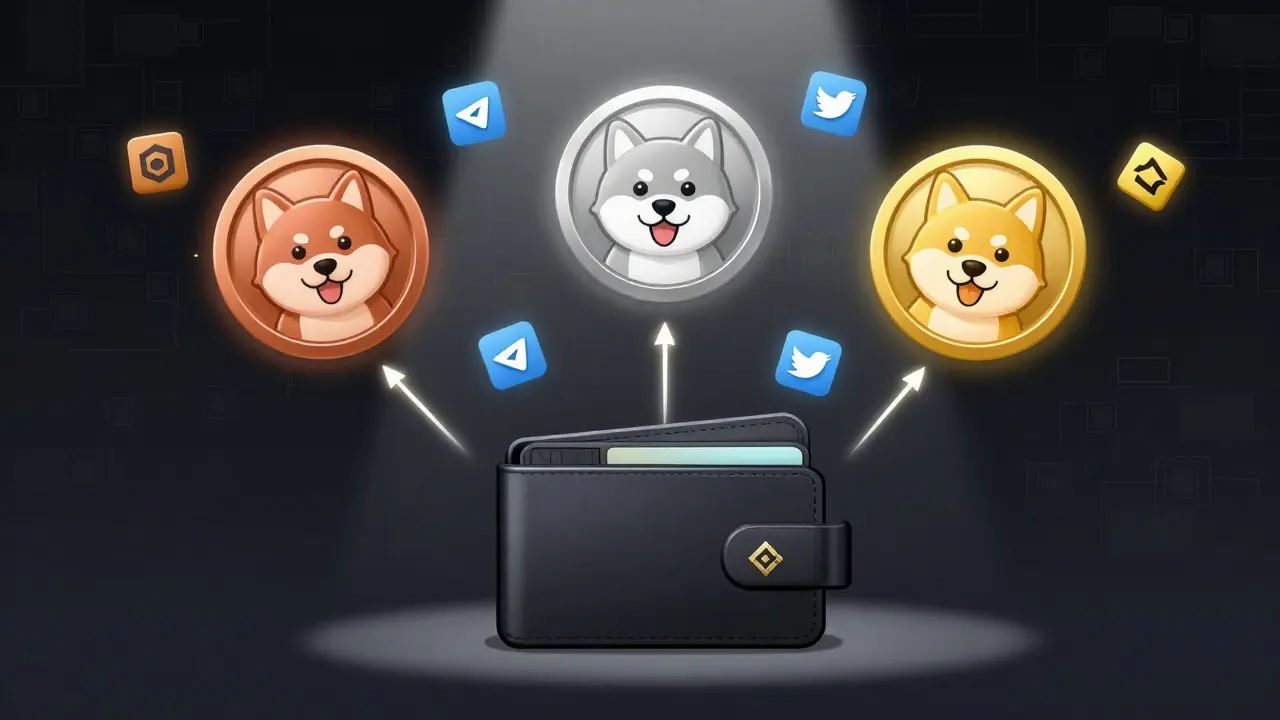
The YooShi SHIB ARMY NFT airdrop was never meant to be a long-term investment. It was a short, loud burst of community energy during the peak of the 2021 crypto boom - a way to reward early followers, build hype, and tie into the massive Shiba Inu movement. If you missed it, you missed it. But if you’re wondering whether those NFTs still mean anything today, or how the whole thing actually worked, here’s the full story - no fluff, no hype, just what happened.
How the Airdrop Actually Worked
You couldn’t just sign up and get an NFT. To qualify, you had to do two things: join the official YooShi Telegram channel and follow the CoinMarketCap account on Twitter. Then, you had to use your Binance Smart Chain (BSC) wallet address to whitelist yourself on yooshi.io. That’s it. No KYC. No credit card. No complex steps. Just wallet + social proof. The airdrop ran from May 27 to May 31, 2021 - exactly four days. That’s not a lot of time, especially when you consider how slow crypto transactions could be back then. If you didn’t claim before the clock hit 1pm UTC on May 31, your spot was gone. No extensions. No second chances. The system was built to create urgency, and it worked. The NFTs came in three tiers: Bronze, Silver, and Gold. Each had a different design, and rarity was tied to the edition number. Bronze was the most common. Gold was rare. The total supply of YooShi tokens was over 45 trillion, but the NFT collection was limited. Exact numbers weren’t published, but community reports suggested only a few thousand NFTs were distributed in total.Why Binance Smart Chain?
This wasn’t an Ethereum project. Every step happened on BSC. That meant lower fees, faster transactions, and a simpler experience for new users. If you didn’t have a BSC wallet - like MetaMask configured for Binance Smart Chain - you couldn’t participate. You had to buy BNB, swap it for BUSD or USDT, and then pay the tiny gas fee to whitelist. Most people used PancakeSwap to get the tokens they needed. BSC was the go-to network for memecoin and NFT airdrops in 2021. Ethereum was too expensive. Solana wasn’t yet trusted by the Shiba Inu crowd. BSC was fast, cheap, and already packed with users. YooShi didn’t pick it by accident. It picked it because that’s where the community was.What Did the NFTs Do?
Here’s the hard truth: they didn’t do much. No utility. No access to games. No staking rewards. No secret Discord channels. Just digital art. You got a picture. That’s it. Some people thought these NFTs would unlock future airdrops. Others hoped they’d become collectibles. A few even tried to flip them on OpenSea or LooksRare. But the secondary market never took off. There was no real demand. No floor price ever stabilized. Today, most of these NFTs sit idle in wallets - forgotten. The project didn’t fail because it was a scam. It failed because it was built on hype, not function. Back then, every crypto project promised “utility.” But very few delivered. YooShi was one of them.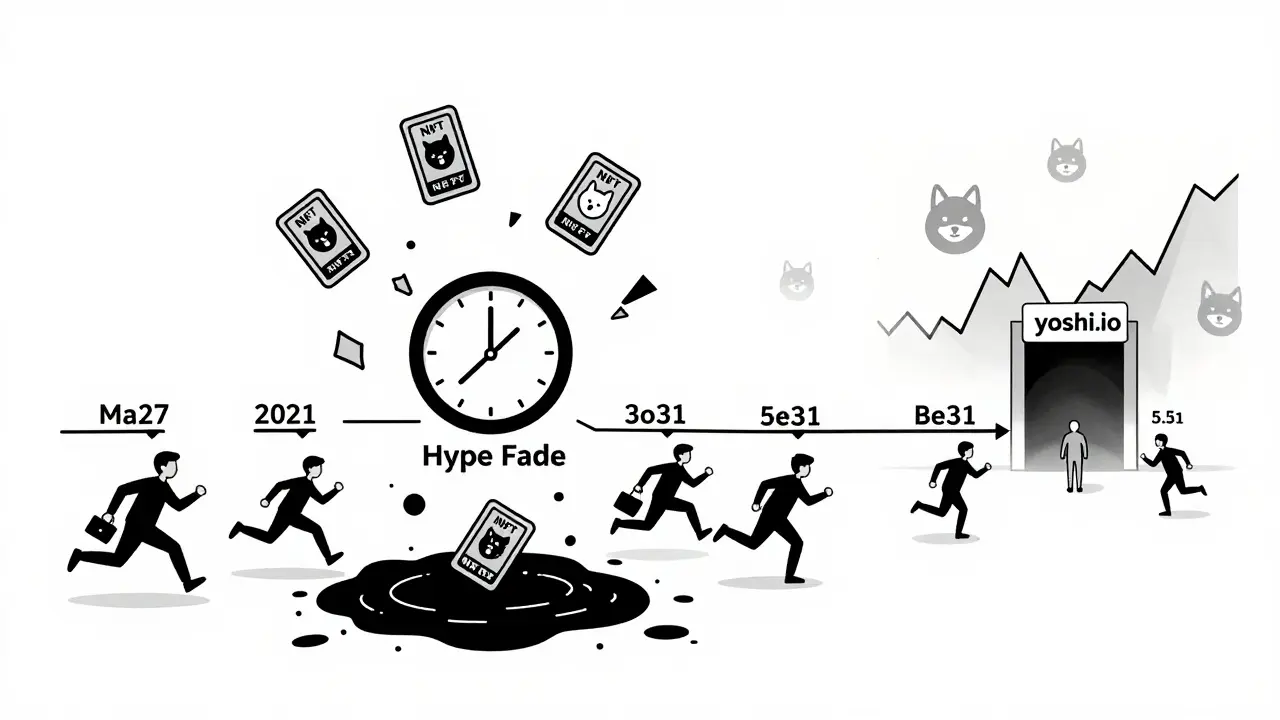
How It Tied Into the Shiba Inu Ecosystem
YooShi wasn’t just another token. It was positioned as part of the “SHIB ARMY” - the nickname for the massive group of Shiba Inu holders who believed in community-driven growth. The branding was deliberate. The logo looked like Shiba Inu’s. The language matched. Even the tone of the Telegram chats felt like an extension of the Shib community. Other Shiba Inu-related projects, like Shib Army Inferno, used NFT sales to buy back and burn SHIB tokens - reducing supply and pushing price up. YooShi didn’t do that. It didn’t burn anything. It didn’t promise token burns. It just gave out NFTs. That’s why many long-time SHIB holders didn’t take YooShi seriously. It felt like a side project. A marketing stunt. Not a core part of the ecosystem.What Happened After the Airdrop?
The hype died fast. By June 2021, the crypto market started cooling. NFT sales dropped. People moved on. YooShi’s Twitter and Telegram slowly went quiet. No major updates. No roadmap. No new NFT drops. Fast forward to 2025, and the Shiba Inu ecosystem has changed. Shibarium, the layer-2 chain, is now the focus. Gaming, DeFi, and staking are the new buzzwords. YooShi’s SHIB ARMY NFTs? They’re not mentioned anymore. Not in official blogs. Not in Shibarium updates. Not in community discussions. The project didn’t shut down. It just faded. Like hundreds of other 2021 NFT airdrops. The NFTs still exist on-chain. You can still see them in your wallet. But they’re digital ghosts.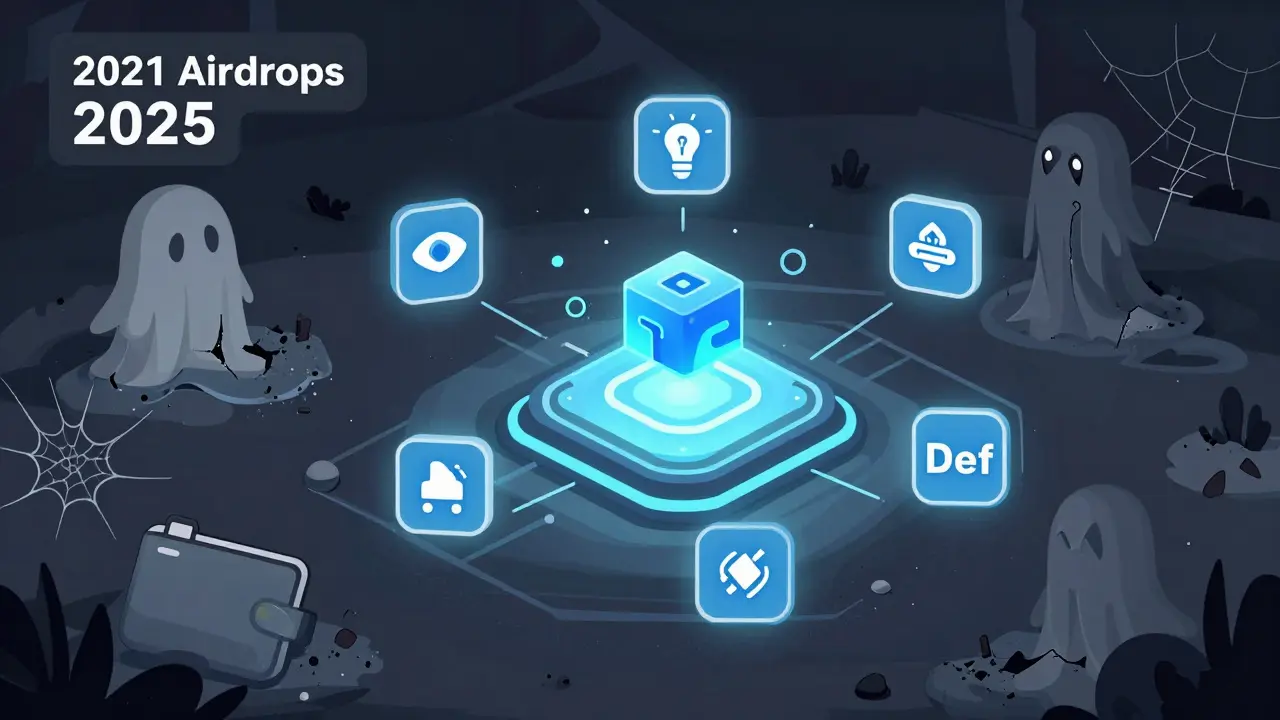
13 Comments
bro that airdrop was chaos 😂 i missed it because i was busy trying to figure out how to add BSC to metamask. now my wallet is full of dead NFTs and i still have the telegram group open in case they magically wake up. 🤡
let’s be real - this wasn’t even an airdrop, it was a distraction. They knew the hype was fading so they threw some JPEGs at the crowd to keep the engagement metrics up. No utility? No burns? No roadmap? That’s not a project, that’s a phishing page with a logo.
i still have my bronze NFT in my wallet. i look at it sometimes. it’s like a little ghost of 2021. i miss when crypto felt like a party and not a spreadsheet. 😭
this whole thing was a CIA operation to get散户 to buy BNB so they could manipulate the chain. you think it was random? nah. they needed liquidity. now they’re on Shibarium. same play, new name.
why do people still keep these NFTs? it’s like holding onto a napkin from a restaurant you ate at once. if it doesn’t do anything, just delete it. your wallet’s not a museum.
the real lesson here is that community is the only thing that outlives hype. the NFTs are dead but the people who showed up? they learned how to use wallets. they learned how to read whitepapers. they learned to ask what utility means. that’s the real airdrop
so let me get this straight - you spent 4 days chasing a JPEG because someone said ‘SHIB ARMY’ and now you’re sad? honey. you were the target market. the whole thing was designed to make you feel special so you’d buy more BNB. congrats, you got played like a ukulele
The airdrop mechanism was functionally sound for its time. The constraints of BSC gas fees and the limited duration were intentional design choices to filter for committed participants. The absence of utility does not equate to failure; it reflects the transitional nature of early-stage Web3 experimentation.
i still get excited when i see old NFTs in my wallet. not because they’re worth anything, but because they remind me of when i first believed in crypto. we were all just kids with wallets and dreams. it’s okay to miss that.
The lack of on-chain utility mechanisms and tokenomic integration rendered the NFTs as purely speculative artifacts. The absence of staking, governance, or burn mechanics disqualified them from long-term value accrual. This is textbook vaporware design.
if you got one of those NFTs you won the lottery of chaos. nobody knew what they were doing back then. we were all just trying to figure out how to not lose our money. the fact that you still have it? that’s a win
the real tragedy isn’t that the NFTs are worthless. it’s that we believed they could be meaningful. we wanted to believe in something. that’s not stupid. it’s human. the system just didn’t care enough to give us a reason to keep believing
This initiative, while lacking in long-term sustainability, served as a foundational educational experience for many participants in the decentralized finance ecosystem. The simplicity of participation and the exposure to blockchain mechanics remain valuable, irrespective of current market valuation.