
xSuter Airdrop Guide: How to Claim XSUTER Tokens in 2026

Everyone loves free money, but in the crypto world, "free" usually comes with a fine print that’s smaller than a microchip. You’ve probably heard whispers about the xSuter airdrop campaign distributing XSUTER tokens to early community members and active users. But here’s the kicker: as of September 10, 2026, official details on the exact claim mechanism are still emerging from the project's ecosystem. If you’re sitting there wondering if you’re eligible or how to actually get those tokens into your wallet without getting scammed, you’re not alone.
The reality is that many projects announce an airdrop long before they finalize the technical specifics. This gap between announcement and execution is where most people lose out-either by missing the window or by clicking a phishing link. We need to look at what we know, what we can reasonably expect based on industry standards, and how you can position yourself to capture value when the XSUTER distribution goes live. Let’s break down the likely scenarios and the steps you should take right now.
Understanding the xSuter Ecosystem Context
To understand the airdrop, you first need to understand the project behind it. xSuter operates within the broader blockchain landscape, focusing on decentralized applications that reward user participation. Unlike traditional finance where loyalty gets you a slightly better interest rate, blockchain projects use tokenomics to incentivize behavior. The XSUTER token serves as the native utility asset for this network, facilitating governance votes, transaction fees, and staking rewards.
Why does this matter for your airdrop? Because eligibility often hinges on on-chain activity. Did you interact with their testnet? Did you hold specific assets in a compatible wallet? These actions create a digital footprint that smart contracts read to determine who gets paid. Without this context, you might be checking for an airdrop that was designed only for developers or early beta testers, leaving general users empty-handed.
Likely Eligibility Criteria for XSUTER Holders
Since specific whitepaper details for the current phase are sparse, we look to comparable projects like Jupiter or Hyperliquid for heuristics. Most modern airdrops use a multi-factor scoring system. It’s rarely just "did you sign up?" anymore. Here is a breakdown of common criteria you should audit in your own history:
- Transaction Volume: High-frequency interactions with the protocol’s dApps often yield higher allocations.
- Holding Periods: Some projects reward long-term holders of partner tokens (e.g., ETH or SOL) during specific snapshot windows.
- Governance Participation: Voting on proposals in related DAOs can double your potential allocation.
- Referral Networks: Bringing new users to the platform often unlocks bonus tiers.
If you were active on similar platforms in late 2025, there is a decent chance you qualify. However, beware of "Sybil attackers"-users who created hundreds of wallets to game the system. Many projects now implement anti-Sybil filters that disqualify accounts with identical funding sources or low organic activity. If your wallet looks like a bot, you might get filtered out even if you technically meet the volume requirements.
The Claim Process: What to Expect
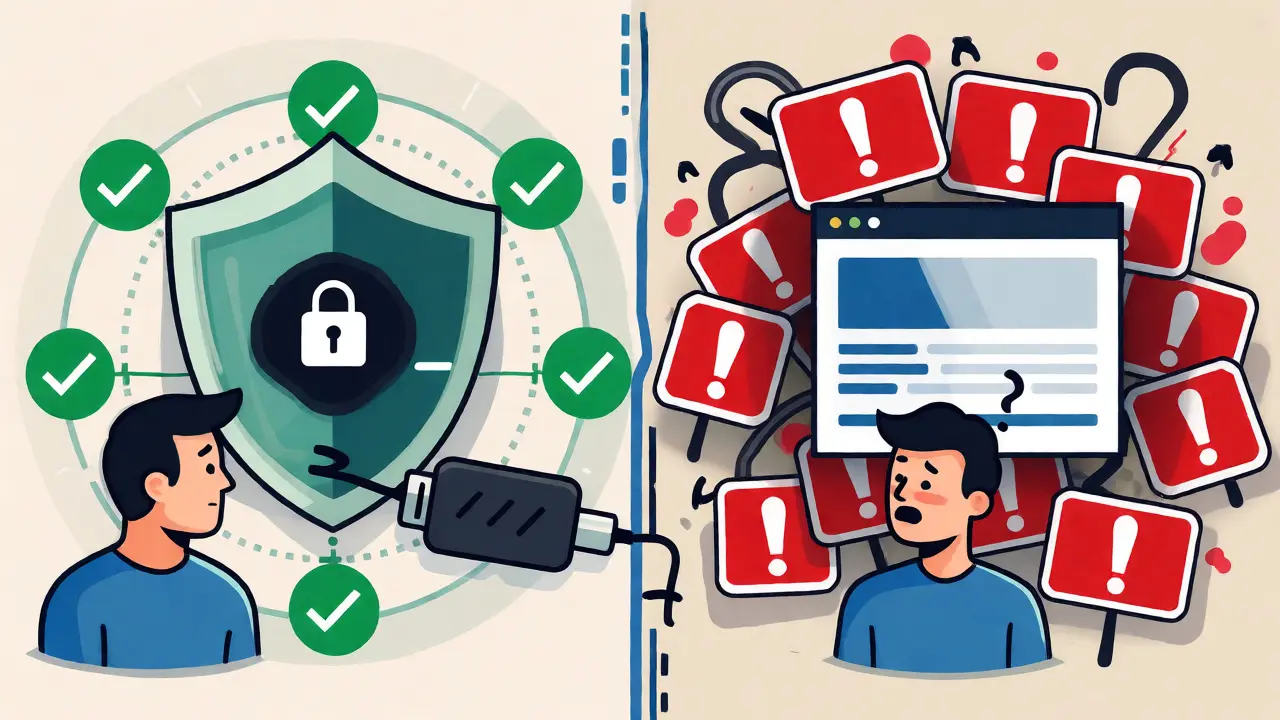
When the claim portal finally opens, speed matters, but accuracy matters more. The standard workflow for claiming an airdrop involves connecting your wallet to an official interface. Never connect your main hardware wallet directly to an unverified site. Use a burner wallet for initial connections if possible, then transfer claimed tokens to cold storage.
| Method | Security Risk | Gas Cost | Complexity |
|---|---|---|---|
| Direct Wallet Connect | Medium (Phishing risk) | High (Mainnet gas) | Low |
| Vesting Contract | Low (Smart contract verified) | Low (One-time unlock) | Medium |
| CEX Listing | Low (Custodial security) | None (Exchange covers gas) | Low |
Notice the trade-offs. Direct connection gives you immediate control but exposes you to malicious pop-ups asking for private keys. Vesting contracts lock your tokens for months, which protects the price from dumping but delays your profit-taking. Centralized exchange listings are easiest but require KYC verification, which some privacy-focused users dislike.
Avoiding Scams During the Hype Cycle
Nothing attracts scammers like a highly anticipated airdrop. In the weeks leading up to the XSUTER launch, expect fake websites mimicking the official domain. They will ask you to "verify your wallet" by signing a transaction that actually approves unlimited spending of your USDC or ETH.
Here is a simple rule of thumb: Legitimate airdrops never ask for your seed phrase. Ever. If a site asks you to paste your 12-word recovery phrase to "claim," close the tab immediately. Additionally, check the URL carefully. Typosquatting domains like `xsuter-airdrop.com` instead of `xsuter.io` are classic traps. Always navigate to the claim page via the official Twitter/X account or Discord server pinned message, not through random links sent in DMs.
Tax Implications and Record Keeping
Once you have those tokens, don’t forget the taxman. In many jurisdictions, including New Zealand and Australia, receiving an airdrop is considered taxable income at the fair market value on the day of receipt. When you later sell those tokens, you’ll also owe capital gains tax on any profit above that initial value.
Keep a detailed log. Note the date, time, and USD/NZD value of the tokens when they hit your wallet. Blockchain explorers make this easy-you can track the timestamp of the claim transaction. If you miss this step, reconstructing the cost basis years later is a nightmare. Use tools like Koinly or CoinTracker to automate this if you handle multiple airdrops.
Strategic Next Steps for Users
So, what do you do while waiting for the final confirmation? First, engage. If the xSuter team has a Discord, join it. Active community members sometimes receive exclusive bonus drops. Second, secure your assets. Ensure your MetaMask or Phantom wallet is updated and that you haven’t approved any suspicious contracts recently.
Finally, manage expectations. Not every airdrop makes you rich. Many distribute tokens worth $50-$100 after vesting. View this as a bonus for being early, not a retirement plan. If the project succeeds long-term, the real value lies in holding the token, not flipping it on day one.
Is the xSuter airdrop confirmed for all users?
Not necessarily. Eligibility is typically restricted to users who met specific on-chain activity criteria during designated snapshot periods. Check the official xSuter documentation for the exact list of qualifying actions.
How much gas fee will I pay to claim XSUTER?
This depends on the underlying blockchain network used for the claim. If it is on Ethereum, fees could range from $5 to $50 depending on congestion. If it is on a Layer-2 solution or Solana, costs are usually under $1.
Can I sell my XSUTER tokens immediately after claiming?
It depends on the vesting schedule. Some airdrops release 100% immediately, while others use linear vesting over 12-24 months. Check the tokenomics section of the project whitepaper.
What happens if I miss the claim deadline?
Unclaimed tokens are often redistributed to the community treasury or burned, effectively reducing supply. Once the deadline passes, you usually cannot recover them.
Do I need to complete KYC to receive the airdrop?
Most on-chain airdrops do not require KYC, allowing anonymous participation. However, if the airdrop is distributed via a centralized exchange, identity verification will be mandatory.