
Wrapped Asset Bridges Security: Risks, Custody Models, and How to Stay Safe
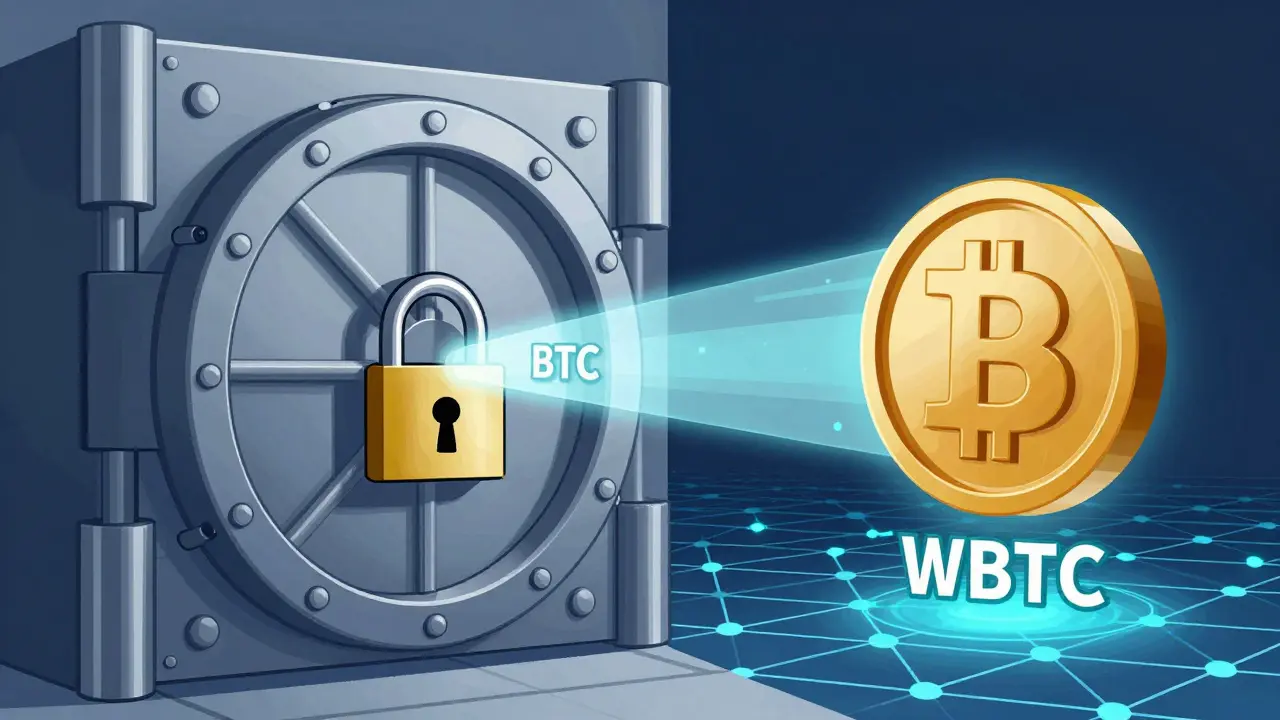
Imagine locking your house keys in a safety deposit box at a bank so you can use a photocopy of them to open your door from halfway across the world. That is essentially how wrapped asset bridges work in the crypto world. You lock your Bitcoin on its native chain, and a trusted entity mints a "wrapped" version (like WBTC) on Ethereum so you can use it in DeFi. It sounds convenient, but that convenience comes with a massive catch: you are trusting a centralized custodian with your actual money. If that custodian gets hacked, goes bankrupt, or simply decides not to honor your redemption request, your wrapped token becomes worthless paper.
The security of these bridges has been a nightmare for the industry. In 2023 alone, bridge hacks accounted for nearly $187 million in losses related to wrapped assets, according to Chainalysis. While this is down from previous years, the risk remains acute because the fundamental architecture relies on trust rather than pure code. This article breaks down exactly where the vulnerabilities lie, how modern bridges try to mitigate them, and what you need to check before sending funds across chains.
How Wrapped Asset Bridges Actually Work
To understand the security risks, you first need to understand the mechanism. Unlike atomic swaps, which trade assets directly between users without intermediaries, wrapped asset bridges rely on a custodial model. Here is the standard flow:
- Locking: You send your native asset (e.g., BTC) to a multi-signature vault controlled by a custodian or a consortium.
- Minting: The bridge contract on the target chain (e.g., Ethereum) mints an equivalent amount of wrapped tokens (WBTC) and sends them to your wallet.
- Burning: When you want your original asset back, you send the WBTC to the bridge contract to be burned.
- Unlocking: The custodian verifies the burn and releases your locked BTC from the vault.
The critical security insight here is that the wrapped token is just an IOU. Its value is entirely dependent on the custodian’s ability and willingness to redeem it. As noted by security researchers at Trail of Bits, this creates a "medium-high risk" profile compared to non-custodial solutions. The attack surface isn't just the smart contract code; it's the physical and digital security of the vault holding the real assets.
The Centralized Custody Problem
The biggest flaw in the wrapped asset model is centralization. Blockchain was built to eliminate trusted third parties, yet wrapped assets reintroduce them. The custodian holds the private keys to the underlying assets. This creates several distinct threats:
- Single Point of Failure: If the custodian’s hot wallet is compromised, attackers can drain the vault. In 2021, a single-point-of-failure in a custodial system led to a $32 million loss in wrapped tokens.
- Insider Threats: Employees or administrators with access to the multi-signature setup could collude to steal funds. This is why protocols like Fireblocks use Multi-Party Computation (MPC) to split key shards among different parties and locations.
- Regulatory Seizure: Since the assets are held in a identifiable vault, governments can freeze them. This happened to Tether and other stablecoin issuers, proving that "not your keys, not your coins" applies doubly to wrapped assets.
OreateAI’s technical review highlights that this centralized custody model fundamentally contradicts blockchain’s decentralization principles. Even if the smart contract is perfect, the human element introduces fragility. Users often don’t realize they are handing over control until something goes wrong.
Modern Security Architectures: MPC and Multi-Sig
Not all bridges are created equal. Early implementations relied on simple multi-signature wallets, which were vulnerable to social engineering and key theft. Modern institutional-grade bridges, like those used by ChainPort, have adopted more robust architectures.
| Feature | Traditional Multi-Sig | MPC + Multi-Sig (Modern) |
|---|---|---|
| Key Management | Private keys stored on devices | Keys never fully assembled; shards distributed |
| Custody Provider | Often self-hosted or single vendor | Institutional providers (Fireblocks, Gnosis Safe) |
| Attack Surface | High (key theft, phishing) | Medium (requires collusion of multiple parties) |
| Transparency | Low (opaque ownership) | Higher (audited processes, proof-of-reserves) |
Multi-Party Computation (MPC) eliminates the concept of a single private key. Instead, cryptographic operations are split across multiple servers or participants. To move funds, a threshold of signers must approve the transaction, but no single party ever sees the full key. Fireblocks, a leading provider, requires at least five independent signers with geographically distributed key shards for institutional bridges. This makes remote hacking nearly impossible unless the attacker compromises multiple physically separated systems simultaneously.
Additionally, many modern bridges use "cold storage" for the vast majority of assets, keeping only a small percentage in "hot" contracts for immediate liquidity. This limits the blast radius of any potential hack. However, as Dan Robinson warned in his 2024 presentation, this is merely "cryptographic window dressing." The fundamental risk-that you are trusting a company-remains unchanged.

Transparency and Proof of Reserves
A major pain point for users is verifying that the bridge actually holds the assets it claims to back. For every 1 WBTC in circulation, there should be 1 BTC in the vault. But how do you know?
In traditional banking, we have audits. In crypto, we have Proof of Reserves (PoR). Leading bridges like ChainPort now publish monthly attestations from independent accounting firms. These reports verify that the balance in the vault matches the total supply of minted tokens. However, Immunefi’s 2023 study found that only 37% of wrapped asset bridges publish regular PoR documentation. This opacity leaves retail users flying blind.
The industry is moving toward cryptographic verification. Newer protocols are implementing Zero-Knowledge Proofs (ZKPs) to provide "Proof of Solvency." This allows the bridge to mathematically prove it holds sufficient reserves without revealing sensitive details about individual user holdings or specific key structures. WBTC Improvement Proposal 12, implemented in late 2023, is a step in this direction. By 2025, Delphi Digital predicts 75% of bridges will use some form of ZKP-backed verification, up from just 22% in 2023.
Until then, users must rely on trust. Always check if the bridge publishes regular, third-party-audited reserve proofs. If they don’t, consider the risk too high.
Regulatory Landscape and Compliance
Security isn't just about hackers; it's also about regulators. The legal environment for wrapped assets has tightened significantly. In February 2024, the SEC took enforcement action against a bridge operator, signaling that tokens representing off-chain assets may be classified as securities. This adds a layer of compliance risk. If a bridge fails to meet regulatory standards, it could be shut down, freezing your assets indefinitely.
In Europe, the Markets in Crypto-Assets (MiCA) regulation, effective June 2024, mandates that bridge operators maintain 100% liquid reserves at all times. This is a positive step for security, as it prevents fractional reserve practices where bridges lend out the locked collateral. However, it also means bridges must undergo rigorous KYC/AML checks, potentially reducing privacy for users.
For developers building on these bridges, compliance is now a security feature. Integrating with regulated custodians like Fireblocks ensures that the infrastructure meets institutional standards, protecting both the protocol and its users from legal shutdowns.

Best Practices for Users and Developers
If you are using wrapped assets, treat them differently than native tokens. They carry counterparty risk. Here is how to minimize exposure:
- Stick to Major Protocols: Use WBTC or well-established bridges with transparent custody models (e.g., ChainPort, RenBridge). Avoid obscure new bridges offering higher yields or faster speeds, as they often cut corners on security.
- Check Audit Reports: Ensure the bridge has been audited by reputable firms like OpenZeppelin, Quantstamp, or Trail of Bits. Audits cost between $50,000 and $150,000, so if a bridge hasn’t paid for one, run away.
- Monitor Proof of Reserves: Look for monthly attestation reports. If the bridge doesn’t publish them, assume the reserves might not exist.
- Limit Exposure: Don’t keep large amounts of capital in wrapped assets longer than necessary. Unwrap and return to native chains when you’re done using DeFi.
- Use Hardware Wallets: Even if the bridge is secure, your personal wallet might not be. Never interact with bridge contracts from a phone or browser-only wallet for large transactions.
For developers, integrating with bridges that support Chainlink’s CCIP (Cross-Chain Interoperability Protocol) can add a layer of decentralized verification. This reduces reliance on a single oracle or message relayer, making the entire process more resilient to manipulation.
Conclusion: Trust Minimization vs. Convenience
Wrapped asset bridges are essential for cross-chain interoperability, but they are inherently risky. They solve the problem of liquidity fragmentation by introducing centralized points of failure. While technologies like MPC, multi-sig wallets, and zero-knowledge proofs have improved security, they cannot eliminate the core issue: you are trusting a custodian with your assets.
The trend is moving toward greater transparency and cryptographic verification, but we are not there yet. Until fully decentralized, trustless bridging becomes mainstream, users must remain vigilant. Treat wrapped assets as high-risk instruments, verify the custodian’s track record, and never invest more than you can afford to lose. In the world of blockchain, convenience often comes at the cost of sovereignty-and security is the price you pay for both.
What is the biggest security risk of wrapped asset bridges?
The biggest risk is centralized custody. The bridge operator holds the private keys to the underlying assets. If they are hacked, go bankrupt, or act maliciously, users cannot redeem their wrapped tokens, rendering them worthless.
Are WBTC bridges safe?
WBTC is considered one of the safer wrapped assets due to its multi-sig custody model involving BitGo, Kyber Network, and Ren. However, it still carries custodial risk. Recent upgrades include monthly proof-of-reserves attestations and enhanced MPC security, but it is not immune to systemic failures.
How do I verify if a bridge has enough reserves?
Look for published Proof of Reserves (PoR) reports from independent auditing firms. Leading bridges release these monthly. Some newer protocols use Zero-Knowledge Proofs (ZKPs) to cryptographically verify solvency without revealing private data.
What is MPC in bridge security?
Multi-Party Computation (MPC) is a cryptographic method that splits private keys into shards distributed across multiple parties. No single party holds the full key, eliminating single points of failure and making it extremely difficult for hackers to steal funds.
Can I unwrap my tokens instantly?
It depends on the bridge. Most reputable bridges allow instant unwrapping if the hot wallet has sufficient liquidity. However, during market stress or network congestion, delays can occur. Always check the bridge’s current status and liquidity depth before initiating large transfers.