
What is ZCore (old) (ZCR)? Supply, Price, and Risks Explained
You might have stumbled upon the ticker ZCR while browsing a crypto portfolio or an old exchange list. It looks like just another digital asset, but there is a catch. You are likely looking at "ZCore (old)," a cryptocurrency that has largely faded from active trading. Understanding what this coin actually is requires digging past the confusing name and looking at its supply numbers, its technical history, and why it sits at the bottom of market rankings today.
The Identity Crisis: Old Chain vs. New Network
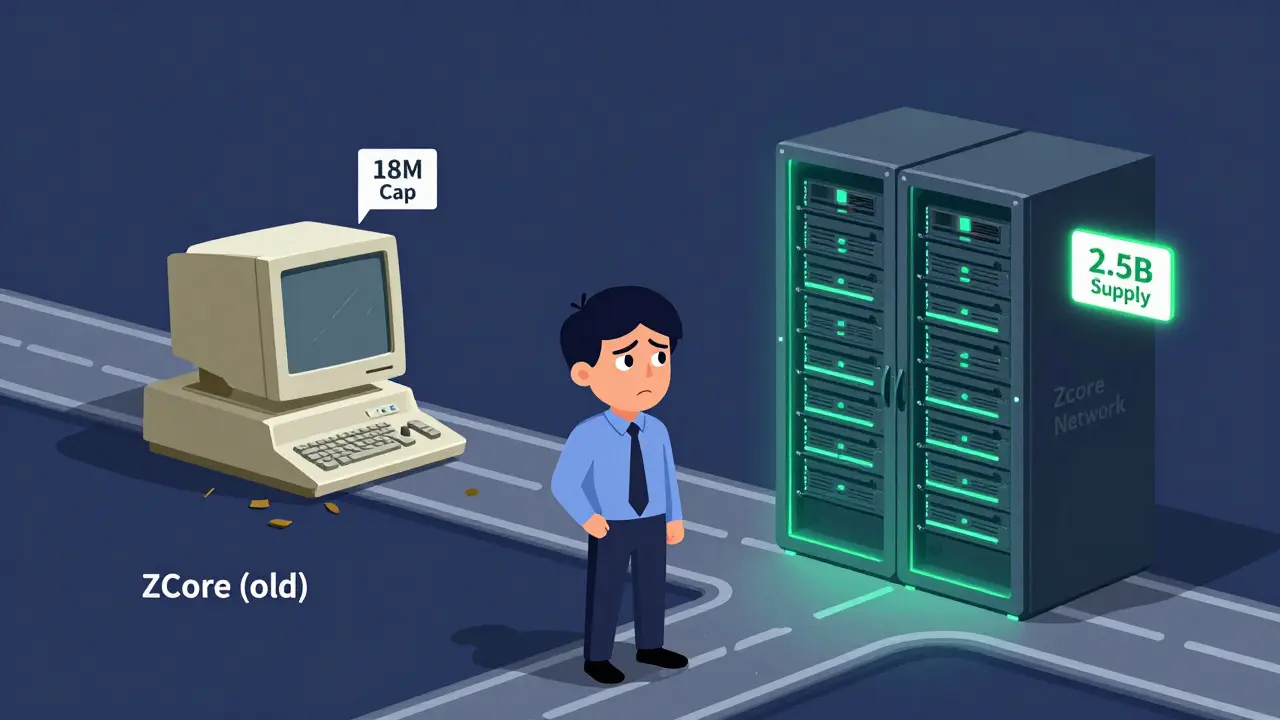
The biggest hurdle with ZCore is the name confusion. If you search for "ZCore," you will find two very different assets sharing the same ticker symbol, ZCR. This creates a significant risk for anyone trying to buy or track the price.
First, there is ZCore (old), which is a legacy proof-of-work cryptocurrency with a capped supply of 18 million units. This is the original project that launched around August 2018. It operates on its own blockchain and relies on mining. When major data aggregators like CoinMarketCap label an entry as "ZCore (old)," they are specifically referring to this smaller, older version.
Then, there is ZCore Network, which is a separate high-supply token with approximately 2.5 billion units in circulation. This newer iteration often appears in price charts showing much higher nominal volumes and different historical highs. For example, data shows an all-time high of $0.541 for ZCR in June 2021, but analysts agree this likely belongs to the ZCore Network version, not the old one. Mixing these two up can lead to serious errors in valuation and risk assessment.
| Feature | ZCore (old) | ZCore Network |
|---|---|---|
| Max Supply | 18,000,000 ZCR | ~2,490,000,000 ZCR |
| Circulating Supply | ~12.5 Million ZCR | ~2.5 Billion ZCR |
| Consensus Type | Proof-of-Work (Lyra2Z) | Token-based (likely BEP-20/ERC-20) |
| Market Status | Negligible volume / Legacy | Active tracking on some platforms |
Technical Background: How ZCore (old) Works
To understand why ZCore (old) exists, we need to look at its technology. Unlike modern tokens that sit on top of Ethereum or Solana, ZCore (old) was designed as a standalone blockchain. It uses a consensus mechanism called Proof-of-Work, which is a method where miners use computer power to validate transactions and secure the network.
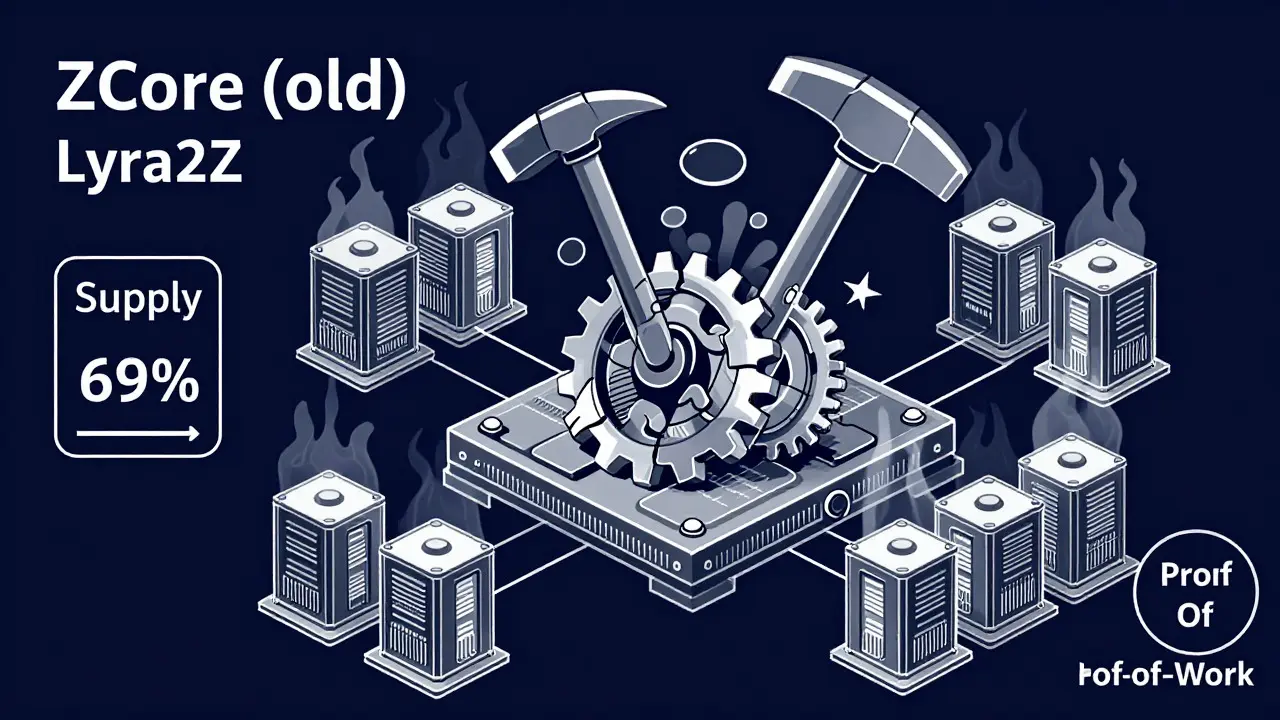
Specifically, it utilizes the Lyra2Z algorithm, which is a memory-intensive hashing algorithm designed to resist ASIC mining hardware. In the mid-2010s and early 2020s, algorithms like Lyra2Z were popular because they allowed regular users with graphics cards (GPUs) to mine coins without buying expensive specialized machines. This made ZCore (old) accessible to hobbyist miners who wanted to experiment with GPU mining.
However, there is a discrepancy in how data providers describe it. Some sources claim it operates on the Ethereum platform, while others insist it has its own chain. The most accurate view is that the original chain used Lyra2Z mining, but over time, tokenized versions may have been created on other networks like BNB Smart Chain to facilitate easier trading. Today, if you want to hold ZCore (old), you are likely interacting with a smart contract representation rather than running a node on the original Proof-of-Work chain.
Supply and Market Metrics: The Numbers Don't Lie
When evaluating any cryptocurrency, supply metrics are crucial. For ZCore (old), the numbers are consistent across multiple independent trackers like Coinpaprika, DigitalCoinPrice, and Coinbase.
- Maximum Supply: Hard-capped at 18,000,000 ZCR.
- Circulating Supply: Approximately 12,505,925 ZCR.
- Inflation Path: Since roughly 69% of the total supply is already in circulation, the remaining inflation is limited, but the lack of demand means this scarcity doesn't drive up the price.
Compare this to Bitcoin's 21 million cap or even smaller altcoins with billions in supply. ZCore (old)'s supply is relatively small, which usually suggests higher value per unit if demand existed. But here lies the problem: there is almost no demand.
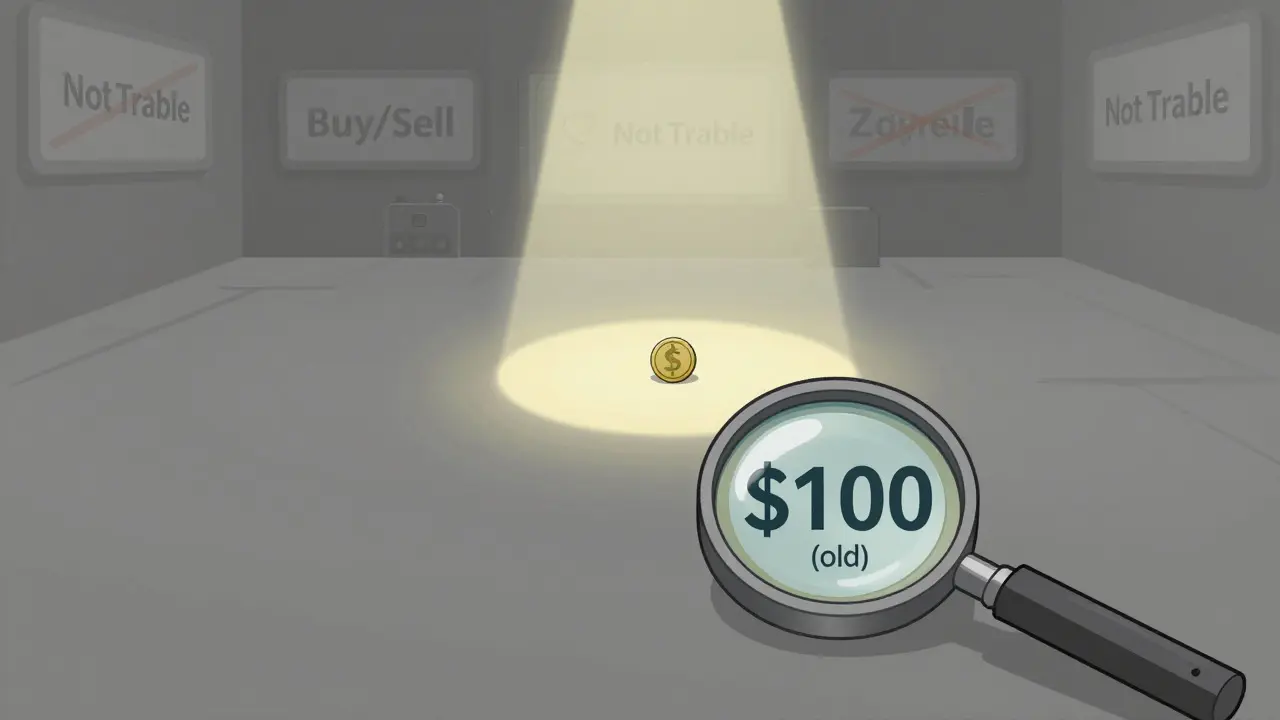
As of mid-2026, the market capitalization of ZCore (old) hovers around a staggering $78 to $81 USD. Yes, less than one hundred dollars for the entire global supply of the coin. The daily trading volume is frequently reported as $0. This indicates that the coin is effectively illiquid. If you tried to sell a large amount, you would likely crash the price to zero because there are no buyers waiting in the order book.
Price History and Volatility
Price data for micro-cap coins like ZCore (old) can be misleading. Because the base price is so low-often between $0.000006 and $0.000052-tiny movements result in massive percentage changes. You might see a headline claiming "ZCR Up 20%!" but in reality, the price only moved by a fraction of a cent.
For instance, in April 2025, the price was recorded at $0.00000645 USD. A single-day drop of 19% sounds alarming, but the absolute loss was negligible. Conversely, occasional spikes, such as a quote of €0.00005228 on Kriptomat in July 2026, represent bursts of activity on specific retail platforms rather than broad market adoption.
The lack of institutional interest is clear. Major exchanges like Coinbase and Crypto.com list the coin for informational purposes but explicitly state it is "not tradable" on their platforms. This means you cannot simply click "buy" on a major app. You have to rely on niche Web3 wallets or smaller, less regulated venues.
How to Buy and Store ZCore (old)
If you still want to acquire ZCore (old) for experimentation or collection, the process is more complex than buying Bitcoin or Ethereum. Since it is not available on major centralized exchanges, you need to use a Web3 wallet.
- Set up a Wallet: Use a wallet like MetaMask that supports BNB Smart Chain or Ethereum, depending on which token version you are targeting.
- Add the Token: Go to the "Import Tokens" section. You will need the specific smart contract address for ZCore (old). Sites like Holder.io provide these addresses (e.g., starting with 0x0e8fe6 on BNB Chain).
- Purchase via On-Ramp: Platforms like Kriptomat allow purchases using SEPA transfers, Visa, or MasterCard, bridging your fiat currency into the token.
- Verify the Contract: Always double-check the contract address. Because the ticker ZCR is shared with ZCore Network, importing the wrong contract means you are buying the wrong asset.
Storage is straightforward once you have the token in your wallet, but remember that since the underlying Proof-of-Work chain is largely dormant, the value is tied entirely to the token's presence on secondary chains.
Risks and Future Outlook
Is ZCore (old) a good investment? Based on current data, the answer leans heavily toward caution. Here are the primary risks:
- Liquidity Risk: With near-zero trading volume, exiting a position can be impossible without significant slippage.
- Confusion Risk: The overlap with ZCore Network means easy mistakes in buying or tracking performance.
- Development Stagnation: There are no recent updates, GitHub commits, or roadmap announcements for the old chain. It appears to be a "zombie" project-technically alive but functionally dead.
- Exchange Delisting: As aggregators clean up their databases, assets with no volume are often removed or marked as inactive, further reducing visibility.
The future outlook for ZCore (old) is minimal. It serves as a relic of the 2018 altcoin boom, a time when many projects launched with ambitious goals but failed to sustain community interest or utility. While the brand name "ZCore" lives on through the newer network token, the original ZCR coin remains a curiosity for collectors rather than a viable financial instrument.
What is the difference between ZCore (old) and ZCore Network?
ZCore (old) is the original proof-of-work coin with a max supply of 18 million ZCR. ZCore Network is a newer token version with a supply of roughly 2.5 billion ZCR. They share the ticker ZCR but have vastly different economics and histories.
Can I mine ZCore (old) today?
Technically, yes, using the Lyra2Z algorithm with GPU hardware. However, due to extremely low rewards and negligible block value, mining is not economically viable for most users.
Where can I buy ZCR?
Major exchanges like Coinbase do not support direct trading. You typically need to use Web3 wallets and purchase via on-ramps on platforms like Kriptomat or swap on decentralized exchanges if liquidity pools exist.
Why is the market cap of ZCore (old) so low?
The market cap is under $100 because there is almost no trading volume or demand. The price is determined by tiny, sporadic trades rather than broad market participation.
Is ZCore (old) a scam?
There is no evidence of a malicious scam; it appears to be a legitimate but abandoned project. The risk comes from its lack of utility and liquidity, making it a poor store of value rather than a fraudulent scheme.