
What is Tutellus (TUT)? A Deep Dive into the Education Token

Imagine a world where your online course doesn't just give you a certificate, but actually pays you to learn or gives you a stake in the platform's growth. That is the core idea behind Tutellus (TUT) is a cryptocurrency utility token designed to power an educational ecosystem that blends traditional online learning with blockchain incentives. Unlike many crypto projects that launch with nothing but a whitepaper and a dream, Tutellus is already a functioning platform with a massive user base, primarily serving the Spanish-speaking world.
The Real-World Engine Behind the Token
Most people entering the crypto space are used to "ghost projects"-coins that promise a revolution but have no actual product. Tutellus is different. It is an operational collaborative educational platform that has already attracted over 1.8 million users across 160 different countries. With a library of more than 180,000 video courses, it functions as a massive knowledge hub.
The platform focuses heavily on professional cryptocurrency content, offering everything from basic introductions to intensive bootcamps. By integrating blockchain, they aren't just teaching about the tech; they are using it to manage how students and teachers interact. This creates a bridge between the massive EdTech industry and the decentralized world of Web3.
How the TUT Token Actually Works
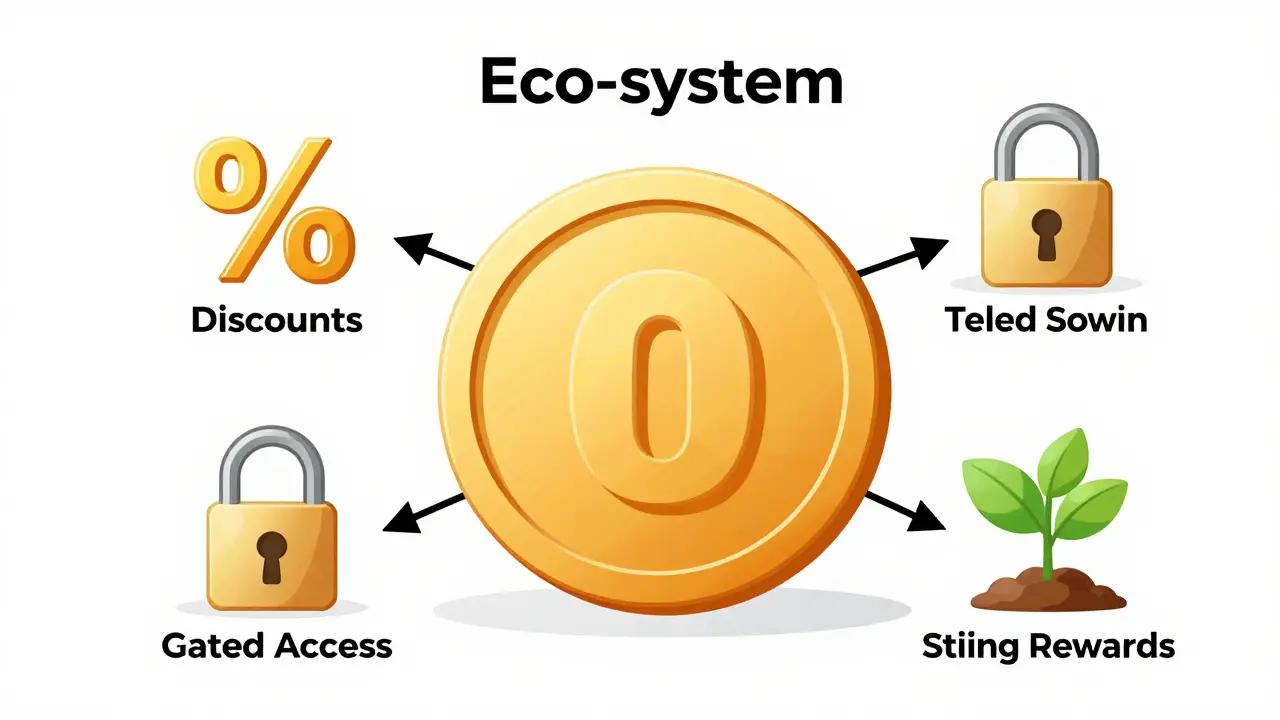
If you're wondering why a learning platform needs its own coin, it comes down to incentives. The TUT token acts as the fuel for the entire ecosystem. It isn't just for trading on exchanges; it has several concrete uses that drive demand within the app.
- Cost Savings: Users get a 10% discount when they pay for courses using TUT tokens instead of traditional fiat currency.
- Gated Access: Some of the most valuable products and services on the platform are restricted. To get in, you have to stake your tokens, meaning you lock them up to prove your commitment.
- Hiring Services: If you want to hire a professional or a tutor through the Tutellus ecosystem, the transaction requires TUT.
- Passive Income: Through DeFi mechanisms like staking and farming, holders can earn a yield on their tokens, effectively getting paid to hold the asset.
Technical Infrastructure and Accessibility
From a technical standpoint, Tutellus doesn't try to reinvent the wheel. It operates on the Polygon network, which is an Ethereum sidechain. This is a smart move for a few reasons. First, it keeps transaction fees low, which is essential for a platform where users might be making small payments for courses.
Because it lives on Polygon, it's incredibly easy for anyone already in the crypto space to use. You don't need a special "Tutellus Wallet"; any standard MetaMask wallet works perfectly. This removes a huge barrier to entry for students who are already familiar with Ethereum-based tools.
| Attribute | Value/Detail |
|---|---|
| Network | Polygon (Ethereum Sidechain) |
| Launch Year | 2021 |
| User Base | 1.8 Million+ |
| Course Volume | 180,000+ Video Courses |
| Primary Wallet | MetaMask compatible |
| Key Incentives | 10% discount on fiat payments |
The Hard Truth: Market Performance and Risks
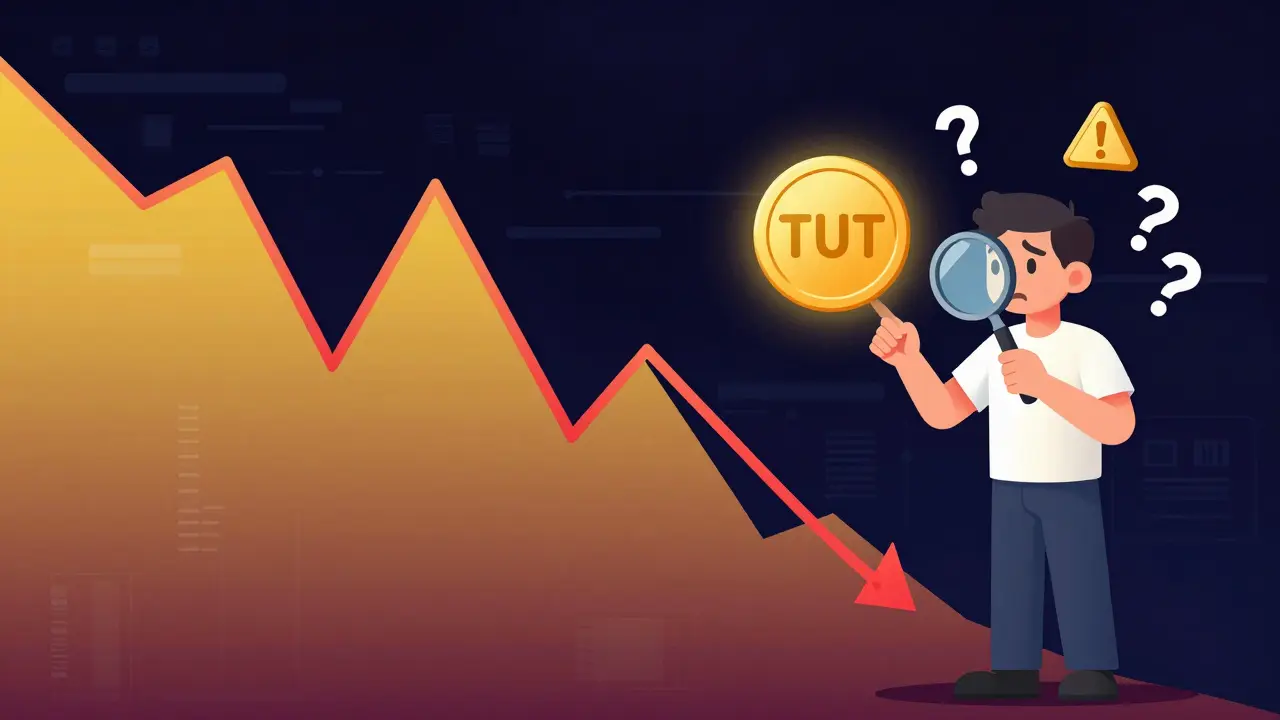
While the platform's utility is impressive, the Tutellus (TUT) crypto coin has had a brutal journey on the charts. If you're looking at this as an investment, you need to see the full picture. At its all-time high, TUT reached a value of approximately S$1.44. Since then, it has crashed significantly, with current prices hovering between $0.009 and $0.014 USD.
This represents a depreciation of roughly 99% from its peak. Why did this happen? It's a common pattern in 2021-era tokens where early hype drove prices to unsustainable levels before the market corrected. For a new user, this means the token is currently extremely volatile and carries high risk.
Liquidity is another major concern. Trading volumes are often very low-sometimes as low as $20,000 in a 24-hour period. This means that if you hold a large amount of TUT, it might be difficult to sell your position quickly without causing the price to drop even further. Additionally, it's available on very few exchanges, with SushiSwap being one of the few places where you can find it.
Who is this for?
If you are a student or a lifelong learner who wants a discount on professional courses and doesn't mind the risk of a volatile asset, TUT provides a direct way to interact with a massive educational library. It's a tool for the "Learn-to-Earn" movement.
However, if you are a cautious investor, the red flags are hard to ignore. The discrepancy in supply data across major trackers like CoinMarketCap and Coinbase-where some report zero circulation and others report 90 million-suggests a lack of transparent communication regarding the token's economics. Until the supply data is standardized and liquidity increases, it remains a speculative asset.
Is Tutellus a scam or a real project?
Tutellus is a real, operational educational platform with nearly 2 million users and thousands of courses. However, like many crypto assets, its token (TUT) has experienced extreme price volatility and a massive drop from its peak value. While the platform is legitimate, the token remains a high-risk financial asset.
How can I buy TUT tokens?
TUT is primarily available on decentralized exchanges (DEXs) such as SushiSwap. Because it runs on the Polygon network, you will need a compatible wallet like MetaMask and some Polygon (MATIC) to pay for the transaction gas fees.
What happens if I stake my TUT tokens?
Staking allows you to lock your tokens in the ecosystem to earn rewards or unlock exclusive access to specific courses and products on the Tutellus platform. It is essentially a way to earn passive income while supporting the network.
Why is the price so much lower than the all-time high?
TUT suffered a common fate for many tokens launched during the 2021 bull market. Initial speculative hype pushed the price to S$1.44, but as the market cooled and the reality of token liquidity and distribution set in, the price corrected sharply, losing about 99% of its value.
Do I need a special wallet for Tutellus?
No, you don't. Since TUT is built on the Polygon network, any Ethereum-compatible wallet works. MetaMask is the most common choice for users to store and manage their TUT tokens.
19 Comments
Polygon sidechain is definitely the play here for minimizing gas costs on micro-transactions though the liquidity depth on SushiSwap looks pretty thin honestly
Omg a 99% drop? That is literally a nightmare! I can't even imagine waking up and seeing my portfolio basically deleted like that. Absolute tragedy!
It is quite fascinating how we try to quantify the value of knowledge through these digital tokens, and while the price crash is a stark reminder of market volatility, perhaps the real utility lies in the community of learners who are actually using the platform to better themselves regardless of the token price fluctuations occurring in the background of the actual educational experience
1.8 million users is just insane!! This is the kind of mass adopshun we need for Web3 to actually work in the real world and not just be for degens trading jpegs all day
Honestly it's just typical. These projects lure people in with a 'vision' and then the whales dump on the retail investors. It's ethically bankrupt to have such a massive gap in supply data while people are still trying to buy in
If you're tryin to buy, just make sure you have some MATIC for gas or the transaccion will fail. I did that mistake last month and it's super frustratin
Just a heads up for everyone, the 10% discount is cool but if the token keeps dropping, that discount might actually cost you more in the long run if you're holding TUT
The lack of transparency regarding the circulating supply is a grave oversight. One must wonder if the management is merely incompetent or deliberately obfuscating the truth to maintain a facade of stability.
Oh sure, let's all just ignore the 99% crash and pretend the 'Learn-to-Earn' model is totally revolutionary. I'm sure the passive income is just amazing right now
Typical Westerners obsessing over price. In India we understand that true knowlege is the only asset. This platform is just a basic tool but the tokenomics are laughable to anyone with a real brain
Focus on the skills, not the coin. Learning is the primary goal here.
Totally a psy-op to get us into a controlled learning environment 🙄 Typical blockchain 'solution' for a problem that doesn't exist. Who even uses SushiSwap anymore? 😂🤡
The Polygon network is merely a veil for deeper centralization. We must question who truly controls the validators and why this specific 'educational' tool is being pushed upon the masses without sufficient oversight from sovereign entities
I find the integration of MetaMask to be quite efficient, as it streamlines the user experience considerably... It is indeed a practical approach!!
I'm really glad to see more educational content coming to the blockchain space! It's all about growth and helping each other out 😊
it's nice that they are reaching the spanish speaking world and making education more accessible across different countries
One might suggest that the current valuation presents a potential entry point for those with a long-term vision of the educational sector's evolution, provided one accepts the inherent risks involved.
Slippage on SushiSwap is a joke man. You try to swap some TUT and you get absolutely wrecked by the low liquidity. It's basically a honeypot at this point for anyone trying to exit a big position. Total rug-pull vibes even if the site actually works
YASSS!!!! Imagine getting paid to learn!!! This is the energy we need in 2024!!! Just keep pushing forward everyone no matter the price!!!