
What is the Genesis Block in Blockchain?
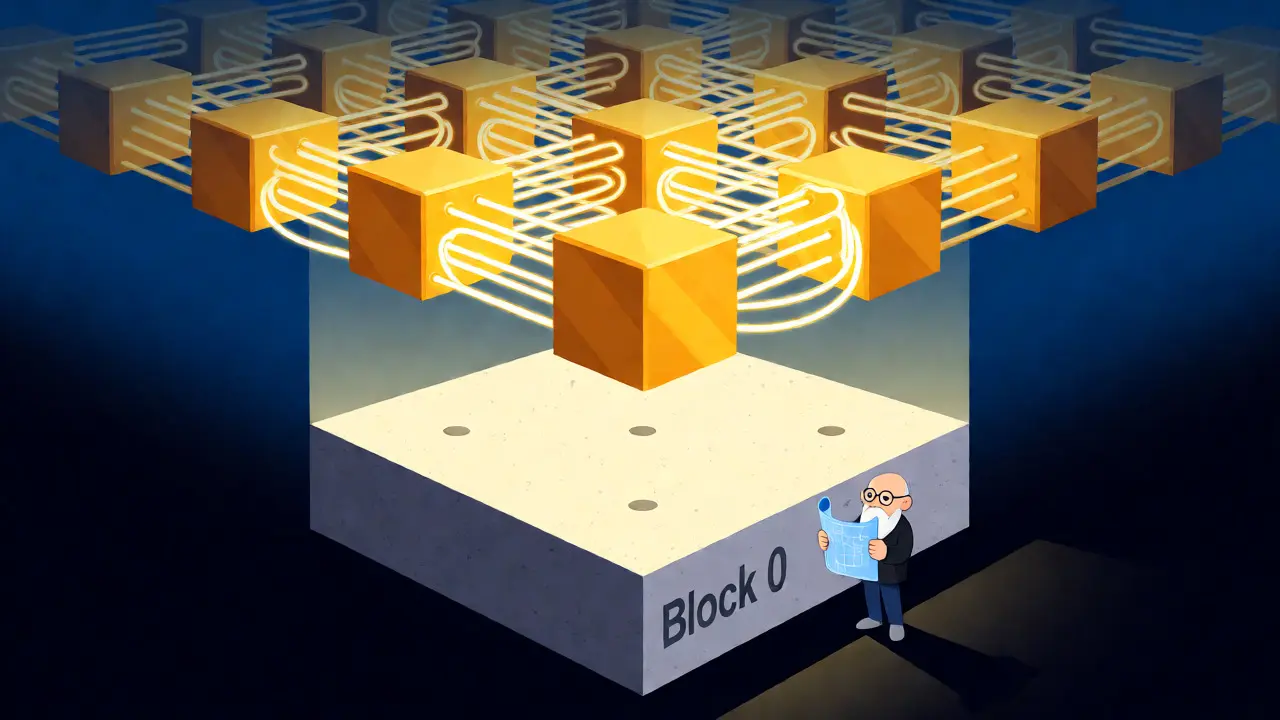
You open a new crypto wallet. You buy some Bitcoin or BTC. The transaction gets confirmed. But have you ever wondered where that chain of data actually started? It didn't just appear out of thin air. Every single block in every major blockchain traces its lineage back to one specific, hard-coded starting point: the Genesis Block, also known as Block 0.
This isn't just some technical footnote for geeks. The genesis block is the anchor of trust for the entire network. Without it, there’s no history, no consensus, and no way to verify if your coins are real. If you’re trying to understand how decentralized ledgers actually work under the hood, you need to start here. Let's break down what this block is, why it’s different from every other block, and why its immutability matters more than you think.
The Origin Story: How Block 0 Was Born
Imagine building a house. You can’t put up walls without a foundation. In blockchain terms, the genesis block is that concrete slab poured before anything else exists. For Bitcoin, this moment happened on January 3, 2009. Satoshi Nakamoto, the pseudonymous creator of Bitcoin, mined the very first block. This wasn't just any block; it was the inaugural act of a new financial system.
Here’s the weird part: you can’t spend the 50 BTC reward from that block. Satoshi hardcoded a rule that makes these initial rewards unspendable. Why? To prevent the founder from having an unfair head start or dumping those coins immediately. It’s a symbolic gesture, but it also serves a technical purpose: it locks the origin point so no one can claim they "mined" the start line earlier than everyone else.
Other networks followed suit, but with their own twists. Ethereum, launched in 2015, created its genesis block through a public crowd sale. Instead of mining rewards being locked away, early participants received ETH based on their contribution. This set a completely different economic tone for Ethereum compared to Bitcoin’s pure proof-of-work launch. Whether it’s Ripple using a centralized process or newer chains using pre-mining, the method of creating Block 0 defines the initial distribution of value.
Why Is the Genesis Block Different?
If you look at Block 1, it references Block 0. Block 2 references Block 1. This linking is what creates the "chain." But what does Block 0 reference? Nothing. Literally nothing.
In standard blocks, each header contains the hash of the previous block. This creates a cryptographic link. If someone tries to change data in Block 50, the hash changes, which breaks the link to Block 51, and so on. The whole chain after it becomes invalid. But the genesis block has no parent. Its "previous block hash" field is filled with zeros (or nulls). This unique structural characteristic marks it as the absolute beginning.
Because it has no parent, the genesis block cannot be validated by checking against a predecessor. Instead, it is validated by being hardcoded into the client software. When you download a Bitcoin node, the software already knows what the genesis block looks like. It doesn’t ask the network, "Hey, did anyone mine a block before this?" It just accepts it as truth. This is called a hard fork or initial state agreement. Every node agrees on this starting point because it’s baked into the code.
Embedded Messages and Historical Context
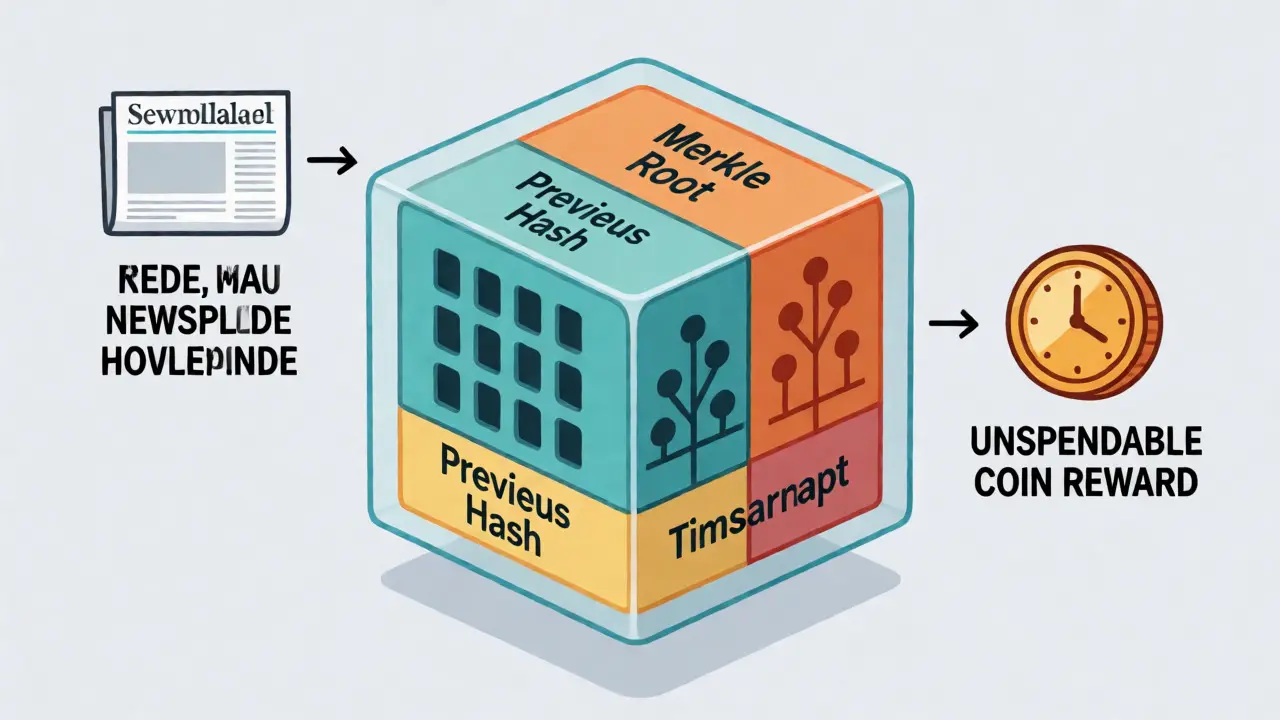
Blockchain purists love hidden messages. The genesis block is famous for carrying a timestamped piece of news that reflects the era’s frustration with traditional finance. Embedded in Bitcoin’s genesis block is the headline from The Times newspaper: "The Times 03/Jan/2009 Chancellor on brink of second bailout for banks."
This isn't just trivia. It proves when the block was created (it couldn't have been mined before the newspaper was published) and states the ideological motivation behind Bitcoin: a response to central bank bailouts and inflationary monetary policies. Other chains do similar things. Some embed coordinates, others quote philosophers, and some include technical parameters that define the network’s rules.
These messages serve as historical markers. They remind us that blockchain isn't just math; it's a social contract born from specific economic conditions. When you interact with a blockchain, you're interacting with a ledger that remembers its origins.
Technical Anatomy of Block 0
Let’s get into the weeds for a second. What exactly is inside this block? While it looks like any other block structurally, its contents are static and foundational.
- Version: Indicates the version of the protocol used to create the block.
- Previous Block Hash: All zeros. This signifies no predecessor.
- Merkle Root: A hash representing all transactions within the block. For Bitcoin’s genesis block, this includes the coinbase transaction generating 50 BTC.
- Timestamp: The exact time the block was mined (January 3, 2009).
- Difficulty Target: Sets the initial difficulty for mining subsequent blocks.
- Nonce: A random number used to solve the proof-of-work puzzle.
The most critical attribute is the Hash of the genesis block itself. For Bitcoin, this hash is 000000000019d6689c085ae165831e934ff763ae46a2a6c172b3f1b60a8ce26f. This string is immutable. If even one bit of data in the genesis block changed, the hash would change, and every node in the world would reject the chain unless they updated their software to accept the new origin. This is why we call it immutability.
| Network | Creation Method | Initial Reward Status | Key Feature |
|---|---|---|---|
| Bitcoin | Mined by Creator | Unspendable | Contains NYT Headline |
| Ethereum | Crowdsale Allocation | Distributed to Buyers | Pre-mined allocation |
| Ripple (XRP) | Centralized Creation | Pre-mined Supply | No mining involved |
| Binance Smart Chain | Fork/EVM Compatible | Allocated to Validators | EVM compatibility focus |
Security and Consensus Implications
Why does the security team care about the genesis block? Because it acts as the root of trust. In cryptography, you need a trusted root to build secure systems. The genesis block provides that root.
Consider a scenario where a malicious actor wants to rewrite history. They try to change a transaction in Block 100. The hash of Block 100 changes. Now, Block 101’s reference to Block 100 is broken. The attacker must re-mine Block 101, then 102, all the way to the current tip. As the chain grows longer, the computational power required to catch up increases exponentially. But if they wanted to change the genesis block? They’d have to convince every single node on the network to accept a new starting point. This is effectively impossible without a coordinated hard fork, which usually splits the community.
This anchoring prevents fragmentation. If two groups disagree on the genesis block, they aren't on the same blockchain anymore. They are on two separate chains with different histories. This is why verifying the genesis block hash is step one for any developer setting up a full node. If the hashes don't match, you're talking to a different network entirely.

Future-Proofing: Quantum Threats and New Designs
Blockchain technology isn't standing still. As we move further into the 2020s, concerns about quantum computing are influencing how new genesis blocks are designed. Traditional elliptic curve cryptography, which secures Bitcoin’s genesis block, might eventually be vulnerable to powerful quantum computers.
Newer blockchains are experimenting with post-quantum cryptographic algorithms in their genesis structures. These new designs ensure that the root of trust remains secure even if classical computing assumptions fail. Additionally, enterprise solutions like those from IBM and Walmart use private blockchains with bespoke genesis blocks tailored for supply chain tracking. These often prioritize speed and permissioned access over the pure decentralization seen in Bitcoin, showing that the concept of Block 0 is adaptable to various business needs.
Practical Takeaways for Users
You don't need to mine blocks to benefit from understanding the genesis block. Here’s why it matters to you:
- Verification: When you audit a blockchain explorer, seeing the genesis block confirms the chain’s integrity from day one.
- Tokenomics: Understanding how the genesis block distributed tokens helps you assess centralization risks. If 80% of tokens were allocated to insiders in Block 0, that’s a red flag for decentralization.
- Forks: If a project forks, it keeps the original genesis block but diverges afterward. Knowing the shared history helps you trace assets across forks.
The genesis block is more than code. It’s the digital birth certificate of a currency. It sets the rules, distributes the wealth, and anchors the trust. Next time you send a transaction, remember: it stands on the shoulders of that very first block, unchanged and unchangeable, since 2009.
Can the genesis block be modified?
No, not without breaking the entire network. Since the genesis block is hardcoded into the client software, changing it requires every node to update its software simultaneously. If nodes disagree on the genesis block hash, they will reject each other's chains, leading to a permanent split or network failure.
Why is the Bitcoin genesis block reward unspendable?
Satoshi Nakamoto made the 50 BTC reward from the genesis block unspendable to prevent immediate selling pressure and to symbolize that the creation of Bitcoin was a collective effort rather than a personal gain for the founder. Technically, the output script is non-standard, making it impossible to redeem in normal transactions.
Do all blockchains have a genesis block?
Yes, every blockchain-based system starts with a genesis block (Block 0). Even private or consortium blockchains use this concept to establish the initial state and rules agreed upon by the founding members. It is the universal starting point for any chained data structure.
How is the genesis block different from Block 1?
The primary difference is the reference to a previous block. Block 1 contains the hash of the genesis block in its header. The genesis block contains a null value (all zeros) in its previous block hash field because it has no predecessor. Additionally, the genesis block is hardcoded, while Block 1 is mined dynamically.
What happens if I lose my keys to coins from the genesis block?
For Bitcoin, the genesis block reward is unspendable anyway, so losing keys doesn't matter. However, for other chains where genesis allocations were distributed to users, losing private keys means those tokens are permanently lost, just like any other cryptocurrency holding. There is no central authority to reset passwords.