
What Is the DOGE-1 Crypto Coin? A Deep Dive Into Satellite Doge-1 Mission
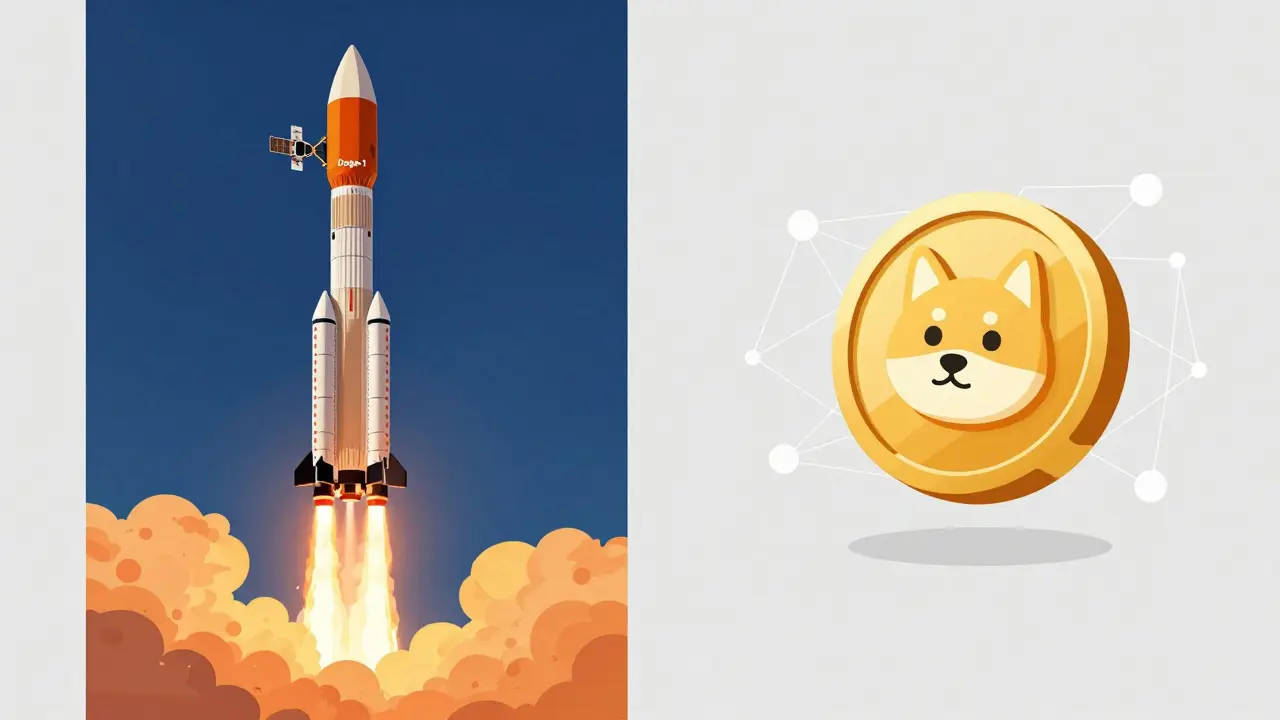
It is easy to get confused when you hear about space missions and cryptocurrency in the same breath. You might have seen headlines about Elon Musk, SpaceX, and a satellite called Doge-1. Then, you see a ticker symbol for DOGE-1 on a crypto chart. Are they the same thing? Did that token actually pay for the rocket launch? The short answer is no. This distinction is critical if you are looking at your wallet or researching an investment.
The actual Doge-1 CubeSat mission was funded by the original Dogecoin, not this new token. The Satellite Doge-1 Mission (DOGE-1) token is a separate, community-driven meme coin built on the Ethereum network. It tries to ride the wave of excitement from the real space mission, but it operates entirely independently. Understanding this difference protects you from buying something based on a false premise.
The Real Story Behind the Name
To understand why this token exists, we have to look back at 2021. That was the year Geometric Energy Corporation made history. They announced they would build a small satellite, a CubeSat, and send it into orbit. But instead of using dollars, they paid for the entire project using Dogecoin. This was a massive deal for the crypto world. It proved that a meme coin could be used for serious, high-value commercial transactions.
SpaceX launched the satellite. The mission was a success. It showed that cryptocurrency could work beyond Earth’s atmosphere. This event created a lot of buzz. Naturally, entrepreneurs saw an opportunity. They wanted to create a digital asset that capitalized on this specific narrative. So, they launched the DOGE-1 token. It is not part of Geometric Energy Corporation. It is not part of SpaceX. It is a third-party project trying to link itself to that historic moment.
Technical Specs: What You Are Actually Buying
If you decide to look closer at the token itself, you need to know how it works under the hood. The DOGE-1 token runs on the Ethereum blockchain. Specifically, it follows the ERC-20 standard. This is the most common standard for tokens on Ethereum. It means you can store it in any wallet that supports Ethereum assets, like MetaMask or Trust Wallet.
Here are the hard numbers for the token as of May 2026:
- Total Supply: Exactly 1 billion tokens. There are no more being minted.
- Transaction Tax: Every trade incurs a 1% fee. This money goes toward project development.
- Network: Ethereum only. You cannot find it on Bitcoin or Solana networks.
The 1% tax is important. When you buy or sell, you lose 1% of your value immediately. For a low-cap token with thin liquidity, this fee can eat into your profits quickly. It also makes day-trading difficult because the costs add up fast.
Where Can You Trade DOGE-1?
This is where things get tricky for new investors. You will not find DOGE-1 on major exchanges like Binance or Crypto.com. I checked their listings in May 2026, and the token is absent. This matters because centralized exchanges offer easier access and better security for most users.
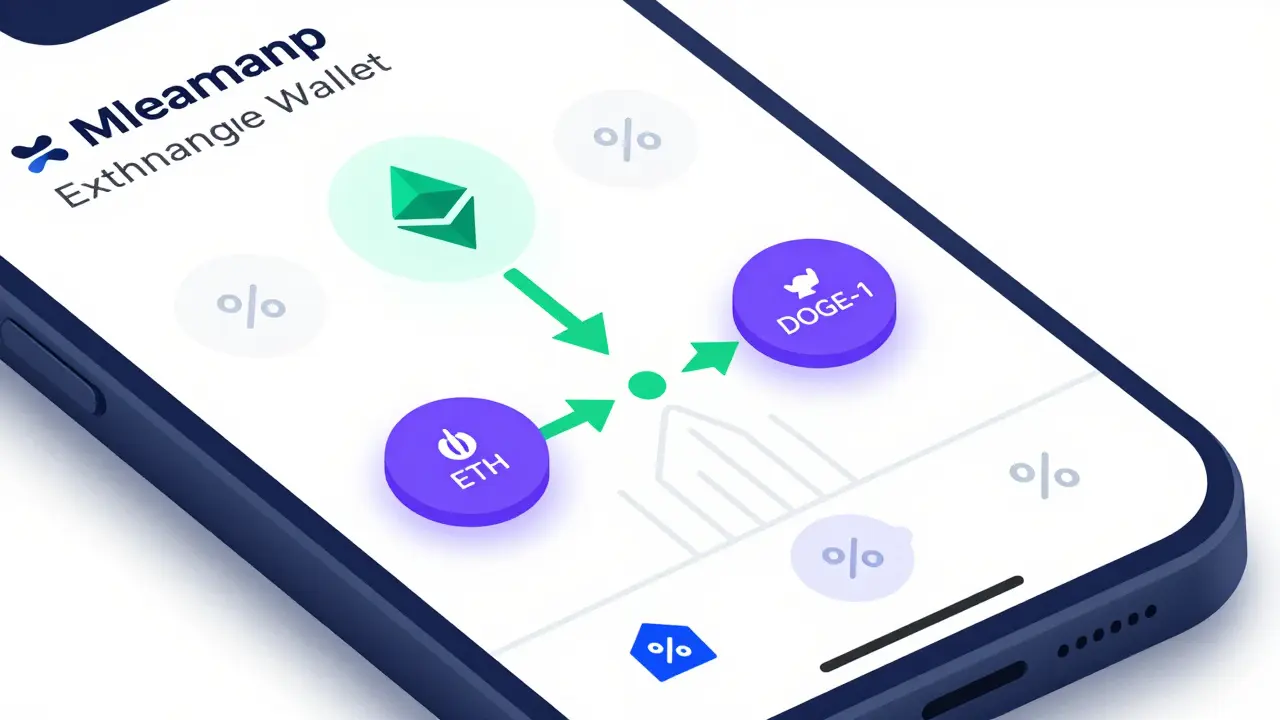
Instead, trading happens almost exclusively on decentralized exchanges (DEXs). The primary venue is Uniswap V2. Here, you swap Wrapped Ethereum (WETH) for DOGE-1. This requires you to use a Web3 wallet and manage your own private keys. If you lose your seed phrase, your funds are gone forever. There is no customer support to call.
| Feature | DOGE-1 Token | Original Dogecoin |
|---|---|---|
| Primary Exchange Type | Decentralized (Uniswap) | Centralized (Binance, Coinbase) |
| Accessibility | Low (Requires Web3 Wallet) | High (Buy with Credit Card) |
| Liquidity | Very Low (~$589 daily volume) | Very High (Billions daily) |
| Transaction Fee | 1% Token Tax + Gas Fees | Standard Network Fees Only |
Price Action and Market Reality
Let’s talk about the money. As of mid-May 2026, the DOGE-1 token trades at a fraction of a cent. Prices hover around $0.00024 to $0.00028 depending on which tracker you check. CoinGecko lists it slightly higher than CoinMarketCap, which is common for illiquid assets due to data aggregation differences.
The market cap is tiny-around $160,000. To put that in perspective, established meme coins have market caps in the billions. This places DOGE-1 in the "micro-cap" category. These tokens are highly speculative. They can surge 30% in a week on very little news, as happened recently with a 34% gain over seven days. But they can just as easily crash 90% overnight.
The trading volume is another red flag for stability. Daily volumes range from $95 to $589. Imagine trying to sell $1,000 worth of this token. With such low volume, your single trade could drop the price significantly. This is called slippage. You might intend to sell at $0.00025, but you end up selling at $0.00015 because there were not enough buyers at your price.
Risks You Must Consider
Investing in DOGE-1 carries significant risks that go beyond normal market volatility. First, there is the confusion risk. Many people assume this token is tied to the actual satellite mission. It is not. If the hype around the original Doge-1 spacecraft fades, this token loses its main marketing hook.
Second, there is the smart contract risk. Since the token lives on Uniswap, you are trusting the code. While Ethereum is secure, individual token contracts can have vulnerabilities. Without a public audit from a reputable firm, you are flying blind. We do not see detailed whitepapers or team disclosures for this project. It is truly community-driven, which often means anonymous developers.
Third, consider the exit problem. Because it is not on Binance or other major platforms, getting out of your position can be hard. If the Ethereum network gets congested, gas fees might cost more than the value of your tokens. You could be stuck holding a bag of worthless digits because it costs too much to move them.
Is There Any Utility?
The project claims it wants to enable "space-related commerce." This sounds ambitious. However, as of May 2026, there is no evidence of this utility existing. No space companies accept DOGE-1. No satellite operators use it. It remains a speculative asset with a thematic wrapper. The 1% tax is supposed to fund development, but without a clear roadmap or public treasury reports, it is hard to verify if any progress is being made.
Compare this to the original Dogecoin. Dogecoin has been used for charity, merchandise, and even tipping content creators. It has a decade of cultural relevance. DOGE-1 is trying to borrow that credibility. It is a derivative product. Derivatives rarely outperform the originals unless they offer a unique technological advantage. Currently, DOGE-1 offers none.
How to Buy (If You Still Want To)
If you understand the risks and still want to buy DOGE-1, here is the process. You cannot simply click "buy" on an app. You need to set up a self-custody wallet. Download MetaMask or a similar Ethereum-compatible wallet. Fund it with Ether (ETH). Go to Uniswap.app and connect your wallet. Paste the contract address for DOGE-1 (verify this carefully from a trusted source like Etherscan, never from a random Telegram message). Swap ETH for DOGE-1. Be prepared to pay high gas fees during peak hours.
Always double-check the contract address. Scammers create fake tokens with similar names. If you send your ETH to the wrong address, it is gone. This is the harsh reality of decentralized finance.
Is DOGE-1 the same as the Dogecoin used for the satellite?
No. The satellite mission was funded by the original Dogecoin (DOGE). DOGE-1 is a separate, unrelated meme token created later to capitalize on the mission's popularity.
Can I buy DOGE-1 on Binance?
No. As of May 2026, DOGE-1 is not listed on Binance, Crypto.com, or other major centralized exchanges. It is only available on decentralized exchanges like Uniswap.
What is the total supply of DOGE-1?
The total supply is capped at 1 billion tokens. No new tokens can be created.
Why is the transaction tax 1%?
The 1% tax is automatically deducted from every trade to fund the project's development and operational growth, according to the project's documentation.
Is DOGE-1 a good investment?
It is extremely high-risk. It has low liquidity, no major exchange listings, and relies on speculative hype rather than proven utility. Only invest what you can afford to lose completely.