
What is Refereum (RFR)? A Deep Dive into the Gaming Crypto Token

Imagine playing your favorite video game and getting paid for it. Not in vague points that expire next month, but in actual cryptocurrency you can trade or spend. That was the core promise of Refereum, a project designed to shake up how gamers and streamers get rewarded. If you’ve stumbled upon the ticker RFR while scrolling through obscure crypto lists, you might be wondering: what exactly is this coin, and does it still have any life left in it?
The short answer? It’s an Ethereum-based utility token created to reward gaming engagement, but its current status is complicated. Launched during the ICO boom of 2018, Refereum aimed to cut out the middlemen in game marketing. Today, as of late 2026, it sits as a micro-cap asset with a market value so small it barely registers on major charts. The original team has officially stepped back, declaring the token "no longer supported." So, why look at it now? Maybe you’re holding legacy bags, maybe you’re curious about failed experiments in GameFi, or perhaps you’re looking for a deep-value lottery ticket. Let’s break down what Refereum actually did, how it worked, and where it stands today.
The Core Idea: Cutting Out the Middleman
Traditional game marketing is broken. Developers spend billions on ads that often fail to convert, while influencers and players who actually drive sales rarely see a fair share of the profit. Refereum proposed a solution using blockchain technology to create a direct link between developers and their community. Instead of paying an advertising agency, developers would use RFR tokens to reward users for specific actions: streaming a game, sharing a referral link, or simply watching content.
This wasn’t just about handing out free coins. It was about attribution. In traditional affiliate marketing, tracking who referred whom is messy and opaque. On the blockchain, every transaction is recorded. If you streamed a new indie title and three people bought it because of your link, the smart contract could automatically distribute RFR to you. This transparency was meant to solve what the team called a "trillion-dollar problem" in digital marketing. By removing intermediaries, they argued, developers could keep more profit, and gamers could earn real value for their time.
How Refereum Worked: The Ecosystem
To understand the token, you have to understand the platform it powered. Refereum wasn’t just a currency; it was a suite of tools integrated into the gaming lifestyle. The ecosystem relied on several key components to function:
- The Twitch Extension: This allowed viewers to earn tickets simply by watching streams. Every few hours, a random winner would receive RFR directly to their Ethereum wallet. It turned passive viewing into potential income.
- Growth Engine: A tool for developers to set up reward campaigns. You could define rules like "Give 50 RFR to anyone who refers a friend who buys the game," and the system handled the payouts automatically.
- Telegram Trivia Bot: A lighter way to engage the community, rewarding users for participating in chat-based games.
- Game Purchases: Users could spend earned RFR to buy games directly from the Refereum marketplace, creating a circular economy within the platform.
The mechanics were simple for the user. You connected your Ethereum wallet, engaged with content, and accumulated rewards. For developers, it required integrating Refereum’s SDK into their games or marketing strategies. While the concept was sound, adoption never reached the critical mass needed to sustain high token demand.
Tokenomics and Supply Details
If you’re looking at RFR as an investment or a curiosity, the numbers tell a stark story. The total supply was fixed at 5.00 billion tokens. There was no inflation mechanism, which is good for scarcity, but bad if demand evaporates. The Initial Coin Offering (ICO) concluded in February 2018, raising funds to build the platform during a period of intense speculation.
| Metric | Value / Status |
|---|---|
| Blockchain Network | Ethereum (ERC-20) |
| Total Supply | 5,000,000,000 RFR |
| All-Time High (ATH) | $0.05096 (April 2021) |
| All-Time Low (ATL) | $0.00001006 (March 2025) |
| Current Status | No longer actively supported by original team |
| Primary Exchange | Gate.io, Kraken (limited liquidity) |
The price history is brutal. After peaking at over five cents in April 2021, driven by the broader crypto bull run and hype around NFTs and GameFi, RFR crashed. By 2025 and 2026, it had fallen to fractions of a cent. Market data varies wildly due to thin liquidity, but most sources place the market cap in the tens of thousands of dollars range. To put that in perspective, many meme coins with no utility have higher valuations. This collapse reflects both the broader market correction and the specific failure of Refereum to maintain active development and user growth after its initial launch window.
Current State: Decentralized but Abandoned?
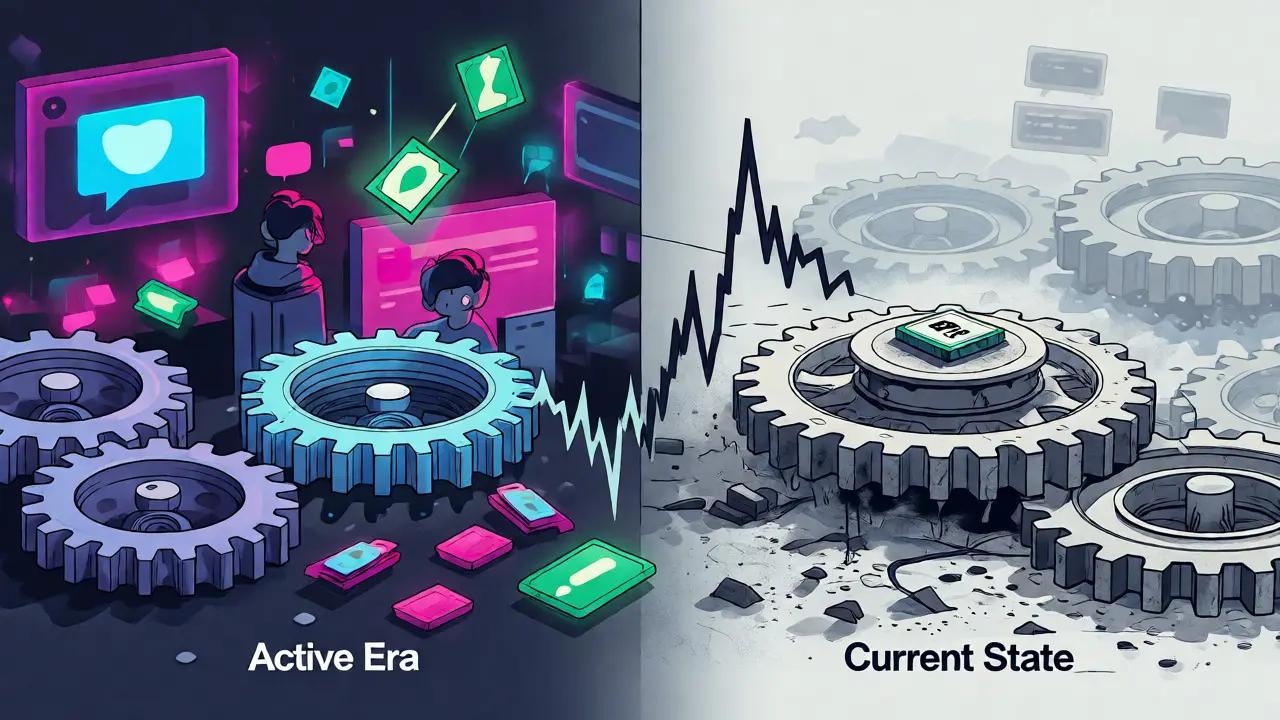
In August 2026, the official Refereum website updated its stance, stating that the "$RFR currency achieved full decentralization, and it is no longer supported, managed, or associated" by the original company. This is a polite way of saying the team has moved on. When a crypto project declares itself "fully decentralized" without a strong community governance model, it often signals the end of centralized support.
For holders, this means two things. First, there is no roadmap. Don’t expect new features, partnerships, or marketing pushes. Second, liquidity is drying up. While you can still trade RFR on exchanges like Gate.io and Kraken, the daily volume is negligible. Selling a large position could crash the price further due to shallow order books. Some regulated exchanges, like Gemini, allow storage but restrict trading, highlighting the perceived risk by compliance teams.
Is RFR Still Useful?
Utility in crypto is hard to fake. For RFR, the utility depended entirely on whether gamers wanted to use it. Today, the Refereum platform sees minimal activity. The Twitch extension and Telegram bot still exist technically, but without active promotion, they attract few new users. Some legacy integrations may remain, but the vibrant ecosystem envisioned in 2018 hasn’t materialized.
However, the token retains some theoretical value as a collectible or a speculative asset. Because the supply is capped and burned tokens are rare, any sudden surge in interest-perhaps driven by a resurgence in retro gaming or a niche community takeover-could spike the price. But betting on this is akin to buying a penny stock with no earnings report. It’s high risk, low probability.
Risks and Considerations for Investors
If you are considering buying RFR today, you need to be aware of the specific risks attached to abandoned projects. Unlike Bitcoin or Ethereum, which have massive developer communities, RFR relies on residual interest.
- Liquidity Risk: With daily volumes sometimes under $20,000, exiting a position can be difficult without impacting the price.
- Data Discrepancies: Different aggregators report vastly different prices and market caps. Always check multiple sources before making a trade.
- No Development Roadmap: Without active coding or updates, the product can become obsolete as newer, better-funded GameFi projects emerge.
- Regulatory Ambiguity: As a utility token that didn’t quite succeed, it exists in a gray area regarding future regulatory treatment, especially if it’s seen purely as a security.
Despite these risks, some investors hold onto assets like RFR hoping for a "zombie rally," where dead projects suddenly pump due to social media hype. It’s a gamble, not an investment strategy.
Frequently Asked Questions
What is Refereum (RFR)?
Refereum (RFR) is an Ethereum-based ERC-20 utility token launched in 2018. It was designed to reward gamers, streamers, and content creators for activities like playing games, streaming, and referring friends. The goal was to eliminate marketing middlemen by allowing developers to pay influencers and players directly in cryptocurrency.
Is Refereum still active?
The original team has stated that RFR is "no longer supported, managed, or associated" with them as of recent updates. While the token still trades on some exchanges and the smart contracts remain live on Ethereum, there is no active central development team driving new features or marketing. It is effectively a community-held or dormant asset.
Where can I buy or sell RFR?
RFR is primarily traded on Gate.io and Kraken. However, liquidity is very low, meaning trading volumes are small. Some larger exchanges like Gemini allow you to store RFR in your wallet but do not support active trading pairs. Always verify current listing status before attempting to trade.
What was the maximum supply of Refereum?
The total maximum supply of Refereum was fixed at 5.00 billion tokens. This supply was minted during the Initial Coin Offering (ICO) phase, which concluded in February 2018. There are no mechanisms for creating new RFR tokens, making it a deflationary asset only if tokens are burned, though significant burning events have not been reported recently.
Why did Refereum’s price drop so much?
Refereum’s price fell due to a combination of factors: the general crypto market downturn following the 2021 peak, lack of sustained user adoption, competition from other GameFi projects, and the eventual withdrawal of the original development team. Thin liquidity also exacerbated price declines as sellers struggled to find buyers.