
What is PAC Protocol (PAC)? A Realistic Look at the Crypto Coin
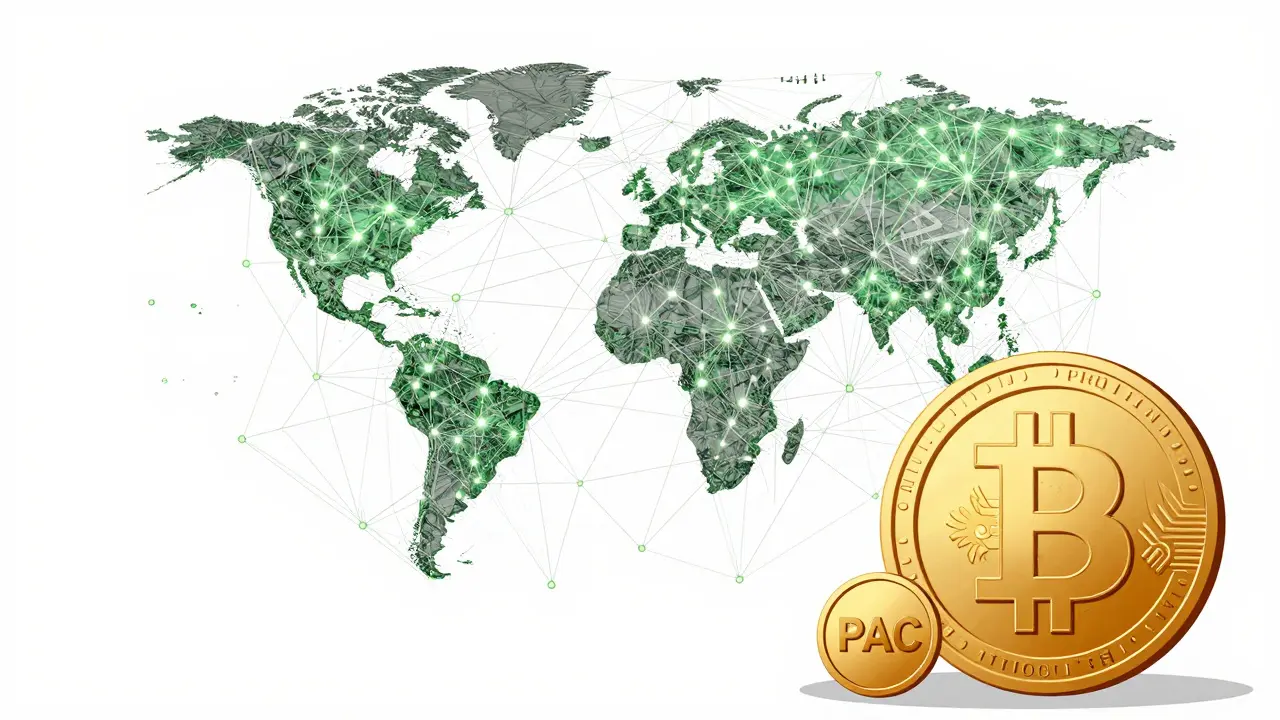
Imagine buying a share in a company that has been around since 2017, boasts a massive global network, yet trades for fractions of a penny with barely anyone watching. That is the reality of PAC Protocol, also known as PAC coin. It is a decentralized cryptocurrency designed to solve real-world problems through a large-scale masternode network. On paper, it sounds impressive. In practice, it sits in the shadowy corners of the crypto market, far removed from the buzz of Bitcoin or Ethereum.
If you are reading this because you saw the ticker symbol PAC on an exchange list or heard about its "decentralized" claims, you need the unvarnished truth before you spend a dime. This isn't just another hype piece. We are going to look at what PAC actually does, why its price behaves the way it does, and whether it still has any life left in 2026.
The Core Concept: Masternodes and Energy Efficiency
At its heart, PAC Protocol was built to fix two things: energy consumption and decentralization. Most people know that Bitcoin uses a lot of electricity because of its Proof of Work system. PAC chose a different path. It uses Proof of Stake, which is a consensus mechanism where validators secure the network by locking up coins rather than using computational power. This makes it much greener and cheaper to run.
But the real selling point for PAC has always been its masternode network. Think of masternodes as super-powered wallets. They don't just store your coins; they help validate transactions and keep the network running smoothly. According to data from masternodes.online, PAC claims to operate one of the largest truly decentralized masternode networks in the world, with over 13,000 active nodes scattered across the globe. For context, Dash-a well-known privacy coin-only has about 5,000 masternodes. If true, PAC’s infrastructure is genuinely distributed.
However, having many nodes doesn't automatically mean success. It means the technical foundation is there. The question is whether anyone is actually using it.
Where Is PAC Today? The Numbers Don't Lie
Let's talk money, because that’s usually why we’re here. As of mid-2026, PAC Protocol is struggling. Its market capitalization hovers around $60,000. To put that in perspective, Bitcoin’s market cap is in the trillions. Even small-cap altcoins often have valuations in the hundreds of millions. PAC ranks #8193 among all cryptocurrencies. You have to scroll down past thousands of projects to find it.
| Cryptocurrency | Market Cap Estimate | Consensus Mechanism | Liquidity Status |
|---|---|---|---|
| PAC Protocol | $60,000 | Proof of Stake | Extremely Low |
| Bitcoin | $1.2+ Trillion | Proof of Work | Very High |
| Ethereum | $400+ Billion | Proof of Stake | High |
| Dash | $300+ Million | X11 / PoW | Moderate |
The price tells a similar story. After hitting an all-time high of roughly $0.018 in March 2021, PAC has plummeted. Recent trading data shows prices dipping into the sub-cent range, sometimes trading for less than $0.000004. That is not a typo. When a coin costs less than a fraction of a cent, it takes billions of tokens to equal a single dollar.
Liquidity is the biggest red flag here. Liquidity measures how easily you can buy or sell an asset without moving the price. For PAC, the 24-hour trading volume is often under $1,000. On some days, it’s barely $500. What does this mean for you? If you try to buy $100 worth of PAC, you might push the price up significantly. If you try to sell, you could crash it. This is called slippage, and in micro-cap coins like PAC, it can eat 10% to 15% of your trade value instantly.
Who Is Behind PAC Protocol?
Every project needs leadership. PAC Protocol is managed by CEO David Gokhshtein and Chairman Drew Saunders. Their contact emails are publicly listed, suggesting transparency. However, community engagement tells a different story. The official Twitter account has around 18,000 followers, but engagement rates are abysmal-around 0.2% per tweet. Compare that to established projects that see 2-3% engagement, and you’ll notice the silence.
The Reddit community r/PACGlobalOfficial has only about 1,200 members. For a project launched in 2017, that is quiet. There are no major news articles from outlets like CoinDesk or Bloomberg covering recent developments. The last significant updates on their GitHub repository were minor security patches in late 2023. Since then, the project appears to be in maintenance mode rather than innovation mode.
Risks Every Investor Must Understand
I am not here to tell you what to do with your money, but I am here to make sure you understand the risks. PAC Protocol falls into the category of "micro-cap speculative assets." Here is what that entails:
- Extreme Volatility: Prices can swing wildly based on tiny trades. A single large sell order can drop the price by 20% in minutes.
- Lack of Utility: There are virtually no merchants accepting PAC. No apps use it. No enterprises integrate with it. It exists mostly as a tradable token on a few obscure exchanges.
- Exchange Delisting Risk: Exchanges charge fees to list coins. If a coin doesn’t generate enough trading volume, exchanges may delist it to save costs. With daily volumes under $1,000, PAC is vulnerable. Once delisted from major platforms, getting your coins out becomes nearly impossible.
- Regulatory Uncertainty: As governments tighten rules on cryptocurrencies (like the EU’s MiCA regulations), micro-caps with no clear utility are often the first to face scrutiny or bans.
Analysts from firms like Messari have noted that projects with market caps below $100 million-and especially those below $1 million-have less than a 15% chance of surviving long-term due to unsustainable liquidity and lack of developer activity.
How to Buy PAC (If You Still Want To)
If you’ve read all this and still want to experiment with PAC, here is how you actually do it. You won’t find it on Coinbase or Binance. You will need to dig deeper.
- Get Base Currency: Start by buying Bitcoin (BTC) or Ethereum (ETH) on a major centralized exchange like KuCoin or Binance.
- Find a Decentralized Exchange: Move your BTC or ETH to a decentralized platform that lists PAC. Historically, exchanges like FinexBox, StakeCube, or Graviex have supported PAC pairs.
- Swap for PAC: Use the DEX to swap your base currency for PAC. Be prepared for high slippage. Set a limit order if possible to control the price you pay.
- Secure Your Wallet: Do not leave your PAC on the exchange. Transfer them to a personal wallet that supports PAC. Check the official PAC Global documentation for compatible wallets.
Note that the minimum investment is effectively around $10 due to fees, but meaningful participation (like running a masternode) requires roughly 10,000 PAC tokens. Given the current price, that might cost you very little in dollars, but the technical setup and ongoing maintenance require knowledge and time.
Is PAC Protocol Worth It in 2026?
This is the million-dollar question. Or rather, the six-figure question. The honest answer is: probably not for most people. PAC Protocol had a vision. It built a unique infrastructure with thousands of nodes. But it failed to build a community, a product, or a market.
In the crypto world, technology alone isn't enough. You need adoption. You need traders. You need developers building on top of it. PAC lacks all three. While it remains energy-efficient and technically decentralized, those features matter little if no one is using the network.
For seasoned degens who enjoy hunting for forgotten gems and understand the extreme risk of total loss, PAC might offer a speculative play. But for anyone looking for stable growth, passive income, or reliable tech integration, there are better options. Projects with higher liquidity, active development teams, and real-world use cases provide a safer path forward.
What is the current price of PAC Protocol?
As of mid-2026, PAC Protocol trades for fractions of a cent, often between $0.000003 and $0.000004. Prices vary significantly depending on the exchange and liquidity conditions.
Is PAC Protocol a scam?
There is no evidence that PAC Protocol is a scam in the traditional sense. It has a working blockchain, public code, and identifiable leadership. However, its lack of utility, low liquidity, and stagnant development make it a high-risk speculative asset that may lose all value.
Can I mine PAC Protocol?
No, you cannot mine PAC. It uses a Proof of Stake consensus mechanism. Instead of mining, users can stake their coins or run masternodes to earn rewards, though the latter requires significant technical setup and capital.
Where can I buy PAC coin?
PAC is not available on major exchanges like Coinbase or Binance. You typically need to buy Bitcoin or Ethereum first, then swap for PAC on smaller decentralized exchanges like FinexBox or StakeCube.
Why is PAC Protocol so cheap?
PAC is cheap because it has extremely low demand and minimal liquidity. With a market cap under $100,000 and negligible trading volume, the price reflects the lack of investor interest and real-world usage compared to major cryptocurrencies.