
What is O Intelligence Coin (OI)? The Single-Supply Crypto Explained
Imagine a currency where there is only one unit in existence. Not billions, not millions-just one. That is the reality of O Intelligence Coin, also known as OI. It is a unique cryptocurrency with a fixed total supply of exactly one coin, divisible into 100 million smaller units called 'O units'. Launched on the Solana blockchain in February 2025, this token breaks every traditional rule we know about digital money. While Bitcoin has 21 million coins and Ethereum has no hard cap, OI relies on absolute scarcity to drive its value and utility within the O.XYZ ecosystem.
If you have heard whispers about this "single-supply" asset and are wondering if it is a revolutionary step for artificial intelligence or just a novelty experiment, you are asking the right questions. This guide cuts through the hype to explain what OI actually is, how it works, and whether it fits into your investment strategy.
The Core Concept: Absolute Scarcity
The defining feature of O Intelligence Coin is its tokenomics. There will never be more than one OI coin. However, that doesn't mean you cannot buy a fraction of it. The single coin is divided into 100,000,000 O units. Think of it like dividing a gold bar into tiny grains; the bar itself is one entity, but you can trade the grains.
This model was created by merging two previous tokens: O Coin and OBOT Coin. The goal was to unify the community under a single symbol representing their shared journey toward building Sovereign Super Intelligence. This concept describes a fully decentralized AI ecosystem that operates without control from corporations or governments. By having only one coin, the project aims to symbolize unity and prevent the dilution often seen in other crypto projects.
How OI Powers the Decentralized AI Ecosystem
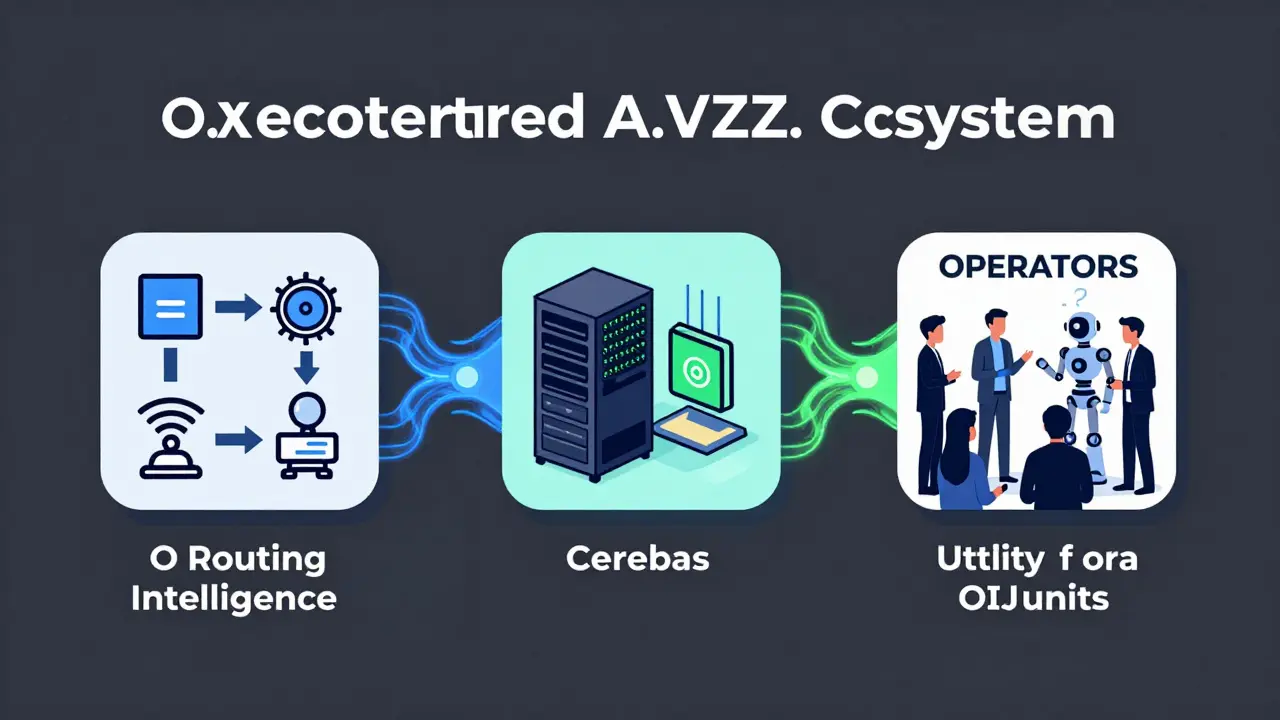
OI is not just a store of value; it is the functional fuel for the O.XYZ platform. The ecosystem focuses on three main technological pillars:
- O Routing Intelligence: This system acts as a traffic controller for AI models. Instead of relying on a single algorithm, it dynamically selects the best AI model for any specific task from a vast network.
- OCEAN: A decentralized AI assistant platform that utilizes high-performance hardware, including Cerebras chips, to process complex queries efficiently.
- OPERATORS: A workforce platform that enables collaboration between humans and AI agents, creating a new economy for automated tasks.
To use these services, users pay with O units. As the ecosystem grows and integrates more models from platforms like HuggingFace, the demand for OI as a payment method for compute power and governance increases. This creates a direct link between the token's value and the utility of the AI tools it supports.
Price Volatility and Market Reality
Let’s talk numbers, because they are startling. Due to the single-supply model, the price of one whole OI coin is exceptionally high. In late 2025, prices ranged between $9.6 million and $15.3 million USD. This makes buying a whole coin impossible for almost everyone, which is why trading happens in O units.
However, this extreme scarcity comes with significant risks. The market capitalization of OI hovers around $10-15 million, which is relatively small compared to major cryptocurrencies. With such a low volume-to-market-cap ratio, the token is highly susceptible to volatility. A few large trades can cause massive price swings. For context, the all-time high was recorded at over $31 million in June 2025, followed by a sharp correction. If you are considering entering this market, understand that you are dealing with an asset that behaves more like a speculative collectible than a stable currency.
| Feature | O Intelligence Coin (OI) | Bitcoin (BTC) | Ethereum (ETH) |
|---|---|---|---|
| Total Supply | 1 Coin (divisible) | 21 Million | No Hard Cap |
| Blockchain | Solana | Bitcoin Network | Ethereum Network |
| Primary Use Case | Decentralized AI Utility | Store of Value | Smart Contracts & DeFi |
| Scarcity Model | Absolute (Fixed) | Inflationary (Halving) | Deflationary (Burns) |
Technical Challenges for Developers
Building on the O.XYZ ecosystem is not for beginners. The documentation requires proficiency in Rust programming and the Solana SDK. Integrating O Routing Intelligence typically takes experienced developers 80 to 120 hours to implement correctly.
One major technical hurdle is price oracle integration. Because the whole coin is worth millions, standard price feeds can be manipulated or inaccurate. The O.XYZ engineering team addressed this by implementing Time-Weighted Average Price (TWAP) oracles across multiple decentralized exchanges. This ensures that when a smart contract checks the price of OI, it gets a fair, averaged value rather than a snapshot that could be gamed by a single trader.
Regulatory Landscape and Risks
The unique nature of OI raises questions for regulators. In December 2025, the U.S. Securities and Exchange Commission (SEC) released a framework for token classification that scrutinizes assets with limited supplies and centralized development teams. While no formal action has been taken against OI yet, analysts warn that its single-supply model could lead to it being classified as a security rather than a utility token in certain jurisdictions.
Furthermore, adoption remains niche. As of late 2025, there were fewer than 2,000 active addresses holding O units. Most engagement comes from professional traders and institutional investors rather than retail users. Social sentiment is mixed, with roughly 62% positive mentions driven by ecosystem announcements, but nearly 30% expressing skepticism about the sustainability of the scarcity model.
Is OI Right for You?
O Intelligence Coin represents a bold experiment in combining absolute scarcity with decentralized AI. If you believe that sovereign AI will become a dominant force and that a unified, scarce token is the best way to govern it, OI offers a unique position in your portfolio. However, you must accept the high volatility, the technical barrier to entry, and the regulatory uncertainty.
For the average investor, buying fractional O units via decentralized exchanges on Solana is the only practical route. Keep an eye on the integration of new AI models from HuggingFace and the expansion of cross-chain capabilities planned for early 2026. These developments will determine if OI transitions from a psychological play to a functional backbone of the AI economy.
Can I buy a whole O Intelligence Coin?
Technically yes, but practically no. With a price ranging from $9 million to over $15 million USD, purchasing a whole OI coin is out of reach for most individuals. Instead, you buy fractions of the coin known as O units. One O unit is equal to 1/100,000,000th of the total supply.
What blockchain does OI run on?
O Intelligence Coin operates on the Solana blockchain. It uses the SPL (Solana Program Library) token standard, which allows for fast transactions and low fees compared to networks like Ethereum. This speed is crucial for its role in powering real-time AI routing and processing.
Why is the supply only one coin?
The single-supply model is designed to create absolute scarcity and symbolize the unity of the O.XYZ community. Unlike Bitcoin, which has a capped supply of 21 million, OI’s fixed supply of one prevents inflation entirely. The developers argue this aligns incentives for long-term value appreciation and serves as a unique unit of account for the decentralized AI ecosystem.
Is OI regulated by the SEC?
As of late 2025, the SEC has not issued a formal ruling specifically targeting OI. However, the agency’s general framework for token classification poses a risk. Assets with limited supplies and strong central development teams may be viewed as securities. Investors should be aware of potential regulatory changes that could affect trading availability in the U.S.
How do I use OI in the AI ecosystem?
You use O units to pay for services within the O.XYZ platform. This includes accessing OCEAI for AI assistance, utilizing O Routing Intelligence to select optimal AI models, and participating in governance decisions. Developers also use OI to pay for infrastructure costs when building applications on the network.