
What is Noodle (NOODLE) Crypto? A Warning on High-Risk Meme Coins
You’ve probably seen it pop up in your feed or heard whispers about a new token called Noodle (NOODLE). It sounds catchy, right? In the world of crypto, especially on the Solana blockchain, names matter. But here’s the hard truth: just because a coin has a funny name doesn’t mean it’s worth your money. In fact, looking at the data for Noodle (NOODLE), it looks less like an investment and more like a trap.
If you are asking what Noodle actually is, the short answer is that it appears to be a speculative meme coin with zero utility, questionable metrics, and high red flags. Before you send any Solana to buy these tokens, you need to understand exactly what you’re dealing with. This isn’t financial advice-it’s a reality check based on the latest available data from late 2025 and early 2026.
The Core Identity: What Is Noodle (NOODLE)?
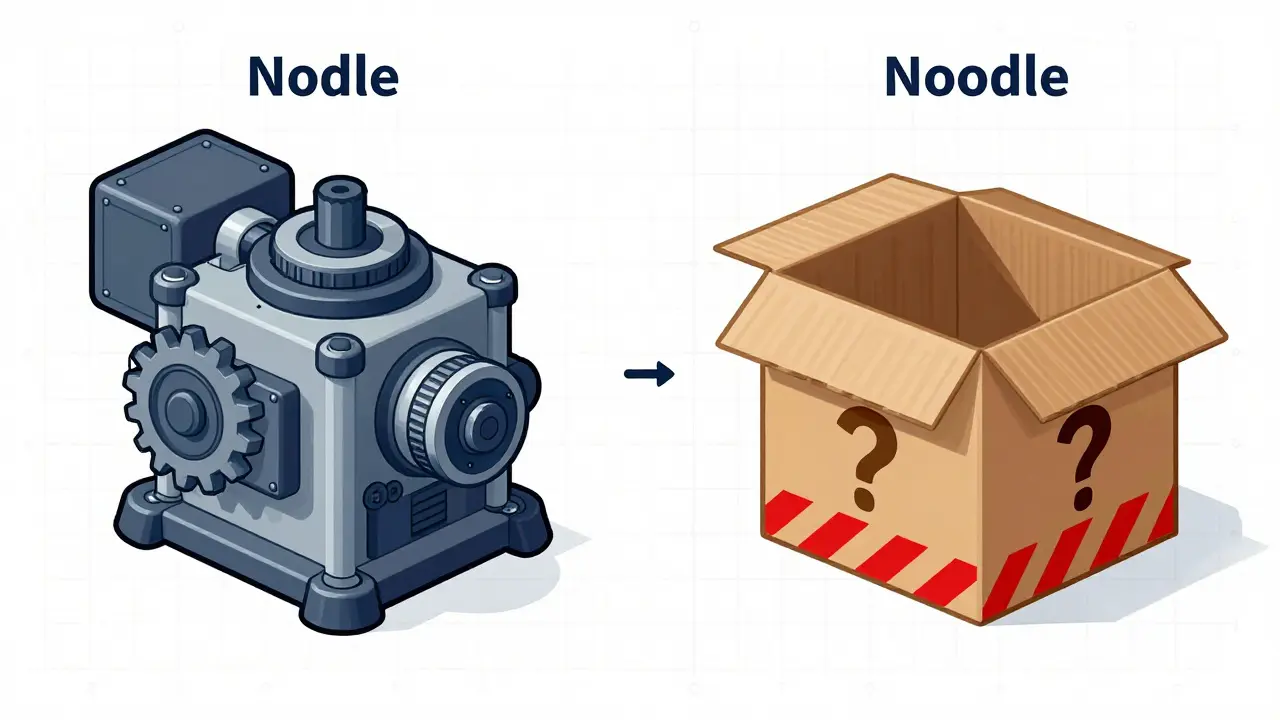
First, let’s clear up a common confusion. You might have heard of Nodle (NODL), which is a legitimate project focused on decentralized physical infrastructure networks (DePIN) for IoT connectivity. Do not mix them up. Noodle (NOODLE) is entirely different. It operates on the Solana blockchain, but it lacks the technological backbone or real-world use case that Nodle has.
Noodle categorizes itself as a meme coin. That means its value is driven purely by community hype, social media trends, and speculation. There is no whitepaper detailing a complex protocol, no governance voting rights, and no staking rewards. It is a standard SPL token on Solana, designed for trading-and often, for quick exits by creators rather than long-term holding by investors.
Here is the critical distinction:
- Nodle (NODL): Utility-based, DePIN network, established partnerships.
- Noodle (NOODLE): Speculative asset, meme-driven, minimal transparency.
When you trade NOODLE, you aren’t buying into technology. You’re betting on whether someone else will pay more for it tomorrow. And as we’ll see, the odds are stacked against you.
The Data Doesn’t Add Up: Supply and Circulation Anomalies
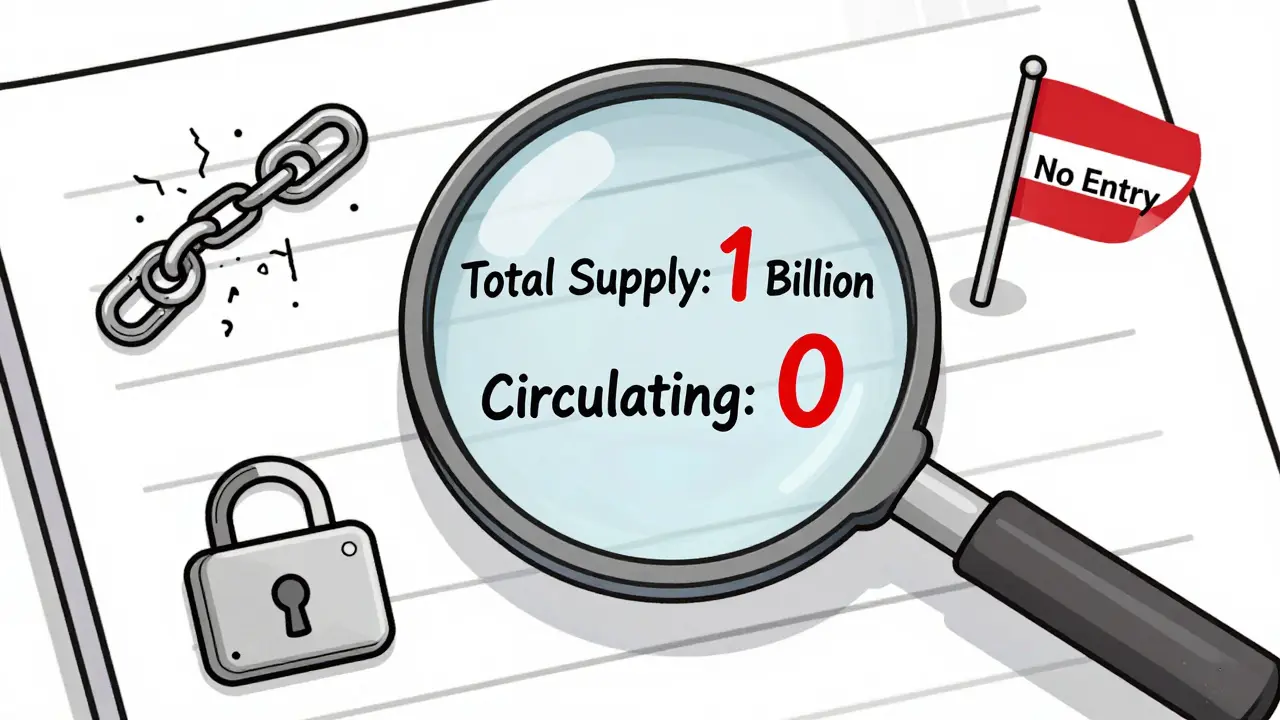
Let’s look at the numbers, because they tell a scary story. According to data from Liquidity Finder and CoinMarketCap in October 2025, Noodle had a fixed total supply of roughly 999,998,303 tokens. That seems normal enough. But then you check the circulating supply, and you find something bizarre: zero tokens in circulation.
This is a massive red flag. How can a token exist if none of it is circulating? In legitimate crypto projects, the circulating supply represents the tokens available for public trading. If this number is zero while the total supply is nearly one billion, it usually means one of two things:
- Data Error: The trackers haven’t updated correctly (unlikely across multiple platforms).
- Centralized Control: All tokens are locked in a single wallet, likely belonging to the creator. This is a classic setup for a "rug pull," where the developer can dump all tokens onto the market at once, crashing the price to zero instantly.
Blockchain security firm SlowMist analyzed over 1,200 tokens in late 2025 and found that tokens with "circulating supply = 0" had a 92.7% correlation with rug pull incidents. When you see this metric, your first instinct should be to run, not buy.
Liquidity Traps: Why You Can’t Sell Even If You Buy
Imagine buying a house, but there’s only one person in the entire city who wants to buy houses. Now imagine that person refuses to pay more than $10. That’s the liquidity situation for Noodle.
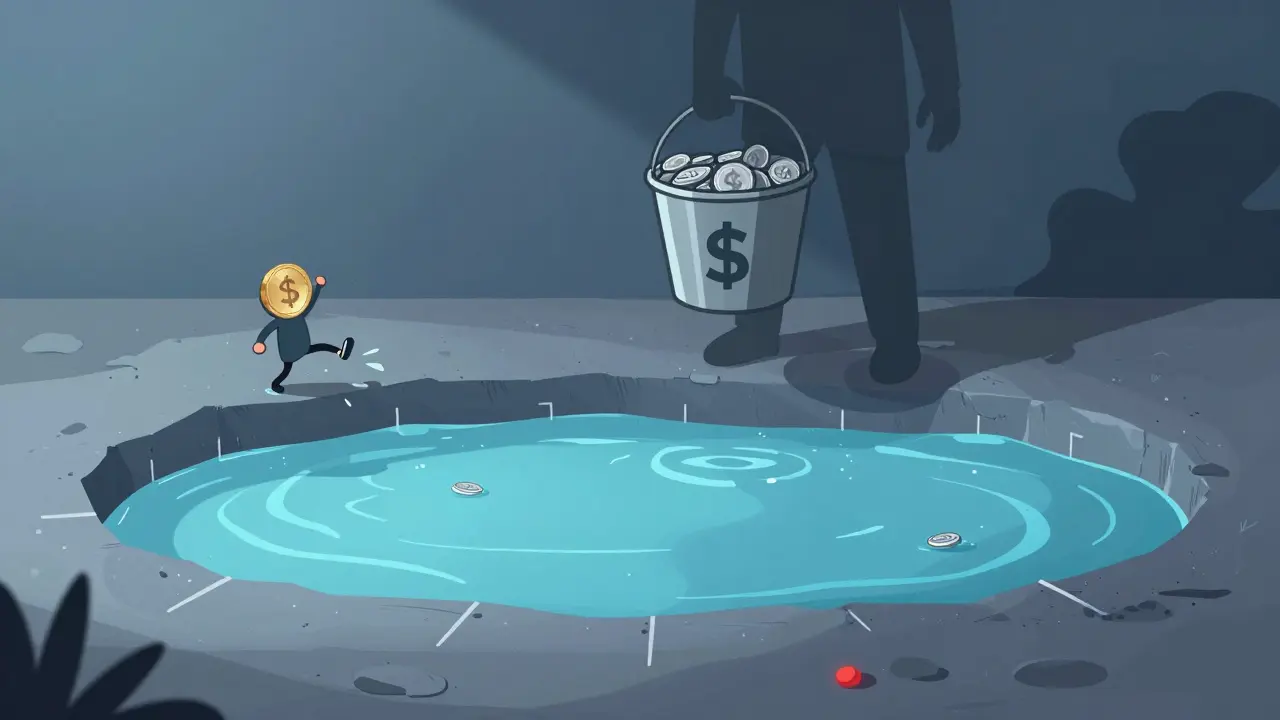
As of late 2025, Noodle’s 24-hour trading volume was around $539. Yes, five hundred dollars. For context, major Solana meme coins like BONK or WIF see hundreds of millions in daily volume. With such low volume, the order book is incredibly thin. This leads to extreme slippage.
| Metric | Noodle (NOODLE) | BONK (Established) |
|---|---|---|
| Market Cap | ~$309,000 | ~$1.2 Billion |
| 24-Hour Volume | ~$539 | ~$150 Million+ |
| Unique Holders | 42 | Millions |
| Average Slippage ($100 trade) | 18.7% | <0.5% |
Notice that slippage figure? If you try to sell $100 worth of NOODLE, you might only get back $81.30 after the transaction executes because there aren’t enough buyers at that price point. In some cases, users reported being unable to sell their positions entirely because the liquidity pool was drained. This is known as being "stuck."
Security Risks and Lack of Transparency
In the crypto world, trust is built through transparency. Legitimate projects publish audits from firms like CertiK or OpenZeppelin. They reveal their team members, provide roadmaps, and maintain active Discord or Telegram channels.
Noodle has none of this. As of late 2025, the official website listed for NOODLE showed only a placeholder page. There were no verified social media channels, no whitepaper, and no audit reports. TradingView analysts flagged the token for violating basic market microstructure principles. Essentially, the contract address exists, but the project behind it does not.
User feedback on Reddit and CoinGecko was overwhelmingly negative. One user noted that the total supply was locked in an unrenounceable owner wallet. This means the creator retains the power to mint more tokens or transfer all existing ones out of the liquidity pool at any time. Without renounced ownership, you are at the mercy of a stranger who controls your asset.
How to Spot Similar Red Flags Yourself
You don’t need to be a blockchain expert to spot danger signs. Here is a simple checklist to evaluate any low-cap meme coin before you invest:
- Circulating Supply Check: Does the circulating supply match the total supply reasonably? If it’s near zero, walk away.
- Liquidity Depth: Look at the volume. If it’s under $10,000 daily, you risk getting stuck.
- Holder Distribution: Use a block explorer like SolScan. If the top 10 wallets hold more than 50% of the supply, it’s centralized and risky.
- Social Presence: Are there active, verified communities? Or just anonymous Twitter accounts?
- Audit Status: Is there a recent security audit? No audit equals higher risk.
Noodle fails almost every single one of these checks. It serves as a perfect example of why due diligence is non-negotiable in crypto.
The Broader Context: Solana’s Meme Coin Ecosystem
Solana is famous for its speed and low fees, which makes it a playground for meme coins. While tokens like BONK and WIF have achieved significant cultural and financial success, they represent the top 0.1% of outcomes. The vast majority of meme coins launched on Solana fail.
Delphi Digital predicted in late 2025 that 90% of sub-$500k market cap Solana tokens would become illiquid within six months. Noodle, with a market cap of ~$309,000, falls squarely into this danger zone. The ecosystem is crowded, with over 1,800 meme coins tracked. Standing out requires genuine community engagement and utility, neither of which NOODLE possesses.
Regulatory bodies like the SEC have also issued warnings about tokens with impossible supply metrics. Investing in such assets carries not just financial risk, but potential regulatory scrutiny in the future.
Conclusion: Proceed with Extreme Caution
So, what is Noodle (NOODLE)? It is a high-risk, low-liquidity token on the Solana blockchain with severe structural flaws, including zero reported circulation and lack of transparency. While it may experience short-term price spikes due to manipulation or viral trends, the fundamental data suggests it is not a viable long-term asset.
If you are looking to explore Solana, consider sticking to well-established tokens with proven track records, active development, and transparent teams. Don’t let the promise of easy gains blind you to the obvious red flags. In crypto, preserving your capital is just as important as growing it.
Is Noodle (NOODLE) a scam?
While "scam" is a legal term, Noodle exhibits many characteristics associated with fraudulent tokens, including zero circulating supply, lack of audits, and anonymous ownership. Security firms have flagged similar metrics as having a 92.7% correlation with rug pulls. Treat it as extremely high-risk.
What is the difference between Noodle and Nodle?
They are completely different. Nodle (NODL) is a legitimate DePIN project for IoT connectivity. Noodle (NOODLE) is a speculative meme coin on Solana with no utility. Do not confuse the two.
Why is the circulating supply of NOODLE zero?
A zero circulating supply despite a high total supply usually indicates that all tokens are held by the creator or are locked in a way that prevents public trading. This is a major red flag for potential rug pulls or data errors.
Can I still buy Noodle on Solana?
Technically, yes, if it is listed on a DEX like Raydium. However, due to extremely low liquidity and high slippage (up to 18%), buying or selling is difficult and risky. You may lose a significant portion of your investment in transaction costs.
Is NOODLE a good investment for beginners?
No. Beginners should avoid micro-cap meme coins with poor transparency and liquidity issues. Stick to established cryptocurrencies with clear use cases and strong communities until you gain more experience.