
What is My Lovely Planet (MLC) Crypto Coin? A Guide to Eco-Gaming
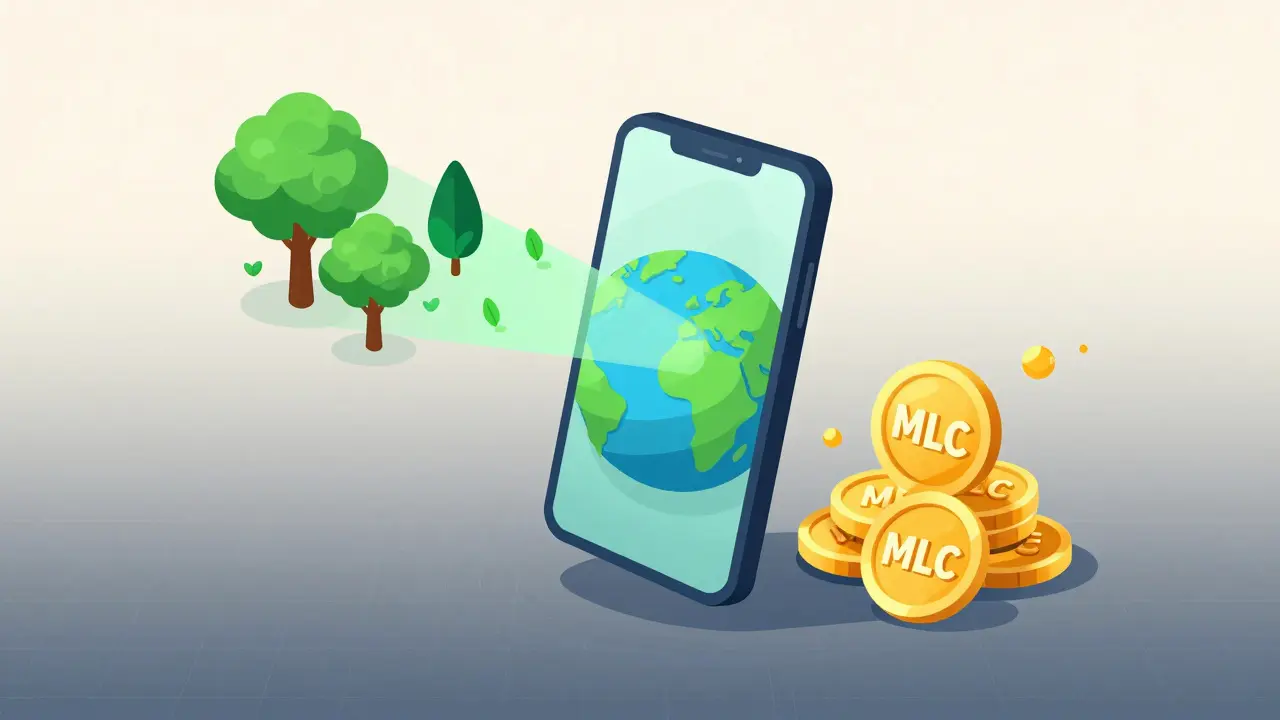
Imagine playing a casual puzzle game on your phone and actually helping the planet while earning money. That sounds like a dream, right? But with My Lovely Planet, also known by its ticker symbol MLC, this concept is becoming a reality in the world of cryptocurrency.
You might be wondering if this is just another hype-driven coin or if there is real substance behind it. The short answer is that MLC tries to bridge the gap between fun mobile gaming and serious environmental conservation. It runs on the Polygon blockchain, which is famous for being fast and cheap to use compared to Ethereum’s main network. This means you can trade tokens or move them around without paying huge fees that eat into your earnings.
But before you download the app and start tapping away, let’s break down exactly how MLC works, what makes it different from other play-to-earn games, and whether it’s worth your time and money in 2026.
How Does the MLC Token Work?
At its core, MLC is a utility token. This means it has a specific purpose inside the My Lovely Planet ecosystem rather than just being an asset you buy hoping the price goes up. The project uses a "Play & Earn" model combined with a unique economic switch designed to stop people from just farming tokens for quick cash.
Here is the basic flow:
- Play the Game: You download the mobile app and play puzzle games. As you progress, you earn in-game currency called Diamonds.
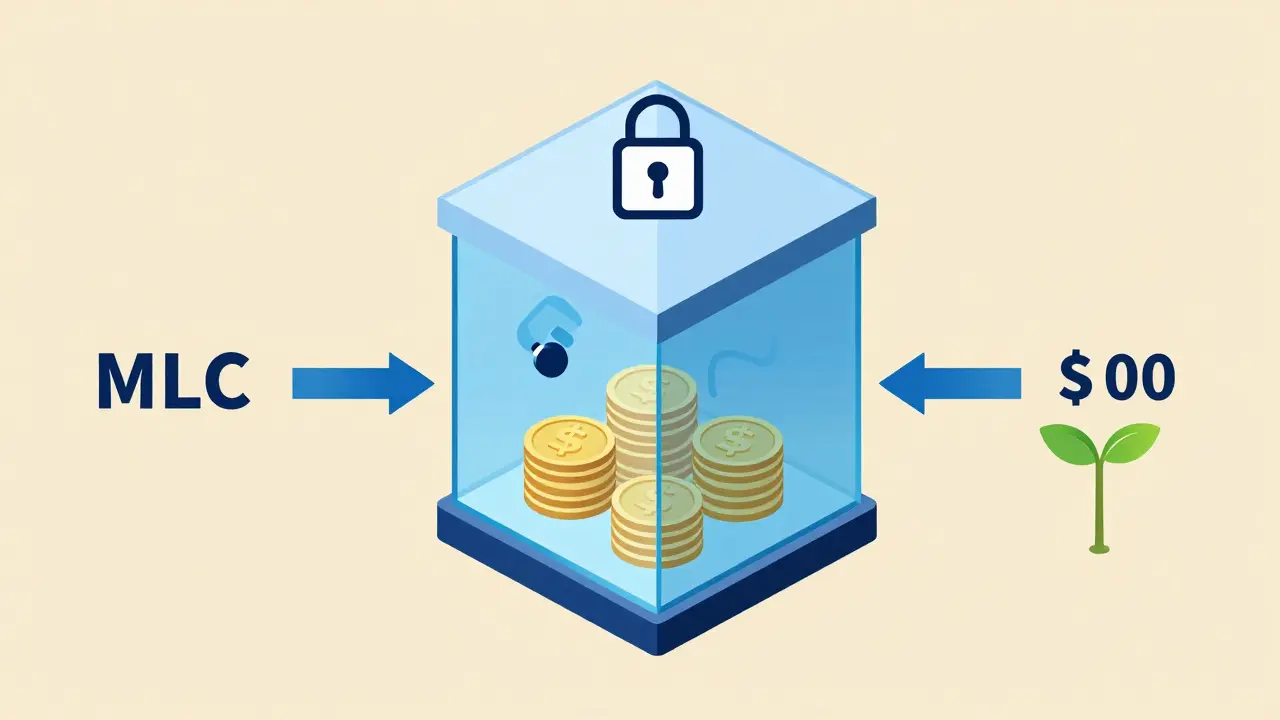
- Stake Your Tokens: To turn those Diamonds into actual MLC crypto tokens, you need to have at least $100 worth of MLC staked in the system. Staking means locking up your tokens to support the network.
- Convert and Earn: Once you meet the staking requirement and hit certain Diamond thresholds, you can convert your in-game rewards into MLC tokens.
This setup is crucial. By requiring you to stake $100 first, the developers ensure that players are committed to the long term. It prevents bots and speculators from flooding the market with tokens, which often crashes the value in other play-to-earn projects.
The Environmental Mission: More Than Just Hype?
What sets My Lovely Planet apart is its focus on the environment. A significant portion of the token supply-specifically 15.22%-is allocated to an Environmental Treasury. This isn't just a marketing slogan; it’s a structured fund within the project’s economics.
As of late 2025, the project claimed to have facilitated the planting of over 370,000 trees globally. The goal is ambitious: they want to become one of the top 30 cryptocurrencies by market capitalization. If they reach that target, which would mean a market cap of around $2.8 billion, the Environmental Treasury alone could be worth more than $800 million. That is a lot of money dedicated to planting trees and funding green projects.
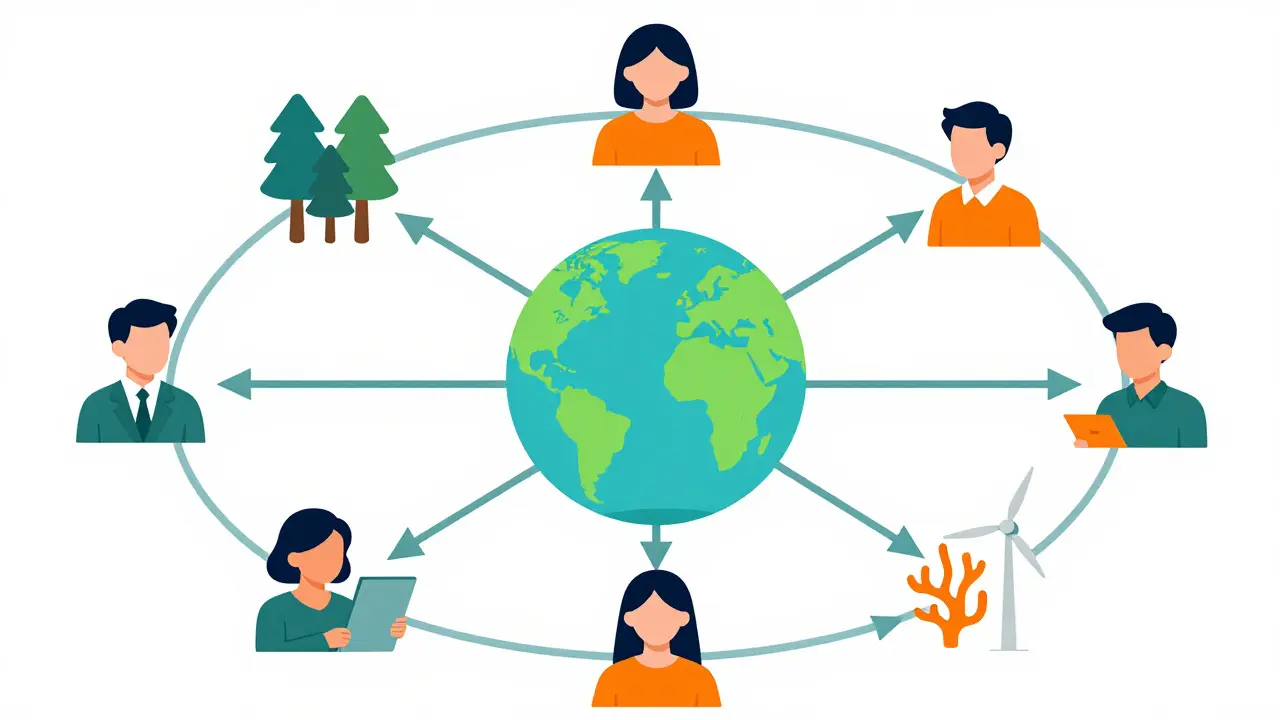
Holders of the MLC token get to vote on which environmental organizations (ONGs) receive funding through a DAO (Decentralized Autonomous Organization). So, when you hold MLC, you aren’t just holding a financial asset; you’re getting a say in where conservation money goes.
Tokenomics and Market Reality
Let’s look at the hard numbers. As of October 2025, MLC was ranked #757 on major tracking sites like CoinMarketCap. Its price hovered around $0.30, with a daily trading volume of roughly $830,000. These figures tell us two things:
- Liquidity: There is enough activity to buy and sell, but it’s not as liquid as top-tier coins like Bitcoin or Ethereum.
- Growth Potential vs. Risk: The initial fully diluted market cap was about $35 million. To hit their goal of a $2.8 billion valuation, the project needs to grow by over 9,000%. While possible in crypto, this requires massive user adoption.
The team aims to tap into the $200 billion mobile gaming industry and the growing ESG (Environmental, Social, Governance) investment market. However, achieving such explosive growth means attracting millions of active users who stay engaged for years, not just days.
| Feature | My Lovely Planet (MLC) | Typical P2E Token (e.g., SLP) |
|---|---|---|
| Barrier to Entry | High (Requires $100 staked MLC) | Low (Often free to start) |
| Anti-Speculation | Strong (Staking & Level gates) | Weak (Easy to farm & sell) |
| Primary Utility | Gaming + Environmental Voting | In-game purchases only |
| Blockchain | Polygon (Low fees) | Varies (Often BSC or Ethereum) |
| Referral Rewards | Level 20 required for both parties | Often immediate upon sign-up |
Is It Safe? Risks and Considerations
No investment in crypto is risk-free, and MLC is no exception. Here is what you need to watch out for:
Volatility: Like all altcoins, MLC’s price can swing wildly. A drop in sentiment toward gaming tokens or environmental crypto could impact its value significantly.
Execution Risk: The promise of planting millions of trees depends on the project maintaining high revenue and user engagement. If player numbers drop, the Environmental Treasury shrinks, and the mission suffers.
Regulatory Uncertainty: Governments worldwide are still figuring out how to regulate crypto, especially tokens tied to real-world assets or activities. Changes in laws could affect how MLC operates or is traded.
However, the mandatory staking requirement acts as a buffer. Because you need to lock up value to earn, the token economy is less prone to the sudden dumps seen in many meme coins or poorly designed play-to-earn games.
Who Is MLC For?
My Lovely Planet isn’t for everyone. If you are looking for a quick flip-buy low, sell high in a day-you will likely find the staking requirements frustrating. The $100 minimum stake and the need to reach Level 20 to unlock referral bonuses mean this project rewards patience and genuine engagement.
It is ideal for:
- Eco-conscious gamers: People who enjoy puzzle games and want their leisure time to contribute to a cause.
- Long-term crypto holders: Investors who believe in the intersection of Web3, gaming, and sustainability.
- Community builders: Users willing to refer friends and help them reach high levels to maximize rewards.
If you fall into these categories, MLC offers a unique blend of entertainment and potential passive income. If you prefer fast-paced trading or zero-barrier entry, you might want to look elsewhere.
Getting Started with My Lovely Planet
Ready to give it a try? Here is how you can begin:
- Download the App: Get the My Lovely Planet mobile game from your app store.
- Create a Wallet: Ensure you have a compatible wallet that supports Polygon, like MetaMask or Trust Wallet.
- Buy MLC: Use a fiat on-ramp service like Transac to buy MLC with your credit card, or transfer it from an exchange.
- Stake Your Tokens: Stake at least $100 worth of MLC in the game’s dashboard to unlock conversion features.
- Play and Progress: Start playing puzzles to earn Diamonds. Aim for Level 20 to unlock full referral benefits.
Remember, the key here is consistency. The more you play and the higher you level up, the more value you extract from the ecosystem. And every step you take helps fund the next tree planted somewhere on Earth.
What is the minimum amount I need to stake to earn MLC?
You need to stake at least $100 worth of MLC tokens to be eligible to convert in-game Diamonds into MLC tokens. This requirement helps prevent speculative farming and ensures player commitment.
Which blockchain does My Lovely Planet use?
My Lovely Planet operates on the Polygon blockchain. This choice allows for fast transactions and very low gas fees, making it cost-effective for players to interact with the token.
How does the Environmental Treasury work?
15.22% of the total MLC token supply is allocated to the Environmental Treasury. Holders can vote via a DAO on which environmental projects or NGOs receive funding from this treasury, directly linking token ownership to conservation efforts.
Can I buy MLC with a credit card?
Yes, the project integrates with Transac, providing a seamless fiat on-ramp that allows users to purchase MLC directly using credit cards, enhancing accessibility for non-crypto-native users.
What are the requirements for referral rewards?
To claim referral rewards, both the referrer and the new user must reach Level 20 in the game. This ensures that rewards go to active, engaged players rather than bots or inactive accounts.
12 Comments
Oh, splendid. Another crypto project trying to wash its sins with a few saplings and a mobile puzzle game. The sheer pretension of thinking that tapping a screen for diamonds will save the rainforest is almost poetic in its absurdity. I suppose we are all supposed to feel morally superior while our wallets get slowly drained by gas fees and staking requirements? It’s not eco-friendly; it’s eco-washing with a side of financial illiteracy. The $100 barrier to entry isn’t about 'commitment,' it’s about filtering out the poor who can’t afford to play along with this digital charade. And let’s not forget the DAO voting nonsense-because nothing says 'democratic conservation' like token holders deciding which NGO gets crumbs from a treasury that might vanish when the hype dies. Truly, the pinnacle of modern environmentalism.
stop overthinking it just play the game and plant trees lol
I have to admit, the mechanic of requiring a stake before you can convert rewards is actually pretty clever, even if it feels a bit restrictive at first glance. It really does seem like they are trying to kill the bot farms that ruined Axie Infinity back in the day. I’m curious though, how do they verify the tree planting? Is there an audit trail or just screenshots of muddy holes? If the transparency is solid, this could be a genuine shift in how we view utility tokens. It’s not just about speculation anymore; it’s about tying value to tangible, verifiable real-world impact. That’s a narrative that could stick if executed well.
The epistemological framework underlying this 'Play & Earn' paradigm is fundamentally flawed when subjected to rigorous scrutiny regarding the ontological status of digital assets versus ecological reality. One must question the hermeneutics of value transfer: does the conversion of ludic engagement into cryptocurrency truly constitute a meaningful contribution to environmental stewardship, or is it merely a simulacrum of altruism driven by speculative fervor? Furthermore, the imposition of a $100 liquidity threshold creates a socio-economic stratification that excludes the very populations most affected by climate degradation, thereby reinforcing existing hegemonic structures under the guise of decentralized empowerment. We must interrogate the dialectic between profit motive and planetary preservation.
lol yeah because nothing screams 'saving the planet' like another polygon token hoping for a 9000% pump. but sure lets pretend the dao voting is anything other than a vanity metric for people who dont know what a hash rate is. typical web3 bro energy wrapped in green packaging. i guess if you want to lose money feeling good about yourself this is your ticket.
I’ve been watching these types of projects for a while now. The Polygon integration is definitely a plus since Ethereum fees would make earning pennies per level impossible. It’s interesting to see them try to lock up value to prevent dumping. My main concern is always user retention. Puzzle games are fun for a week, then they’re forgotten. If the active user base drops, the whole economic model collapses regardless of how many trees they claim to plant. Just keeping an eye on their monthly active users report.
you guys are so naive honestly. i tried something similar last year and lost my shirt. these projects always start with big promises about saving the world but end up being rug pulls waiting to happen. the devs take their cut early and leave you holding the bag of worthless tokens. dont fall for the greenwashing propaganda. its just a pyramid scheme with better marketing. trust me i know better.
i mean the graphics look ok for a mobile game. but why do i need to stake 100 bucks just to play? thats kinda steep for a casual puzzle thing. maybe if i had more cash lying around i would try it but right now im just gonna watch from the sidelines. seems like a lot of hassle for small returns.
The requirement to reach Level 20 for referral rewards is a significant hurdle that effectively kills the viral loop potential. Most play-to-earn models rely on exponential growth through easy referrals. By gating this behind high-level achievement, they are prioritizing quality over quantity, which is smart for sustainability but bad for initial marketing velocity. I expect their user acquisition costs to be extremely high compared to competitors. They need a much stronger incentive structure for early adopters to justify the effort.
It’s nice to see projects trying to align entertainment with positive outcomes. I think the key here is whether the game is actually enjoyable on its own merits, independent of the crypto rewards. If it’s just a chore disguised as a game, people will burn out quickly. But if it’s genuinely fun, the environmental angle becomes a sweet bonus. I’d love to hear from anyone who has played it for more than a month without chasing profits.
honestly i think its cute that they are trying to do good. i wish more tech companies cared about the environment. i might give it a shot if i can find someone to help me get started since the setup looks a bit confusing for someone like me who isnt super tech savvy. hope it works out for everyone involved.
I appreciate the detailed breakdown of the tokenomics. It’s refreshing to see a guide that doesn’t just hype the price but explains the mechanics. The comparison table with SLP is particularly useful for understanding the differences in design philosophy. While I remain cautious about any crypto investment, the focus on long-term commitment via staking does address one of the biggest flaws in previous generations of P2E games. It’s worth monitoring to see if this model holds up under market pressure.