
What is Budbo Token (BUBO)? A Guide to the Cannabis Crypto Ecosystem

Imagine walking into a dispensary, scanning a QR code, and paying with a digital token that not only buys your product but also tracks its journey from seed to sale. That is the promise behind Budbo Token, known by its ticker symbol BUBO. It is an ERC-20 cryptocurrency built on the Ethereum blockchain designed specifically for the legal cannabis industry. While many crypto projects chase vague promises of global domination, BUBO targets a single, highly regulated vertical: marijuana commerce.
If you have stumbled upon this token on a trading chart or heard about it in niche crypto circles, you likely have questions. Is it just another meme coin with a funny name? Or does it actually solve real problems for dispensaries and patients? The short answer is that BUBO attempts to bridge the gap between traditional cannabis retail and decentralized finance. However, like any asset in this space, it comes with specific risks and limitations that you need to understand before diving in.
The Core Concept: Blockchain Meets Botany
To understand what Budbo Token is, you first need to look at the ecosystem it powers. The cannabis industry has always struggled with two major issues: payment processing and supply chain transparency. Because federal laws in places like the United States still classify cannabis as a controlled substance, banks often refuse to work with dispensaries. This creates a cash-heavy environment that is risky for both businesses and consumers.
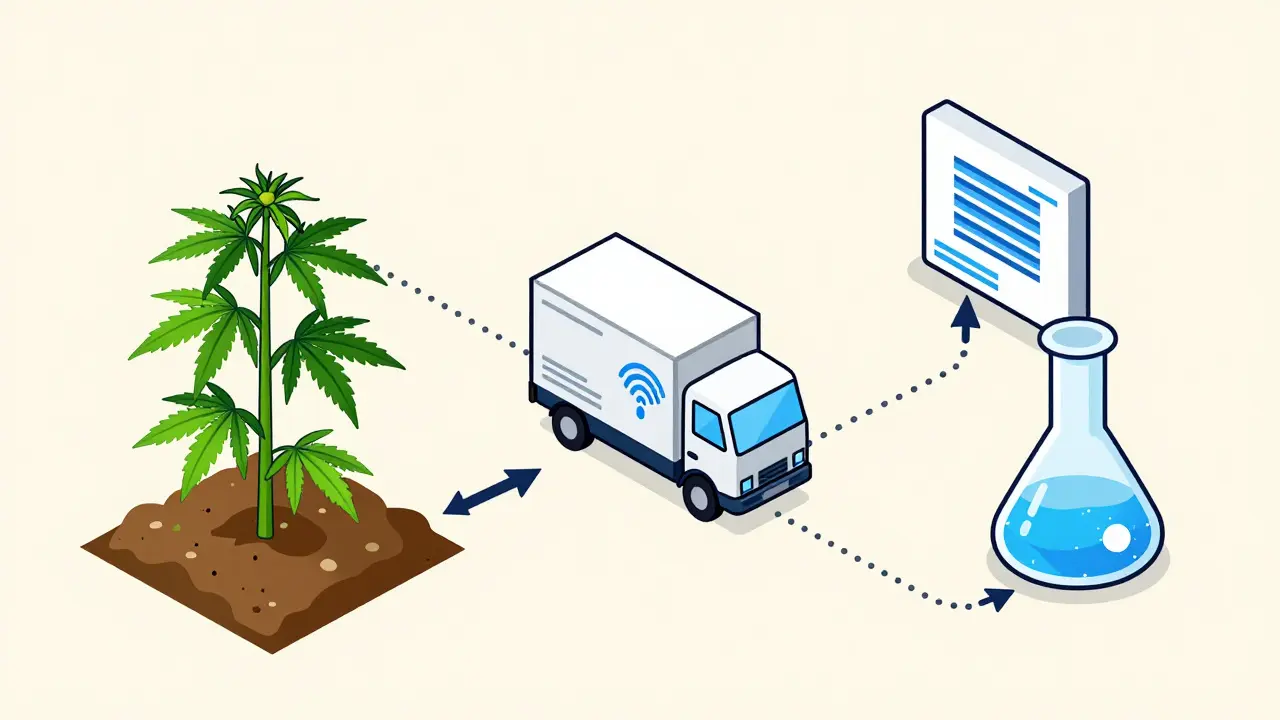
Budbo is a blockchain-enabled platform that uses BUBO tokens as a universal API key and medium of exchange within the legal cannabis market. The idea is simple. By using a cryptocurrency, dispensaries can bypass traditional banking restrictions. At the same time, the blockchain provides an immutable ledger. This means every step of a product’s life-from the soil it was grown in to the shelf where it sits-can be recorded permanently. You cannot fake a lab result or hide a shipment if the data is locked in a distributed ledger.
The token itself serves two main purposes. First, it acts as a utility token. You use it to pay for products and services within the Budbo network. Second, it functions as an incentive mechanism. When you buy with BUBO, you might get instant discounts. When suppliers join the network, they gain access to a new customer base. It is a closed-loop economy designed to keep value circulating within the cannabis community.
How the Budbo Ecosystem Works
A token is only as good as the technology backing it. Budbo isn't just a coin; it is part of a broader software suite. Let's break down the practical applications that give BUBO its value proposition.
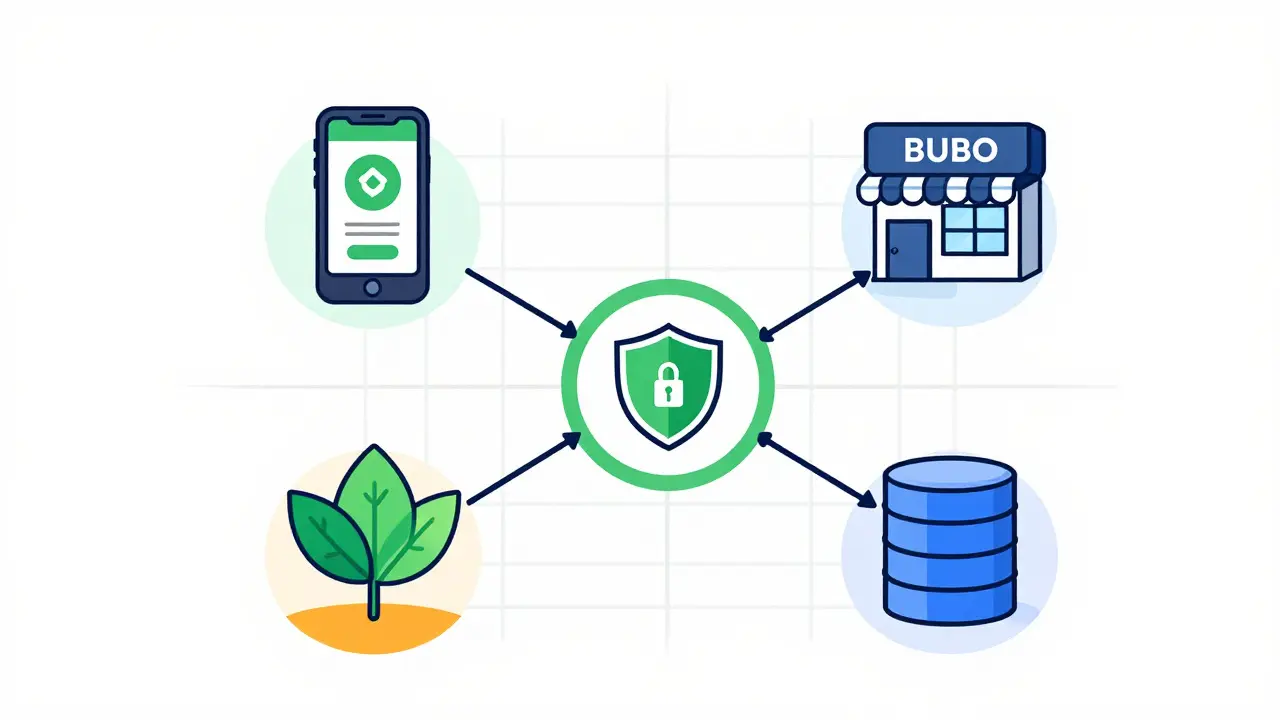
The Budbo Mobile App is the flagship consumer-facing product that allows users to discover local cannabis products, check lab results, and make purchases using an integrated crypto wallet. Think of it as Yelp meets Coinbase, but strictly for weed. The app uses an AI algorithm to match users with products based on their preferences. But here is the kicker: it relies on verified data. Testing labs upload THC, CBD, and terpene profiles directly to the blockchain. You aren't guessing what's in the bag; you are seeing immutable data.
Beyond the consumer app, there is a heavy focus on logistics. Budbo Telematics refers to blockchain-powered hardware and software solutions for fleet management and supply chain tracking in the cannabis industry. For growers and distributors, moving product is a nightmare due to strict regulations. They need to prove exactly where a batch was, who handled it, and when it arrived. Budbo’s telematic solutions provide real-time visibility into pickup, handling, and delivery. This reduces theft, ensures compliance, and builds trust between suppliers and dispensaries.
So, when you hold BUBO, you are holding a stake in a network that connects:
- Patients and recreational users looking for safe, tested products.
- Dispensaries needing reliable payment methods and customer traffic.
- Growers and manufacturers requiring transparent supply chain tools.
- Testing labs storing critical data on an immutable ledger.
Tokenomics: Supply, Distribution, and Scarcity
Understanding the economics of a cryptocurrency is crucial. If a token has infinite supply, it will likely inflate and lose value. BUBO avoids this pitfall through a fixed cap.
The total supply of Budbo Token is capped at 200 million tokens. These tokens are non-mineable, meaning you cannot run a computer to earn them like Bitcoin. They were distributed primarily through an Initial Coin Offering (ICO) back in 2018. During that campaign, the project raised $50 million USD. The initial price was set at $0.35 per token. Since then, the distribution has shifted toward public circulation.
As of mid-2026, approximately 82.17 million BUBO tokens are in active circulation. This means roughly 41% of the total supply is available for trading and usage, while the rest may be held by early investors, locked in development funds, or reserved for future ecosystem incentives. This limited supply creates natural scarcity. If demand for the Budbo platform grows, the pressure on the available tokens could drive up the price. However, scarcity alone does not guarantee value; adoption does.
| Metric | Value / Detail |
|---|---|
| Total Supply | 200,000,000 BUBO |
| Circulating Supply | ~82.17 Million BUBO |
| Blockchain | Ethereum (ERC-20) |
| ICO Date | January - March 2018 |
| Initial Price | $0.35 USD |
| All-Time High | $0.2001 USD (Jan 2022) |
Market Performance and Trading Reality
Let's talk numbers. If you are looking to trade BUBO, you need realistic expectations. Cryptocurrencies tied to specific industries often experience high volatility. BUBO is no exception.
The all-time high for Budbo Token was reached on January 7, 2022, at approximately $0.2001 USD. This peak coincided with a broader surge in interest around cannabis stocks and crypto adoption. Since then, like many altcoins, it has faced significant correction. As of March 2026, the price hovers around $0.022 USD. That represents a decline of over 88% from its peak. Does this mean the project is failing? Not necessarily. It reflects the harsh reality of the crypto market cycles and the slow pace of regulatory change in the cannabis sector.
Trading volume is another key indicator. In recent months, daily trading volume has ranged between $92,000 and $111,000 USD. While this isn't massive compared to giants like Bitcoin or Ethereum, it indicates consistent activity. The token trades primarily on decentralized exchanges like Uniswap v2 is a decentralized exchange protocol on Ethereum that allows users to swap tokens without intermediaries and centralized platforms such as Biconomy. The presence of liquidity on these platforms means you can buy and sell relatively easily, though slippage can occur during large trades due to the smaller market cap of roughly $1.93 million.
For context, BUBO ranks somewhere between #2000 and #4300 among all cryptocurrencies by market capitalization. It is a micro-cap asset. This classification means it carries higher risk but also higher potential reward if the ecosystem gains mainstream traction. You are betting on the growth of the legal cannabis industry's integration with blockchain technology.
Risks and Challenges to Consider
No investment discussion is complete without addressing the downsides. Here is why you should proceed with caution.
Regulatory Uncertainty: The entire value proposition of BUBO hinges on the legal status of cannabis. If federal laws in the US do not change significantly, the addressable market remains fragmented by state lines. Banks are still hesitant, which drives demand for crypto payments, but regulators are also watching crypto closely. Any crackdown on crypto transactions involving controlled substances could impact the platform.
Competition: The "cannabis tech" space is crowded. Other projects like CureCoin and various private equity-backed platforms are trying to solve similar problems. Budbo needs to prove that its AI-driven matching and telematics are superior to existing legacy systems used by large multi-state operators.
Adoption Hurdles: Technology is useless if people don't use it. With over 75,000 mobile users and 2,000 suppliers, Budbo has made progress. But compared to the millions of cannabis consumers in North America alone, penetration is low. Convincing everyday smokers to download a crypto wallet and buy tokens instead of using cash or credit cards is a steep behavioral hill to climb.
Is Budbo Token Worth Your Attention?
So, what is the verdict? Budbo Token (BUBO) is a legitimate attempt to apply blockchain technology to a tangible, growing industry. It is not a vaporware project. It has a working app, real-world partnerships with dispensaries, and a clear utility case for supply chain transparency. The integration of AI for product recommendation adds a layer of sophistication that sets it apart from basic payment tokens.
However, it is a high-risk, speculative asset. The price history shows significant volatility, and the path to mass adoption depends on factors outside the developers' control, namely government regulation. If you believe that the legal cannabis industry will fully embrace blockchain for payments and tracking, BUBO offers exposure to that thesis. If you prefer stability, this micro-cap altcoin is likely too volatile for your portfolio.
Before buying, ensure you understand how to store ERC-20 tokens securely. Use a reputable hardware wallet or a trusted software wallet that supports Ethereum. Never leave your assets on an exchange for long periods. And remember: past performance, including that 88% drop from the all-time high, is not indicative of future results. Do your own research, start small, and never invest more than you can afford to lose.
What is the current price of Budbo Token (BUBO)?
As of mid-2026, the price of BUBO fluctuates around $0.022 USD. Cryptocurrency prices change rapidly based on market demand and trading volume. Always check a live tracker like CoinMarketCap or Uniswap for the most up-to-the-second rate before making a transaction.
Where can I buy BUBO tokens?
You can purchase BUBO on decentralized exchanges like Uniswap v2 using Ethereum (ETH). It is also listed on some centralized exchanges such as Biconomy. To buy on Uniswap, you will need an Ethereum wallet (like MetaMask), some ETH for gas fees, and the correct contract address for BUBO to avoid scams.
Is Budbo Token a scam?
There is no evidence suggesting Budbo is a scam. It has a verifiable smart contract on the Ethereum blockchain, a functional mobile application, and reported user metrics. However, "not a scam" does not mean "safe investment." Like all altcoins, it carries high financial risk due to volatility and market conditions.
What is the maximum supply of BUBO?
The total supply of Budbo Token is fixed at 200 million tokens. This hard cap prevents inflation. Currently, about 82 million tokens are in circulation, meaning the majority of the supply is either held by investors or reserved for ecosystem development.
How does Budbo help the cannabis industry?
Budbo addresses two main pain points: payment processing and supply chain tracking. It allows dispensaries to accept digital payments without relying on traditional banks that may refuse cannabis clients. Additionally, its blockchain ledger enables transparent tracking of products from grower to consumer, ensuring authenticity and safety through immutable lab data records.