
What is Axiom (AXIOM) Crypto? Price, Mining & Dead Coin Warning
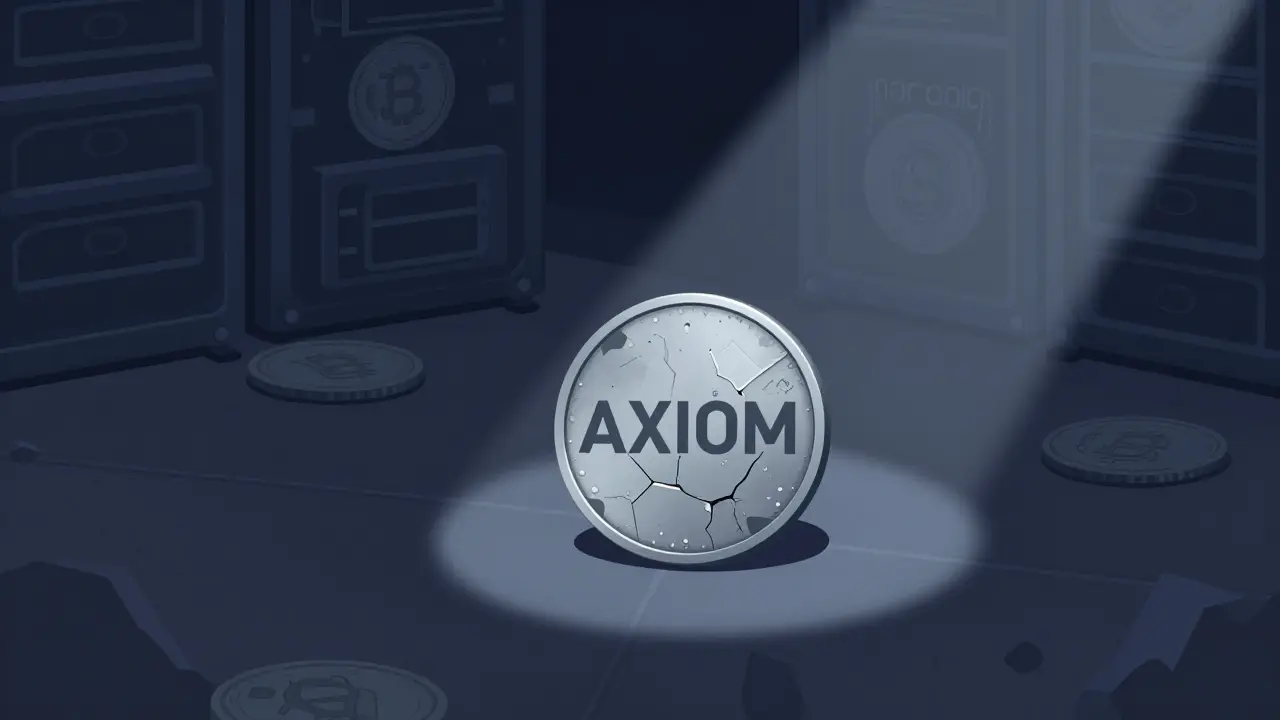
You type "Axiom" into your search bar expecting to find the next big decentralized exchange or a cutting-edge zero-knowledge protocol. Instead, you land on a page for Axiom (AXIOM), a legacy mineable cryptocurrency with negligible market activity. The price is fractions of a cent. The trading volume is zero. It feels like stepping into an empty room.
This confusion happens because the name "Axiom" has been hijacked by modern, high-growth projects while the original coin sits in digital limbo. If you are holding AXIOM or considering buying it based on hype around the new Axiom brand, you need to stop and read this. There is a massive difference between the dormant AXIOM token and the active Axiom DeFi platforms dominating headlines in 2026.
The Reality of AXIOM: A Digital Relic
Let’s look at the hard numbers first. According to major aggregators like CoinMarketCap and Investing.com, the original AXIOM coin is effectively ghosted. As of mid-2026, it ranks somewhere around #5623 among all tracked assets. That places it deep in the graveyard of forgotten altcoins.
Here is what the data actually says:
- Price: Hovering between $0.0011 and $0.0017. You would need millions of coins to equal a single dollar.
- Volume: $0.00 over the last 24 hours. No one is buying or selling.
- Liquidity: Only one active market pair exists. Even if you wanted to sell, you might not find a buyer.
- Supply Data: Listed as 0. This doesn’t mean there are no coins; it means the data feeds have given up trying to verify how many exist.
This profile fits the definition of a "dead coin." These are tokens that launched years ago, perhaps during the 2013-2015 altcoin boom, but never gained traction. They remain listed on exchanges because removing them requires administrative effort, but they serve no economic function today. If you own AXIOM, understand that its value is speculative at best and likely heading toward zero.
Where Did AXIOM Come From?
Unlike modern tokens that launch with whitepapers, roadmaps, and Twitter influencers, the original AXIOM emerged from the era of Proof-of-Work (PoW) experimentation. It was designed to be mineable, meaning people used computer power to secure the network and earn new coins, similar to early Bitcoin or Litecoin.
However, the specifics are lost to time. There is no verified founding team, no public GitHub repository with recent commits, and no clear consensus algorithm documented on major tracking sites. Was it SHA-256? Scrypt? We don’t know for sure. What we do know is that it operated as an independent blockchain, not a token built on Ethereum or Solana. This technical isolation made it harder to integrate with modern DeFi tools, accelerating its decline as the industry moved toward interoperable smart contract platforms.
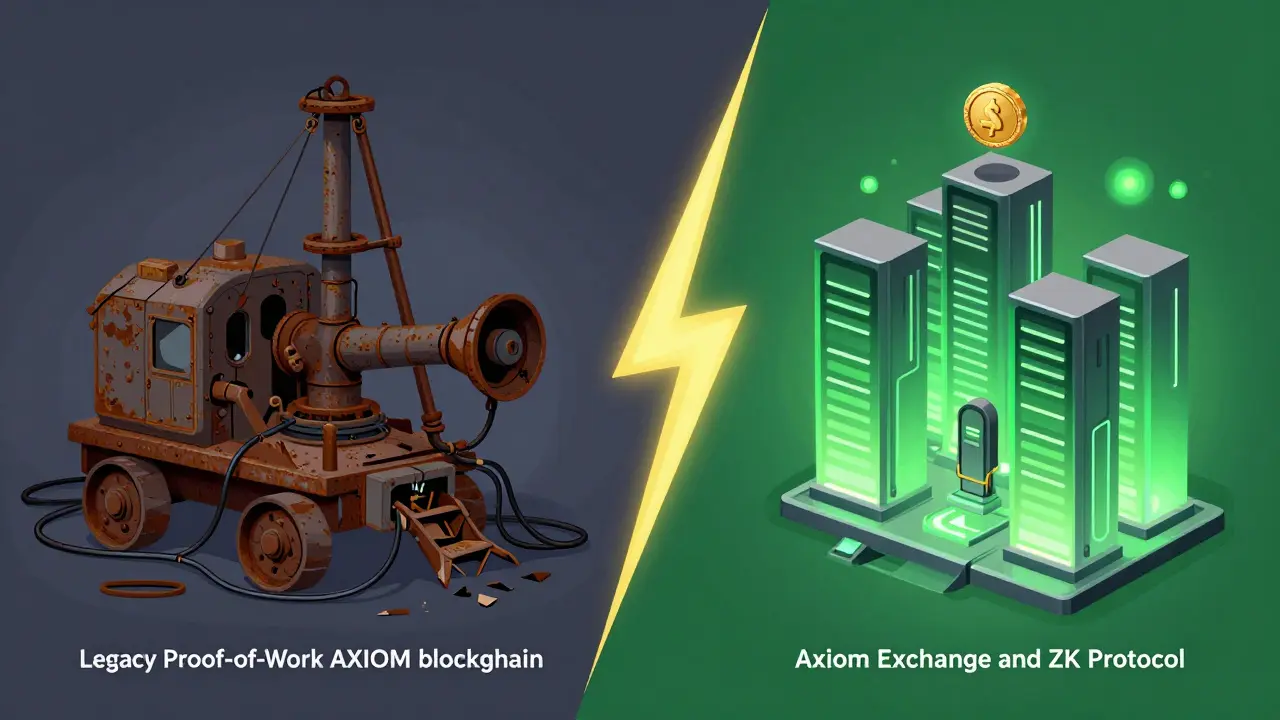
| Feature | Legacy AXIOM Coin | Axiom Exchange / Protocol |
|---|---|---|
| Status | Dormant / Inactive | Active / High Growth |
| Technology | Unknown PoW Blockchain | ZK Coprocessor & DEX |
| Founders | Unknown / Anonymous | Henry Zhang & Preston Ellis |
| Revenue | $0 | $10M Monthly Recurring Revenue |
| Use Case | None currently | Cross-chain Trading & Data Queries |
The Name Confusion: Why Everyone Talks About "Axiom" Now
If you see news about Axiom making millions of dollars, it is not about the AXIOM coin. The brand name has been adopted by two distinct, highly successful modern projects. This overlap creates dangerous misinformation for casual investors.
1. Axiom Exchange (Axiom.trade)
Founded in 2024 by Henry Zhang and Preston Ellis, this platform is a decentralized exchange (DEX) backed by Y Combinator. It allows users to trade Bitcoin, Ether, Solana, and memecoins across multiple chains. Unlike the old AXIOM coin, this platform generates real revenue-reportedly $10 million in monthly recurring revenue (MRR) and $5 million in net profit. It uses a points system to reward traders, which many speculate will lead to a future token airdrop. But that token is not AXIOM.
2. Axiom Protocol (ZK Infrastructure)
This is a technical project focused on zero-knowledge (ZK) proofs. It acts as a "ZK coprocessor" for Ethereum, allowing smart contracts to efficiently query historical blockchain data. This is complex infrastructure work aimed at developers, not retail miners. It has nothing to do with the mineable AXIOM asset.
The connection between these modern giants and the legacy AXIOM coin is purely nominal. They share a name, but they do not share technology, teams, or funds. Assuming the success of Axiom Exchange will pump the price of the old AXIOM coin is like assuming Apple Inc.’s stock price depends on a defunct company named Apple Computer from the 1970s.
Can You Mine AXIOM Today?
Technically, yes. The coin is still classified as mineable. However, practically, it makes no sense. Here is why:
- No Reward Value: Mining costs electricity and hardware wear. If the coin sells for $0.001 and has zero volume, you cannot convert your mined coins into fiat currency easily.
- Network Hashrate Collapse: With no active miners, the difficulty of mining may have dropped, but so has the security of the chain. It is vulnerable to attacks, making holdings unsafe.
- Software Obsolescence: There are no updated mining clients or wallet recommendations provided by current data aggregators. Finding working software requires digging through archived forums from 2015, which carries significant malware risks.
If you are looking to get into crypto mining, focus on established networks like Bitcoin, Litecoin, or emerging Proof-of-Stake validators. Do not waste resources on a chain with no economic utility.
Risks of Holding Dead Altcoins
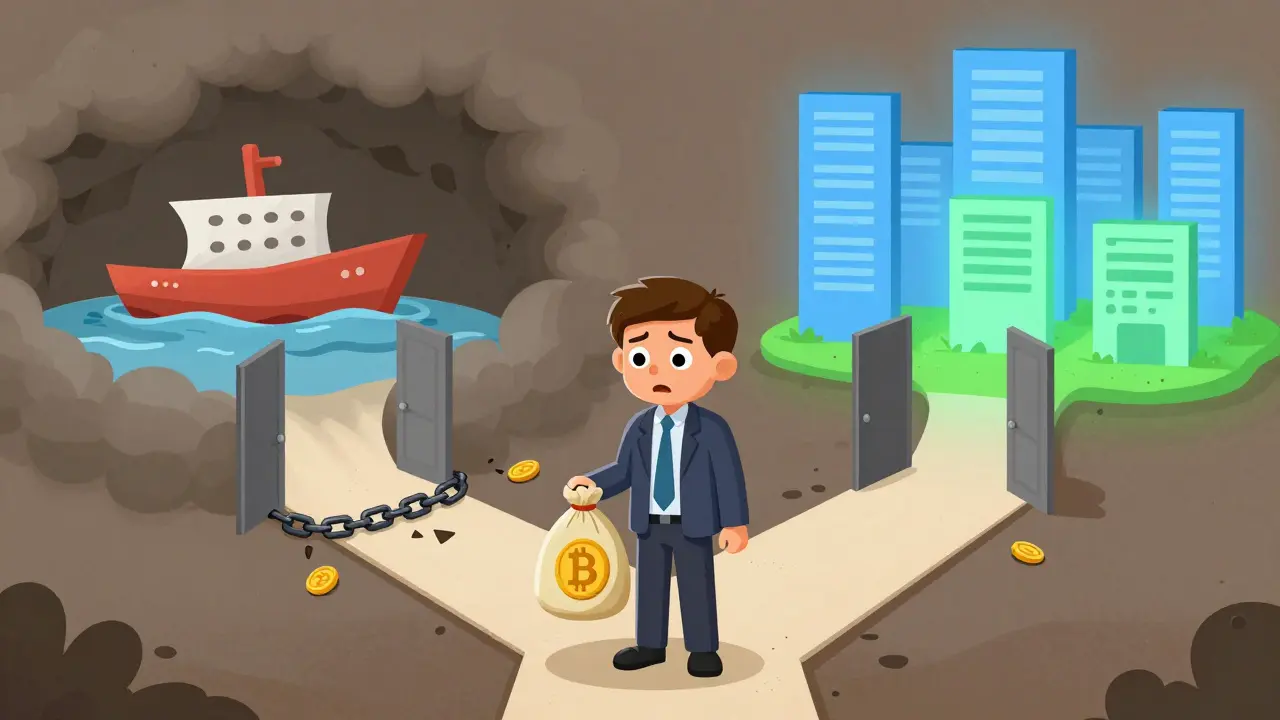
Holding AXIOM exposes you to specific risks that differ from volatile but active cryptocurrencies:
- Liquidity Trap: You might see a paper gain if the price ticks up slightly due to a single large buy order, but you won’t be able to sell without crashing the price back down. With only one active market, exit strategies are non-existent.
- Exchange Delisting: Exchanges periodically clean up their listings. When they remove illiquid assets, holders often lose access to their funds entirely if they haven’t transferred them to a private wallet-and even then, the wallet software may no longer be supported.
- Opportunity Cost: Capital tied up in dead coins could be earning yield in stablecoins or participating in active DeFi protocols. Every day AXIOM sits idle, it loses purchasing power against inflation.
Regulators worldwide are increasing scrutiny on illiquid tokens. While AXIOM isn’t specifically targeted, it falls into the category of "zombie assets" that offer no consumer protection and minimal transparency.
What Should You Do?
If you found yourself here searching for investment advice on AXIOM, the answer is straightforward: avoid it. The project is dormant, the community is gone, and the technology is obsolete.
If you are interested in the "Axiom" brand due to its recent success, research Axiom Exchange or the Axiom ZK Protocol. Look for their official documentation, join their developer communities, and participate in their point systems if available. These are living projects with revenue, active development, and clear use cases in the 2026 crypto landscape.
For the legacy AXIOM coin, treat it as a lesson in crypto history. It represents the thousands of experiments that failed to survive the shift from simple mining to complex smart contract ecosystems. Keep your capital where it can grow, not where it gathers digital dust.
Is Axiom (AXIOM) the same token as Axiom Exchange?
No. Axiom Exchange is a modern decentralized trading platform founded in 2024. The legacy AXIOM coin is a dormant, mineable cryptocurrency from the mid-2010s. They share a name but have no technical or organizational connection.
Why is the trading volume for AXIOM zero?
Zero volume indicates that no trades have occurred on tracked exchanges in the last 24 hours. This suggests the coin is effectively abandoned, with no buyers or sellers actively participating in the market.
Can I still mine AXIOM?
While the coin is technically mineable, it is not recommended. The lack of liquidity means you cannot easily sell what you mine, and the absence of updated software poses security risks.
What is the Axiom ZK Protocol?
The Axiom ZK Protocol is a separate project that provides zero-knowledge proof infrastructure for Ethereum. It helps smart contracts query historical data efficiently. It is unrelated to the legacy AXIOM coin.
Should I buy AXIOM expecting a revival?
No. There are no signs of development, community activity, or partnerships for the legacy AXIOM coin. Betting on a revival is highly speculative and risky compared to investing in active projects.