
What Crypto Exchanges Are Banned in Nigeria: 2026 Regulatory Guide
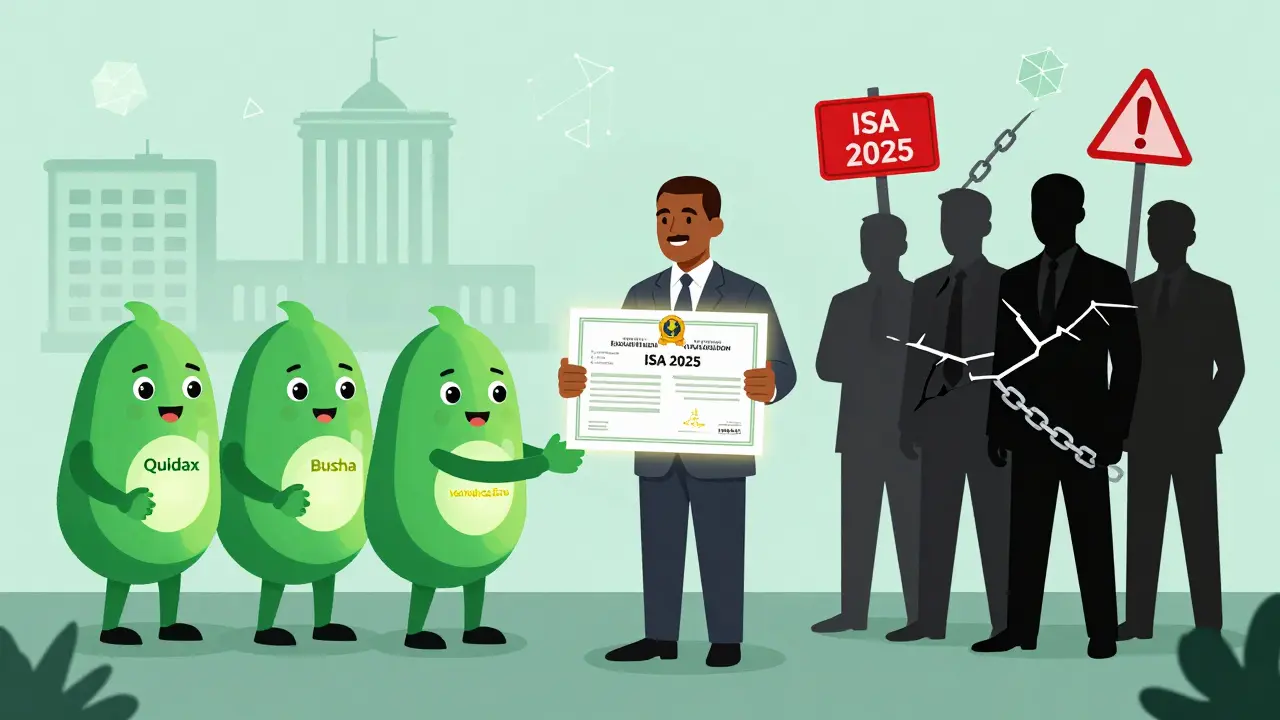
For years, if you tried to buy Bitcoin with Naira on a major global exchange, you hit a wall. The Central Bank of Nigeria (CBN) cut off bank access, and international platforms pulled out or got blocked. But as we move through late 2026, the landscape has shifted dramatically. The question isn't just "which exchanges are banned?" but rather "which ones are legal?"
The short answer is that there is no longer a simple blacklist of banned names. Instead, Nigeria operates under a strict licensing regime established by the Investments and Securities Act (ISA) 2025, which defines digital assets as securities. Any exchange operating without a license from the Securities and Exchange Commission (SEC) is effectively banned from conducting business within Nigerian borders. This means while you might technically access some sites via VPN, using them for Naira transactions is illegal and risky.
The Shift from Blanket Bans to Licensing
To understand what is banned today, you have to look at where we came from. In 2021, the CBN issued a circular prohibiting banks from servicing any crypto-related businesses. This didn't ban the technology, but it made buying crypto incredibly difficult because your bank would freeze your account if they detected a transaction to an exchange.
That changed in late 2023 when the CBN lifted the ban, allowing banks to service licensed Virtual Asset Service Providers (VASPs). Then, in March 2025, President Bola Ahmed Tinubu signed the ISA 2025 into law. This was the game-changer. It moved oversight from the banking sector to the SEC, treating cryptocurrencies like stocks. If an exchange doesn't register with the SEC, it cannot legally operate. This created a two-tier system: licensed local heroes and unlicensed global giants facing restrictions.
Is Binance Banned in Nigeria?
Binance is the elephant in the room. For most Nigerian traders, Binance *is* the exchange. So, is it banned? The answer is nuanced. Binance is not "banned" in the sense that the government has outlawed the software itself. However, its operations involving the Naira are severely restricted.
In February 2024, Binance suspended P2P trades for Naira. Shortly after, Nigerian telecom providers blocked access to Binance's domain names. This is a functional ban on easy access. You can still create an account and trade crypto-for-crypto (like swapping BTC for ETH), but you cannot easily deposit or withdraw Naira directly through official channels.
Key Takeaway: While not explicitly named in a "banned list," Binance operates in a gray area. Using it requires workarounds like VPNs to bypass ISP blocks, and moving fiat money in or out is difficult and often violates terms of service for local banks. For all practical purposes, if you want a smooth, legal experience with Naira, Binance is currently off-limits for direct fiat trading.
Which Exchanges Are Legally Licensed?
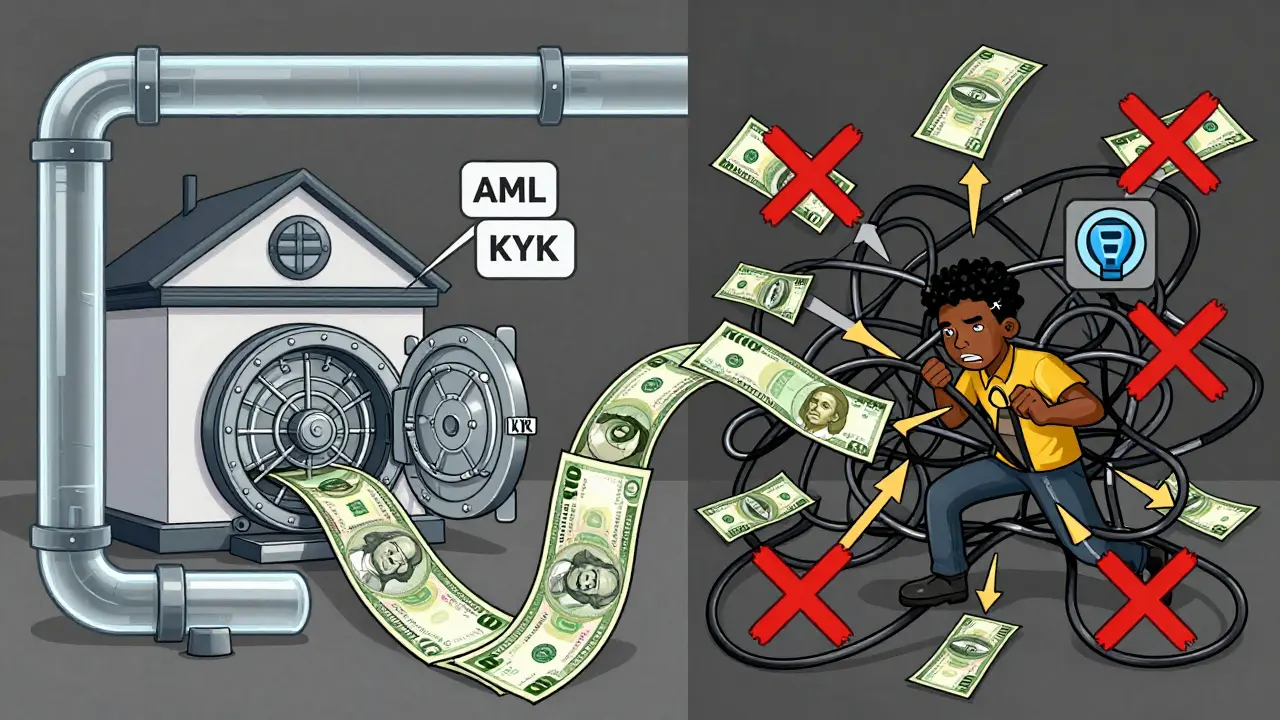
If you want to trade safely and legally in Nigeria in 2026, you need to stick to platforms that have passed the SEC's rigorous vetting process. These exchanges have implemented strict Anti-Money Laundering (AML) and Know Your Customer (KYC) protocols. They are the only ones allowed to interface directly with the Nigerian banking system.
As of late 2026, the primary licensed exchanges include:
- Quidax: One of the first to receive approval, Quidax has become a household name. It offers a user-friendly interface and supports a wide range of cryptocurrencies. Because it is fully compliant, you can link your Nigerian bank account directly.
- Busha: Another early adopter of the new regulatory framework. Busha focuses heavily on security and compliance, making it a favorite among institutional investors and serious retail traders who prioritize safety over speed.
- Yellow Card: Known for its innovative approach to payments and crypto integration, Yellow Card has secured necessary licenses to operate legally, offering unique features like spending crypto on everyday goods.
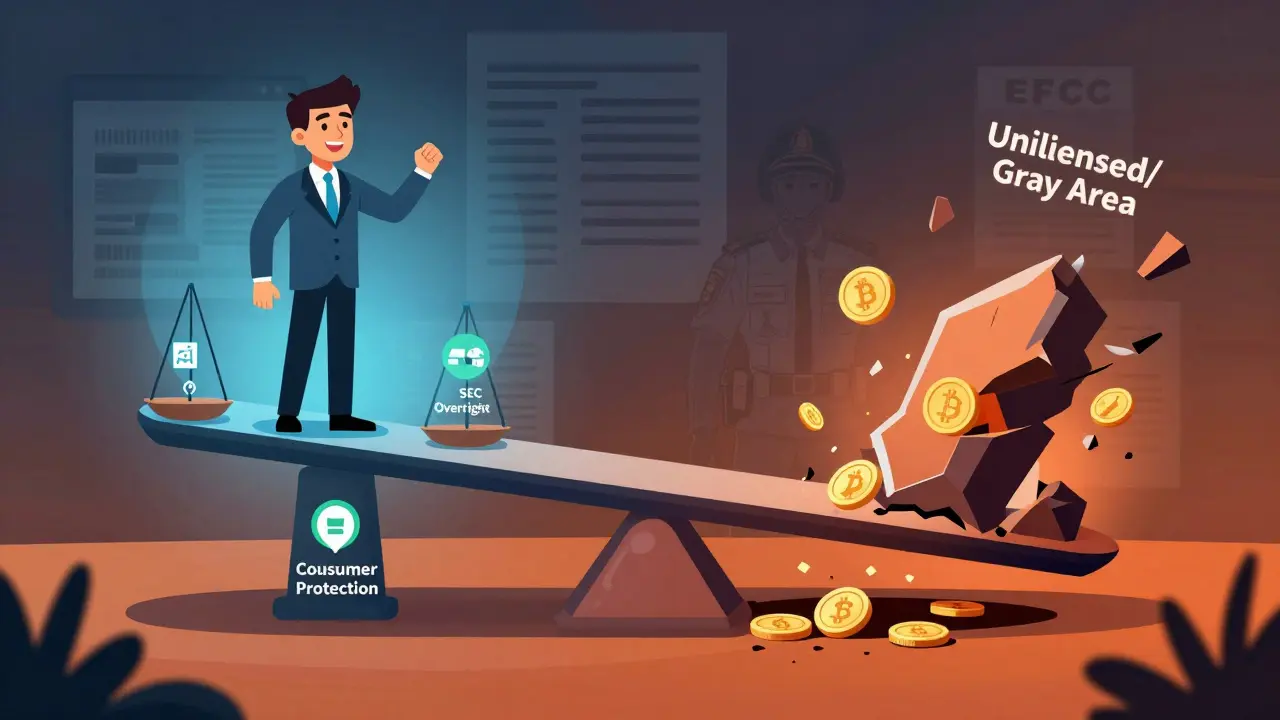
These platforms are not just "allowed"; they are actively monitored by regulators. This means if something goes wrong-like a hack or fraud-you have recourse through Nigerian financial authorities. Unlicensed exchanges offer no such protection.
| Feature | Licensed (e.g., Quidax, Busha) | Restricted (e.g., Binance) |
|---|---|---|
| Fiat On-Ramp (Naira) | ✅ Direct Bank Transfer Allowed | ❌ Suspended/Blocked |
| Legal Status | ✅ Fully Compliant with ISA 2025 | ⚠️ Domain Blocked, No Fiat Support |
| Consumer Protection | ✅ Regulated by SEC & EFCC | ❌ No Local Recourse |
| Access Method | ✅ Direct App/Web Access | ⚠️ Requires VPN for Web Access |
The Cost of Non-Compliance: Fines and Risks
Why does the government care so much? It’s about control and taxation. The Nigeria Tax Administration Act (NTAA) 2025, which took effect in 2026, introduced heavy penalties for non-compliance. VASPs that fail to register or report transactions face initial fines of ₦10 million ($6,693) for the first month of default, plus ₦1 million ($669) for every additional month.
This isn't just paperwork. The Economic and Financial Crimes Commission (EFCC) and the Nigerian Financial Intelligence Unit (NFIU) now have enhanced powers to investigate crypto fraud. If you use an unlicensed platform and get scammed, the police may tell you that you were participating in an illegal activity. There is no safety net. The ISA 2025 explicitly bans Ponzi schemes and gives regulators access to telecommunications records to track illicit flows. Sticking to licensed exchanges protects you from being labeled a participant in money laundering or tax evasion.
How to Spot an Unlicensed Exchange
Not every exchange that accepts Nigerians is licensed. Many international platforms still allow users to sign up, but they do so in violation of Nigerian law. Here is how to protect yourself:
- Check the SEC Register: The SEC publishes a list of approved VASPs. If the exchange isn't on that list, it's operating illegally in Nigeria.
- Look for Local Banking Integration: If an exchange forces you to use P2P networks exclusively because bank transfers are blocked, it's likely not fully licensed for fiat operations.
- Beware of "Too Good to Be True" Promos: Unlicensed exchanges often lure users with high bonuses to compensate for the lack of regulatory trust. Licensed platforms compete on reliability, not just incentives.
Using an unlicensed exchange also puts your personal data at risk. Without SEC oversight, these platforms aren't required to meet Nigeria's data protection standards. A breach could expose your identity and financial history to bad actors with no local authority to hold them accountable.
The Future of Crypto in Nigeria: 2026 and Beyond
Nigeria remains one of the largest crypto markets in Africa, receiving an estimated $92.1 billion in crypto value between July 2024 and June 2025. That’s nearly double South Africa’s activity. The government knows it can’t stop this tide, so it chose to channel it. The current regulatory framework is designed to turn crypto from a shadow economy into a taxable, investable asset class.
We expect more exchanges to apply for licenses throughout 2026 and 2027. International giants may return if they can navigate the compliance costs. For now, however, the smart money is staying local. By using licensed platforms like Quidax and Busha, you’re not just following the rules; you’re supporting the development of a secure, transparent financial ecosystem in Nigeria.
Don't let convenience tempt you into using restricted platforms. The hassle of VPNs and the risk of frozen funds aren't worth it when safe, legal alternatives are available. Stick to the SEC-approved list, keep your records clean, and trade with confidence.
Is Binance completely banned in Nigeria?
Binance is not explicitly "banned" by name in legislation, but its operations are severely restricted. It has suspended Naira P2P trading, and Nigerian ISPs block access to its website. Users can still access the site via VPN and trade crypto-to-crypto, but they cannot legally deposit or withdraw Naira through official banking channels.
Which crypto exchanges are legal in Nigeria in 2026?
Legal exchanges must be licensed by the Securities and Exchange Commission (SEC). As of 2026, prominent licensed platforms include Quidax, Busha, and Yellow Card. These platforms comply with the Investments and Securities Act (ISA) 2025 and can legally process Naira transactions.
Can I use my bank card to buy crypto on Binance?
No. Since the CBN lifted its blanket ban in 2023, banks are only allowed to service licensed VASPs. Because Binance does not have full operational license for fiat services in Nigeria, banks will decline transactions destined for Binance. Attempting to force these transactions can lead to account freezes.
What happens if I use an unlicensed exchange?
Using an unlicensed exchange carries significant risks. You have no consumer protection under Nigerian law, meaning if the platform fails or scams you, you cannot seek help from the SEC or EFCC. Additionally, the Nigeria Tax Administration Act imposes heavy fines on non-compliant entities, and users may face scrutiny regarding tax obligations and anti-money laundering laws.
Does the SEC regulate decentralized finance (DeFi)?
The ISA 2025 primarily targets centralized exchanges and Virtual Asset Service Providers (VASPs). While DeFi protocols are harder to regulate due to their lack of central management, the SEC has indicated it will issue further guidelines. Currently, interacting with DeFi platforms is less regulated than using centralized exchanges, but users should exercise extreme caution as these platforms are not covered by the same consumer protections.