
What Are Multi-Signature Crypto Wallets? A Complete Guide to M-of-N Security
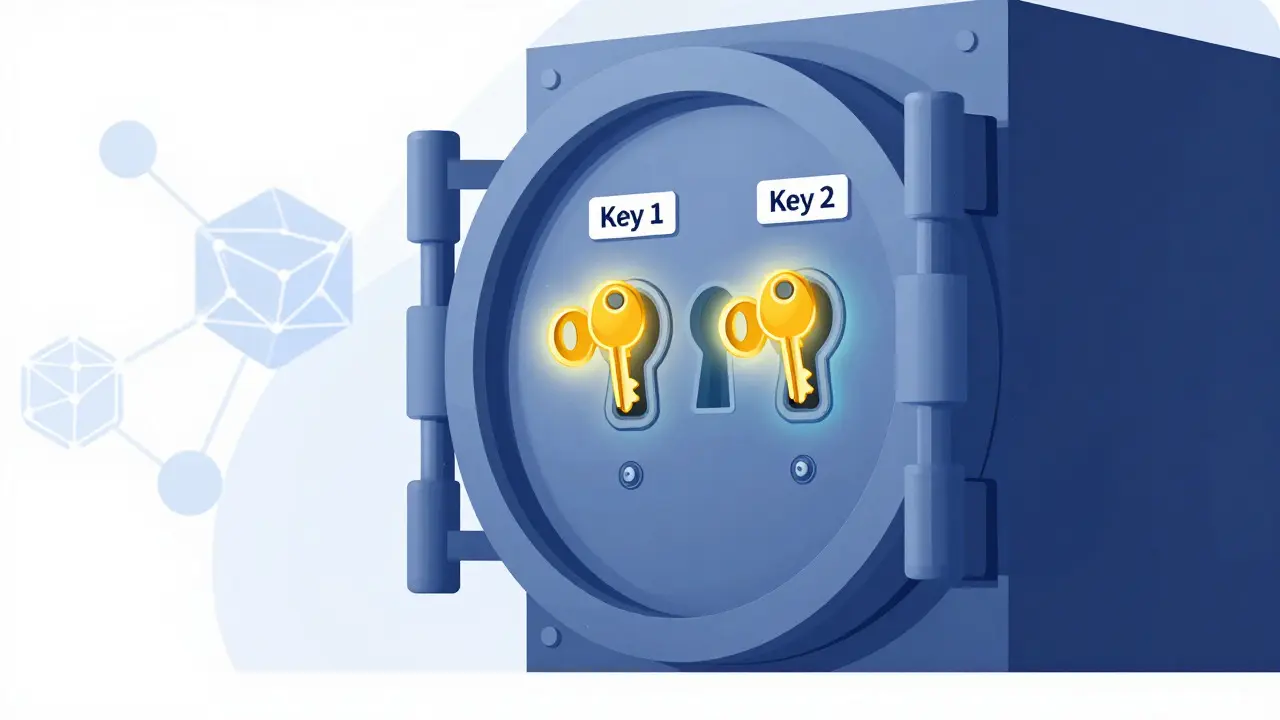
Imagine handing over the keys to your house to a single friend. If they lose them, you’re locked out. If they steal them, you’re robbed. Now imagine splitting those keys among three trusted friends, requiring two of them to agree before the door opens. That is the core logic behind multi-signature crypto wallets, often called multi-sig wallets. These are digital vaults that require multiple cryptographic signatures from different private keys to authorize any transaction. Unlike standard wallets where one person holds all the power, multi-sig distributes control, creating a system of checks and balances that protects against theft, loss, and human error.
In the early days of Bitcoin, losing a single private key meant losing everything forever. Today, as institutions and decentralized organizations manage billions in assets, that risk is unacceptable. Multi-sig technology has evolved from a niche feature into the industry standard for serious asset protection. Whether you are running a startup, managing a DAO treasury, or simply want peace of mind for your personal savings, understanding how these wallets work is essential for staying safe in the crypto ecosystem.
How Multi-Signature Wallets Work: The M-of-N Model
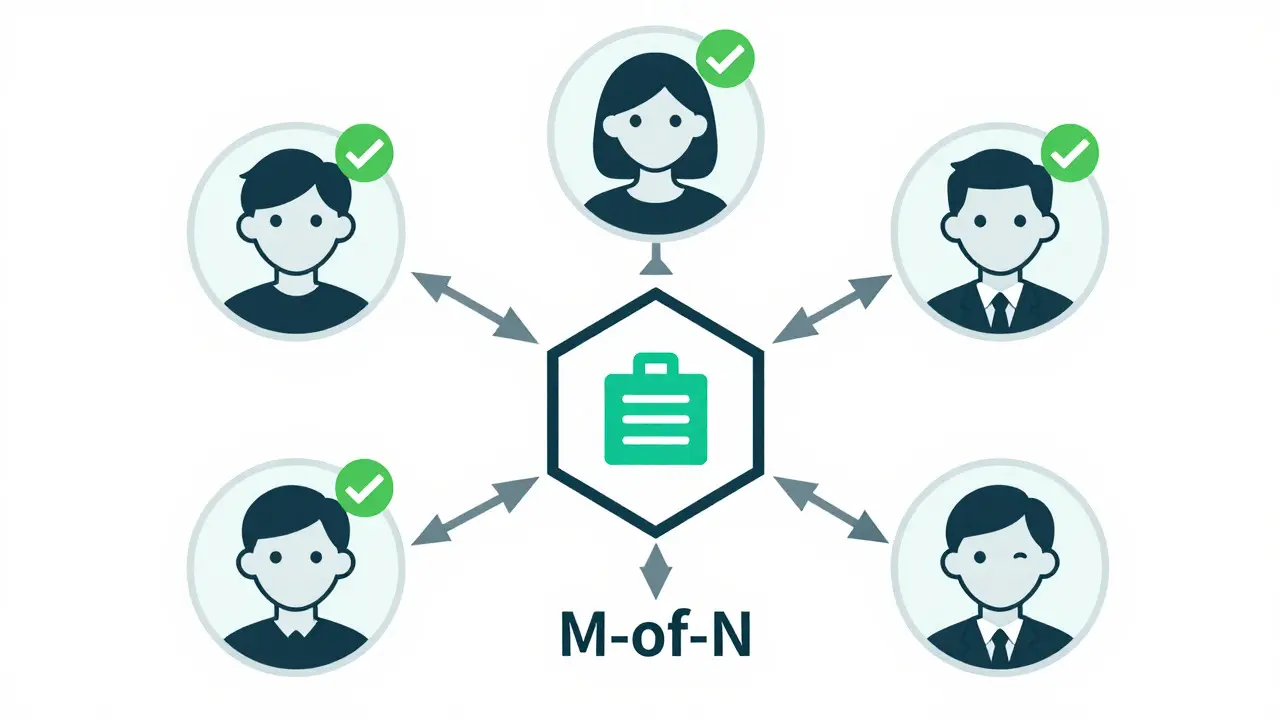
The magic of a multi-sig wallet lies in its configuration, known as the M-of-N model. In this framework, "N" represents the total number of private keys created for the wallet, and "M" is the minimum number of signatures required to approve a transaction. You might see setups like 2-of-3, 3-of-5, or even 4-of-7. Let’s break down why the 2-of-3 setup is so popular.
In a 2-of-3 wallet, three distinct keys are generated. To move funds, at least two of those three holders must sign off on the transaction. This structure offers resilience. If one key is lost or stolen, your funds remain safe because the thief needs a second signature. If one holder goes on vacation or loses their device, the other two can still access the funds. It eliminates the single point of failure that plagues traditional single-signature wallets.
| Configuration | Total Keys (N) | Required Signatures (M) | Best For | Risk Mitigation |
|---|---|---|---|---|
| 2-of-3 | 3 | 2 | Small teams, couples, individual backup | Loses one key? Still secure. One compromised? Still safe. |
| 3-of-5 | 5 | 3 | DAOs, medium-sized businesses | Prevents collusion by small groups; allows for more member turnover. |
| 4-of-7 | 7 | 4 | Large corporations, institutional treasuries | High governance oversight; requires broad consensus for moves. |
Technically, these rules are enforced by smart contracts on the blockchain. When a transaction is initiated, it enters a pending state. It sits there until the required threshold of signatures is collected. Only then does the transaction broadcast to the network. This process adds a layer of friction-transactions take longer-but that friction is exactly what stops hackers and rogue insiders from draining accounts instantly.
Multi-Sig vs. Single-Signature Wallets: Why the Upgrade Matters
To appreciate multi-sig, you have to understand what it replaces. Most people start with a single-signature wallet, often a hot wallet connected to an exchange or a simple mobile app. In this model, one private key controls everything. It’s convenient, but it’s fragile. According to security reports from Coinbase, nearly 98% of hacked cryptocurrency exchanges relied on single-signature custodial solutions. When that one key is compromised, the attacker has full control.
Multi-sig changes the math. Even if a hacker steals one private key, they cannot move the funds without the others. This drastically reduces the attack surface. Ledger Academy data suggests that properly implemented multi-sig setups reduce successful theft attempts by 92% compared to single-key alternatives. However, this security comes with trade-offs. Transaction times increase. A standard single-sig transaction might execute in under a minute. A 2-of-3 multi-sig transaction averages around 3.2 minutes due to the coordination needed between signers. For high-frequency traders, this latency is annoying. For long-term holders, it’s a safety feature.
Another major difference is recovery. With a single wallet, if you lose your seed phrase, your money is gone forever. Multi-sig wallets offer redundancy. If you use a 2-of-3 setup and lose one key, you still have the other two. You don’t need to rely on a single piece of paper stored in a fireproof box. You just need to ensure at least two keys survive.
Who Should Use Multi-Signature Wallets?
Not everyone needs the complexity of a multi-sig wallet. In fact, for many retail users buying small amounts of Bitcoin or Ethereum, the learning curve isn’t worth the hassle. Data from Trezor shows that 68% of single-wallet consumers abandon multi-sig setups because they find them too complicated. But for certain groups, it’s not just recommended-it’s mandatory.
- Decentralized Autonomous Organizations (DAOs): DAOs hold millions in community treasuries. Using a 3-of-5 or higher setup ensures no single founder or developer can drain the funds. It enforces democratic governance on-chain.
- Cryptocurrency Businesses: Exchanges, hedge funds, and startups handling client assets face strict regulatory requirements. The U.S. Office of the Comptroller of the Currency recognizes multi-sig as satisfying "dual control" standards. Over 78% of crypto businesses managing more than $100,000 now use multi-sig.
- Joint Accounts: Couples or business partners who share crypto assets can use a 2-of-2 setup. Both parties must agree to spend, preventing unilateral decisions.
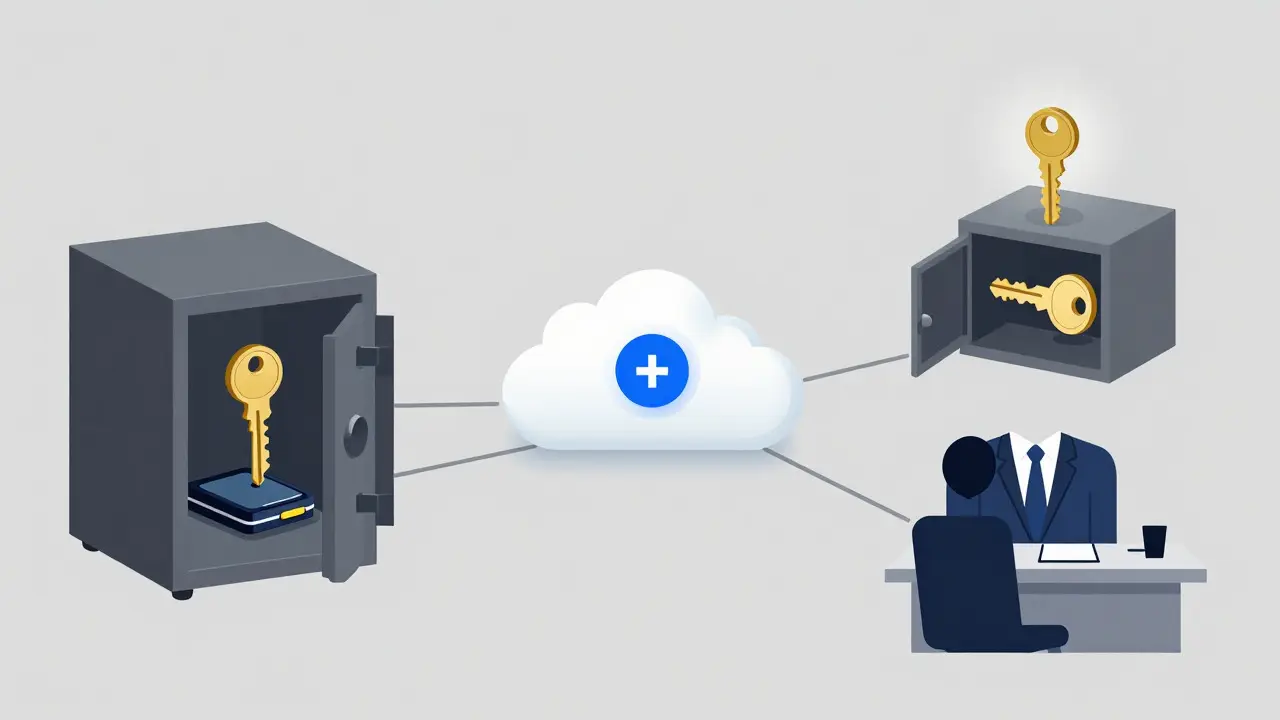
- High-Net-Worth Individuals: For someone holding significant wealth, a 2-of-3 setup provides insurance against loss. One key stays in a home safe, one in a bank deposit box, and one with a trusted family member or lawyer.
If you are a casual investor moving small sums frequently, stick to a reputable single-sig hardware wallet. If you are managing substantial value or shared responsibilities, multi-sig is the professional choice.
Setting Up Your First Multi-Sig Wallet
Creating a multi-sig wallet is more involved than downloading an app. It requires planning, secure communication, and technical care. Here is a practical step-by-step approach based on industry best practices from providers like BitGo and Safe.
- Choose Your Platform: Select a reputable multi-sig interface. Popular options include Safe (formerly Gnosis Safe) for Ethereum-based assets, or BitGo for enterprise-grade Bitcoin and altcoin support.
- Determine Your Structure: Decide on your M-of-N ratio. For most individuals and small teams, 2-of-3 is the sweet spot. It balances security with usability.
- Generate Keys Separately: Each signer should generate their own private key on a dedicated device. Ideally, use hardware wallets like Ledger or Trezor. Do not generate all keys on the same computer. If one machine gets malware, all keys could be exposed.
- Distribute Keys Securely: Share the public keys (not the private keys) to create the wallet contract on the blockchain. Keep private keys physically separated. Store one at home, one at work, and one with a trusted third party.
- Test with Small Amounts: Before funding the wallet with significant assets, send a tiny amount of crypto to it. Try to move it out. Ensure all signers can connect, approve, and broadcast the transaction successfully.
- Document the Process: Write down who holds which key and how to contact them in an emergency. Include instructions for recovering the wallet if a signer becomes unavailable.
Expect to spend 6 to 10 hours on initial setup if you are new to this. Rushing leads to mistakes, and in crypto, mistakes are expensive. Take your time to verify every address and signature.
Pitfalls and How to Avoid Them
Even with robust technology, human error remains the biggest threat. Here are common traps that undermine multi-sig security:
Co-Located Keys: Storing all three keys in the same physical location defeats the purpose. If your house burns down or gets burgled, you lose all keys. Always geographically distribute your keys.
Poor Communication Channels: Multi-sig relies on coordination. If signers argue or cannot reach each other, funds get stuck. Establish clear protocols for urgent transactions. Use encrypted messaging apps for discussion, but never share private keys over chat.
Ignoring Social Recovery: What happens if a signer dies or disappears? Newer platforms like Safe introduce "social guardians" who can help initiate recovery without having full spending power. Explore these features to prevent permanent lockouts.
Complexity Fatigue: Users sometimes disable security features because they are tedious. If your team finds the approval process too slow, consider automating routine payments with whitelisted addresses, while keeping manual approval for large or unusual transfers.
The Future of Multi-Signature Technology
Multi-sig is evolving beyond simple key counting. We are seeing integration with social recovery mechanisms, allowing trusted contacts to help restore access without needing full signing authority. There is also progress in quantum-resistant cryptography, with companies like BitGo planning post-quantum updates to protect against future computing threats.
Regulatory bodies are increasingly viewing multi-sig as a baseline requirement for institutional custody. Fidelity Digital Assets, for example, mandates multi-sig for all client holdings over $500,000. As the crypto market matures, expect multi-sig to become as standard as two-factor authentication is for email today. It is no longer a luxury for experts; it is a necessity for anyone treating cryptocurrency as real money.
Is a multi-sig wallet better than a hardware wallet?
It depends on your needs. A hardware wallet like Ledger or Trezor secures your private keys offline, protecting against online hacks. A multi-sig wallet adds a layer of governance by requiring multiple approvals. They are not mutually exclusive; in fact, the best practice is to use hardware wallets to store the keys within a multi-sig setup. This combines physical security with distributed control.
Can I recover my funds if I lose one key in a 2-of-3 wallet?
Yes. In a 2-of-3 setup, you only need two keys to sign a transaction. If you lose one key, you still have the other two. As long as you retain access to at least two keys, your funds are safe and accessible. This is the primary advantage over single-signature wallets where losing the only key means losing everything.
Are multi-sig wallets free to use?
The underlying technology is open-source and free. However, you still pay standard blockchain gas fees for transactions. Some enterprise services like BitGo charge monthly subscription fees for advanced features, customer support, and insurance. For individuals using interfaces like Safe, the cost is limited to network transaction fees.
How long does it take to set up a multi-sig wallet?
For beginners, expect to spend 6 to 10 hours. This includes researching platforms, generating keys securely, distributing them, testing transactions, and documenting recovery procedures. While the actual creation takes minutes, the careful preparation required to avoid errors makes it a longer process than setting up a standard wallet.
Do multi-sig wallets work on all blockchains?
Multi-sig functionality exists on many major blockchains, including Bitcoin, Ethereum, Polygon, and Solana. However, the implementation varies. Bitcoin uses script-based multi-sig, while Ethereum uses smart contracts via platforms like Safe. Always check if your chosen platform supports the specific cryptocurrencies you hold.