
Virtual Digital Assets Taxation in India: Complete Guide to Rules, Rates & Compliance
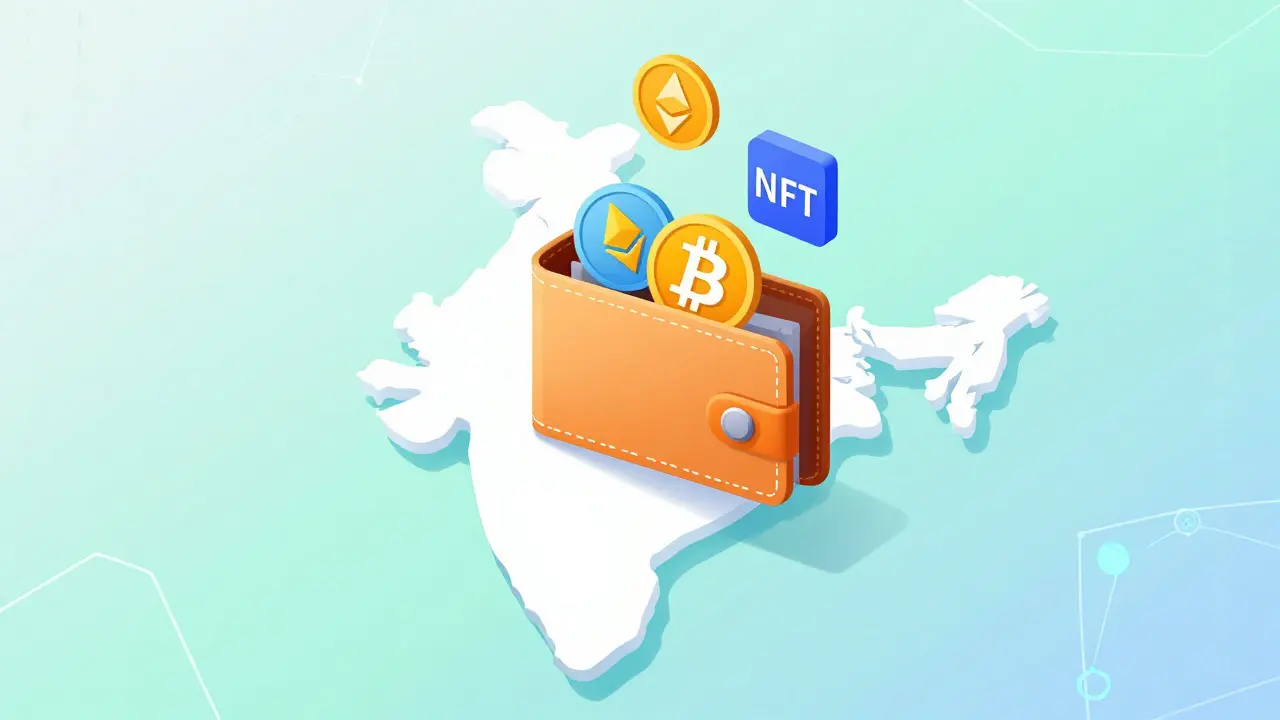
Imagine selling your Bitcoin for a profit, only to find that the government takes nearly a third of it before you even see the money. That is the reality for anyone trading Virtual Digital Assets (VDAs) in India under the current taxation framework. Since April 1, 2022, the Indian government has treated cryptocurrencies not as currency, but as taxable assets with some of the strictest rules in the world. If you are holding digital tokens, mining them, or planning to trade them, understanding these rules isn't just good advice-it’s mandatory.
The landscape changed drastically with the Finance Act, 2022. Before this, there was ambiguity. Now, there is clarity, but it comes at a cost. This guide breaks down exactly how much you pay, what you can deduct, and how to file correctly so you don’t end up paying twice or facing penalties.
What Counts as a Virtual Digital Asset?
First, let's define what we are talking about. The Income Tax Act defines VDAs broadly. It includes anything generated through cryptographic means that represents value digitally. This covers:
- Cryptocurrencies like Bitcoin (BTC) and Ethereum (ETH).
- Non-Fungible Tokens (NFTs).
- Any other digital token used for investment or financial transactions.
Crucially, fiat currencies (like the Indian Rupee or US Dollar) are excluded. However, the definition is wide enough to catch almost any new blockchain-based asset. Even if you swap one crypto for another, that counts as a transfer and triggers tax implications. You might think swapping Ethereum for Solana is just moving money around, but in the eyes of the taxman, you sold Ethereum and bought Solana. That sale is taxable.
The Flat 30% Tax Rate on Gains
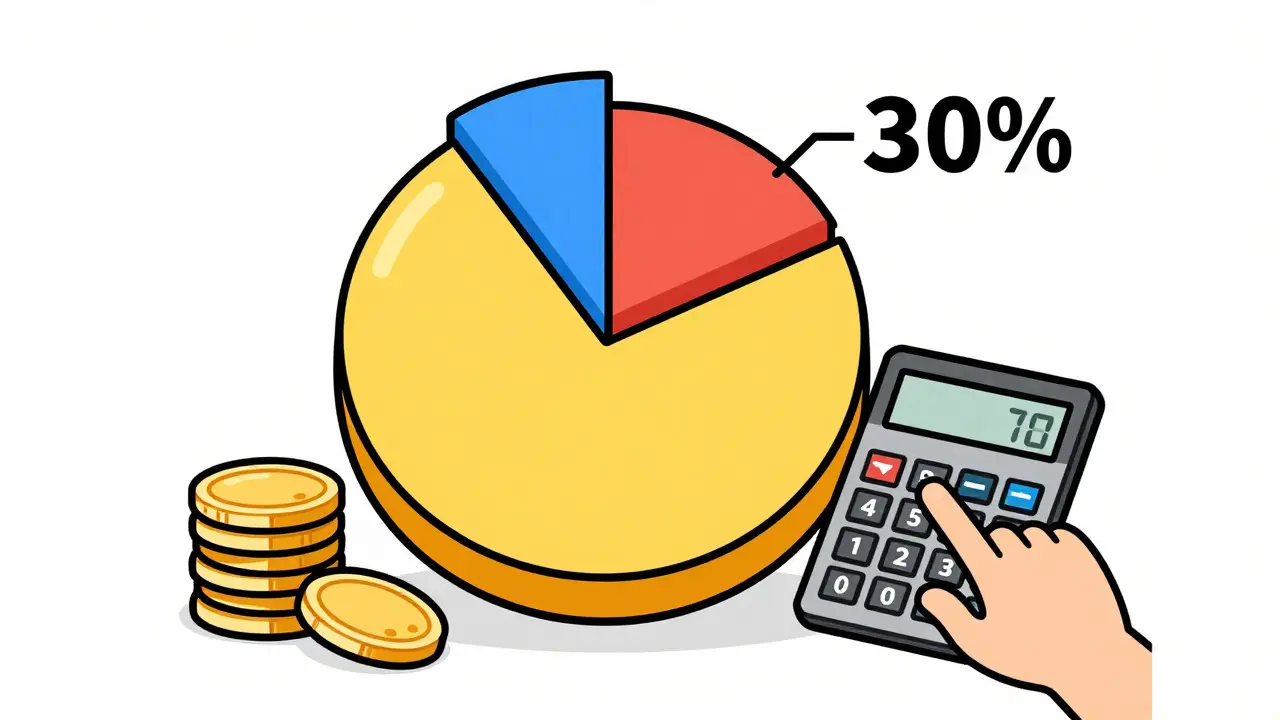
Here is the headline number everyone needs to know: gains from VDAs are taxed at a flat 30% rate. This applies regardless of your income slab. Whether you earn ₹5 lakhs or ₹5 crores a year, the tax on your crypto profits remains 30%.
This rate is applied to the net gain, which is calculated by subtracting the cost of acquisition from the full value of consideration received. There are no benefits for long-term holdings. In traditional investing, holding an asset for more than three years often reduces your tax burden significantly. With VDAs, holding Bitcoin for ten years yields the same 30% tax rate as holding it for ten days. Short-term and long-term capital gains distinctions do not apply here.
Furthermore, deductions are severely limited. You can only deduct the actual cost of buying the asset. Transaction fees, gas fees, mining electricity costs, and storage wallet fees are explicitly non-deductible. This means your taxable base is higher than it would be under standard capital gains rules.
Tax Deducted at Source (TDS): The 1% Rule
Before you even calculate your annual tax, a chunk of your transaction value is deducted at the source. This is known as TDS. Under Section 194S of the Income Tax Act, a 1% TDS is applicable on every VDA transfer if the aggregate value exceeds certain thresholds in a financial year.
| Category of Person | Annual Transaction Threshold | TDS Rate |
|---|---|---|
| Specified Persons (Individuals/HUFs with turnover ≤ ₹1 Cr or receipts ≤ ₹50 Lakhs) |
₹50,000 | 1% |
| Non-Specified Persons (Others, including businesses without low-turnover status) |
₹10,000 | 1% |
| No PAN Provided | Any Amount | 20% |
If you fail to provide your Permanent Account Number (PAN), the TDS rate jumps dramatically to 20%. This is a massive penalty designed to force compliance. For most retail investors who fall under "Specified Persons," the threshold is ₹50,000 per year. Once your total transfers cross this limit, every subsequent transaction will have 1% deducted automatically by the exchange or platform.
Can You Set Off Crypto Losses?
This is where many investors get burned. In traditional stock markets, if you lose money on one stock, you can offset that loss against profits from another stock. With VDAs, this is largely impossible.
Losses from VDA transactions cannot be set off against any other head of income-such as salary, business income, or interest income. They also cannot be set off against profits from other VDA transactions in the same year. Your only option is to carry forward these losses for up to eight assessment years. You can use them to offset future VDA gains, but nothing else.
For example, if you made ₹1 lakh profit on Bitcoin but lost ₹80,000 on NFT sales, you still pay tax on the full ₹1 lakh Bitcoin profit. The NFT loss sits in your records, waiting for a future year where you make more VDA profits. This rule makes the tax structure particularly punitive for volatile traders who experience frequent ups and downs.
Filing Your Returns: Schedule VDA
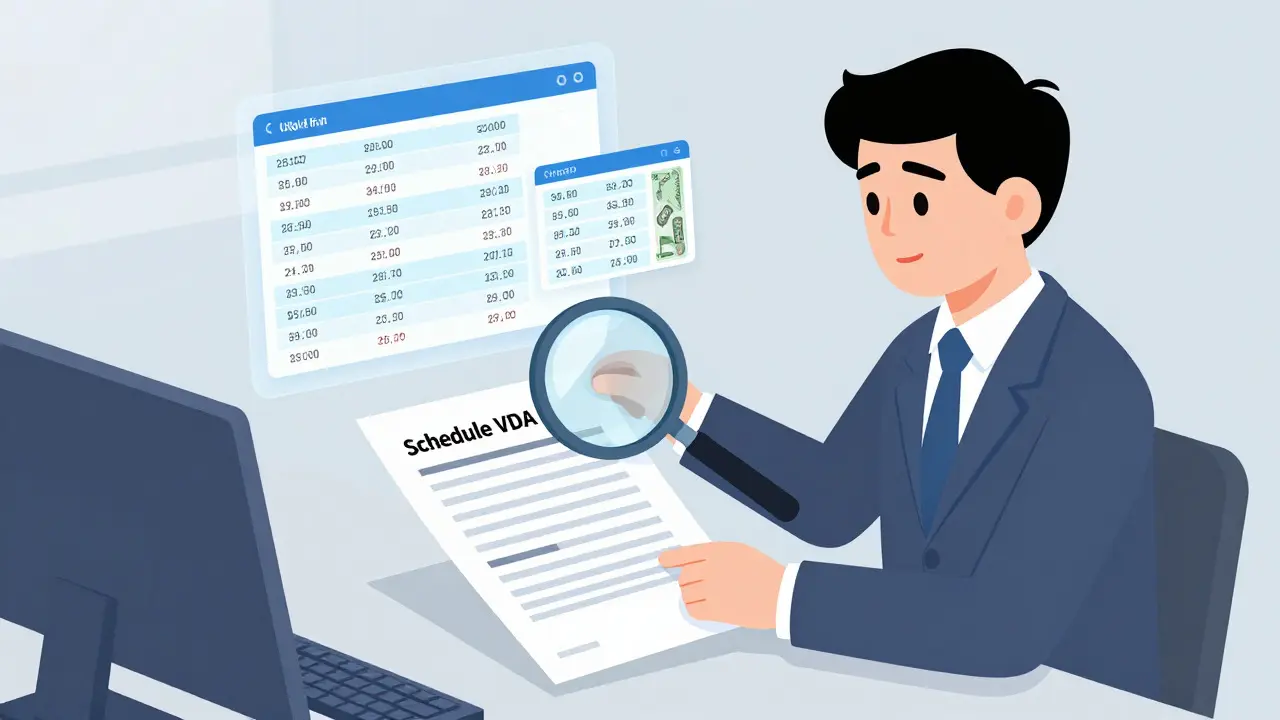
When it comes time to file your Income Tax Return (ITR), you must report all VDA transactions. This is done using Schedule VDA, which is part of ITR-2 and ITR-3 forms. You need to provide specific details for each transaction:
- Date of acquisition.
- Date of transfer.
- Cost of acquisition.
- Full value of consideration received.
For crypto-to-crypto swaps, the valuation must be in Indian Rupees (INR) at the time of the transaction. The Central Board of Direct Taxes (CBDT) recommends using exchange rates from notified platforms. Keeping accurate records is critical. The National Institute of Securities Markets (NISM) reported that 65% of tax disputes stem from inadequate record-keeping. Save your exchange statements, wallet addresses, and proof of purchase. Without these, explaining your cost basis during an audit becomes nearly impossible.
Common Pitfalls and Pro Tips
Navigating VDA taxes requires attention to detail. Here are common mistakes to avoid:
- Mining Income Misclassification: Mining rewards are taxed as business income at your slab rate when received. When you later sell those mined coins, the 30% VDA tax applies again. Don't treat mining solely as capital gains.
- TDS Errors: Exchanges sometimes miscalculate TDS. Always check your Form 26AS (annual tax statement) to ensure the deducted amount matches what was actually withheld. Over-deduction can tie up your cash flow unnecessarily.
- Gifting Strategies: Some investors gift assets to family members in lower tax brackets to optimize liabilities. While legal, ensure the gift is genuine and documented to avoid scrutiny.
Pro tip: Use specialized crypto tax software or consult a CA familiar with Schedule VDA. The learning curve is steep, with active traders spending 15-20 hours annually on compliance compared to 2-3 hours for traditional investors.
Future Outlook: Income Tax Act, 2025
The regulatory environment continues to evolve. The Income Tax Act, 2025, which received presidential assent in August 2025, maintains the 30% tax rate but introduces a "Tax Year" concept instead of the financial year. It also emphasizes digital-first enforcement. While the core rates remain unchanged, expect tighter monitoring and easier tracking of offshore wallets. The proposed Virtual Asset Service Providers Bill may introduce licensing requirements that further streamline tax administration.
Despite the high taxes, adoption persists. Chainalysis data shows India remains a top global market for crypto activity. The key is compliance. Paying the correct tax now prevents costly notices later.
Is crypto legal in India?
Yes, owning and trading Virtual Digital Assets is legal in India. However, they are not recognized as legal tender for payments. The Reserve Bank of India (RBI) has moved from caution to engagement, acknowledging the growing maturity of the sector while maintaining strict anti-money laundering (AML) checks.
Can I claim expenses like gas fees as deductions?
No. Under the current VDA tax framework, only the cost of acquisition is deductible. Transaction fees, gas fees, mining costs, and storage fees cannot be claimed as deductions against your capital gains.
What happens if I forget to declare my crypto holdings?
Failure to declare VDA transactions can lead to penalties and interest under the Income Tax Act. With increased data sharing between exchanges and the Income Tax Department, undeclared transactions are increasingly likely to be flagged during audits.
How are crypto-to-crypto swaps taxed?
A crypto-to-crypto swap is treated as a transfer. You must calculate the gain or loss based on the INR value of the asset given up versus its original cost. This event triggers both potential capital gains tax and TDS obligations.
Do I need to pay tax if I hold crypto for more than 3 years?
Yes. Unlike equities, there is no long-term capital gains benefit for VDAs. The tax rate remains a flat 30% regardless of how long you hold the asset.
21 Comments
the sheer audacity of this tax structure is breathtaking. they want you to pay 30% on gains that might not even be real if you account for inflation and the volatility of these assets. it feels like a punishment for being early adopters rather than a fair contribution to society. nobody should have to pay such a steep rate without any deductions for the costs involved in keeping those assets safe. it is just greedy.
you are missing the bigger picture here. the government knows exactly what they are doing by making crypto unattractive compared to traditional banking. it is a control mechanism. they want to force everyone back into the fiat system where they can track every single rupee you spend. the 30% tax is just the bait to keep the masses away from true financial sovereignty. wake up sheeple.
this is so sad 😞 i just wanted to buy some nfts for my collection but now i feel like i am getting robbed before i even start. why does it have to be so complicated? 😔
one must consider the philosophical implications of taxing something that exists primarily in the digital ether. when we assign a tangible value to a virtual token, are we not participating in a collective hallucination sanctioned by the state? the tax is merely the price of admission to this shared dream. it forces us to confront the nature of value itself. perhaps the loss is not financial but existential. we trade freedom for security. a fair exchange in the eyes of the law. yet the soul remains unpaid.
look on the bright side guys! at least it is legal now. that is huge progress. we used to live in fear of our accounts getting frozen overnight. now we have rules. sure the tax is high but it gives legitimacy to the industry. investors will come if they know the rules of the game. let us embrace compliance and build a future together. positivity wins!
i just sit back and watch the chaos unfold. people arguing over percentages while the whales move millions unnoticed. it is quite a spectacle really. the little fish swim in circles thinking they are free. meanwhile the net tightens. fascinating behavior nonetheless.
so basically if you swap eth for solana you owe taxes on the eth sale even if you never touched fiat. this is absurd logic. who designed this system clearly has no understanding of how decentralized finance actually works. it creates a liquidity trap. you cannot move your assets without triggering a tax event. it is suffocating the ecosystem from within. typical bureaucratic overreach.
THEY ARE WATCHING YOU. every transaction is recorded on the blockchain forever. the tds is just the tip of the iceberg. soon they will link your wallet address to your biometric data. prepare for total surveillance. the 30% tax is irrelevant compared to the loss of privacy. run while you still can. trust no one. especially not the exchanges.
it would be prudent to examine the historical precedents for such taxation. other nations have attempted similar structures with varying degrees of success. the key issue lies in the definition of the asset class. if it is not currency then it must be property. if it is property then capital gains laws apply. however the lack of deduction for expenses is an anomaly. this suggests a punitive intent rather than a revenue generating one. further study is required.
actually most people do not realize that mining income is taxed differently. it is business income first then capital gains later. double taxation essentially. you need to keep meticulous records or you will get hammered. i learned this the hard way last year. lesson learned.
only fools invest in this garbage. the elites use it to launder money while the peasants pay the tax. it is rigged against the common man. simple as that. they want to destroy the middle class wealth. keep your money in gold or land. anything physical. digital is a scam.
honey you really need to read the fine print. its not just about the tax rate its about the hassle. filling out schedule vda is a nightmare. i spent hours last week just trying to figure out my cost basis for an old altcoin. its exhausting. why bother unless you are rich enough to hire a ca?
let us try to stay calm everyone. there are pros and cons. yes the tax is high but at least we have clarity. ambiguity was worse. we can plan our finances better now. maybe next year the rates will change. lets support each other through this transition. knowledge is power.
i hear your frustrations and they are valid. it is scary to see so much taken away. but remember that compliance protects you in the long run. think of it as insurance. pay the premium now avoid the lawsuit later. breathe deeply. take it one step at a time. you are stronger than you think.
morality dictates that profit should be taxed fairly but this is not fair. it is confiscatory. the government has no right to take a third of your labor rewards. it violates the social contract. we work hard to earn this digital asset and they punish us for innovation. it is unjust.
oh please spare me the moralizing. you think you are special because you bought bitcoin? you are just a gambler. the house always wins. the tax is just the rake. stop pretending you are an investor. you are a sucker waiting to be squeezed. face reality.
yo guys dont lose hope! u can still make money if u play ur cards right. just focus on the big moves. ignore the small fees. keep grinding. the market will bounce back. stay strong brothers. we got this 💪
my life is ruined because of this. i sold my coins and lost half to tax. now i cant afford rent. why does it hurt so much? i feel empty inside. nobody cares about us small traders. just pain and suffering. why me?
INDIA IS GREAT!!! WE NEED THIS TAX TO BUILD NATIONS!!! AMERICA SHOULD COPY US!!! OUR GOVERNMENT KNOWS BEST!!! STOP COMPLAINING AND PAY YOUR DUES!!! PATRIOTISM MEANS OBEYING THE LAW!!! LONG LIVE INDIA!!! 🇮🇳🇮🇳🇮🇳
hey friend take a deep breath. it is okay to feel overwhelmed. many people are going through the same thing. you are not alone in this journey. let us learn together. step by step we will master these rules. believe in yourself. you can handle this challenge.
it makes me sick to see people complaining about paying their fair share. do you think the poor pay 30%? no they pay nothing. you lucky bastards get to hoard wealth and then whine about taxes. serve them right. let them suffer a bit. it builds character.