
Turkey Crypto Rules: CBRT Restrictions & 2026 Compliance Guide
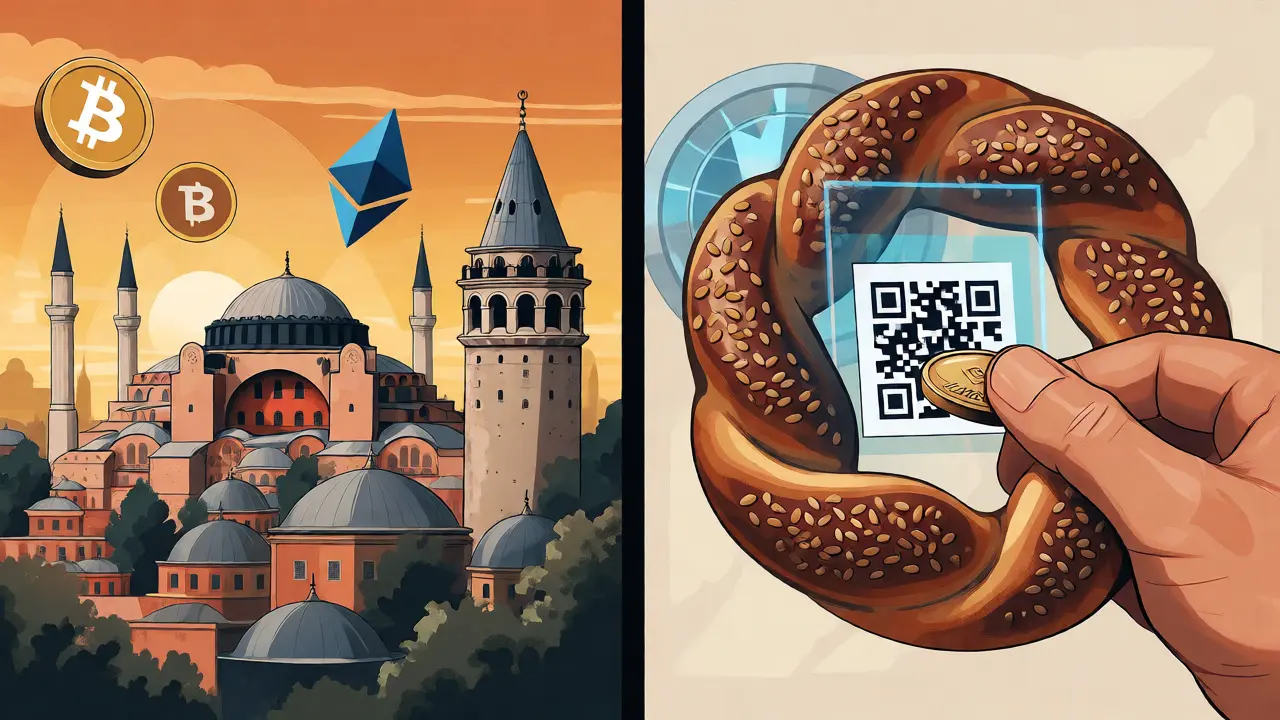
You can buy Bitcoin in Istanbul. You can sell Ethereum in Ankara. But you cannot use either to buy a simit or pay your rent. This is the paradox at the heart of Turkey's cryptocurrency landscape. The Central Bank of the Republic of Turkey (CBRT) has drawn a hard line: digital assets are investments, not money. As of late 2025 and into 2026, this distinction dictates how millions of Turks interact with digital finance.
If you are trading crypto in Turkey, you aren't just navigating market volatility; you are navigating a strict regulatory maze. The rules changed significantly in March 2025, shifting oversight from a gray area to a tightly controlled environment led by the Capital Markets Board (CMB). Understanding these restrictions isn't optional for investors-it's essential for keeping your funds accessible and your account open.
The Payment Ban: Why You Can't Spend Crypto
Let's get the biggest restriction out of the way first. Since April 2021, the CBRT has prohibited the direct use of cryptocurrencies as a means of payment. This ban remains firmly in place today. It means that if you walk into a coffee shop in Izmir, you cannot hand over a QR code linked to your Bitcoin wallet to pay for your latte. The transaction must be settled in Turkish Lira.
This isn't just about small purchases. The restriction extends to large transactions, including real estate deals. You might think, "I'll just sell my Bitcoin on an exchange and transfer the Lira." And you would be right. That is the required workflow. Any purchase of goods or services requires a conversion step through a regulated platform. This creates friction, but it also protects the sovereignty of the national currency. The CBRT wants to ensure that monetary policy tools, like interest rates, actually influence the economy. If everyone paid in stablecoins, those tools would lose their bite.
Why does this matter to you? Because it shapes how you view your portfolio. In Turkey, crypto is primarily a hedge against inflation, not a daily spending tool. With inflation rates often hitting double digits, many citizens treat digital assets like gold-something to hold onto when the Lira weakens, rather than something to spend freely.
Licensing Exchanges: The New Era of CASPs
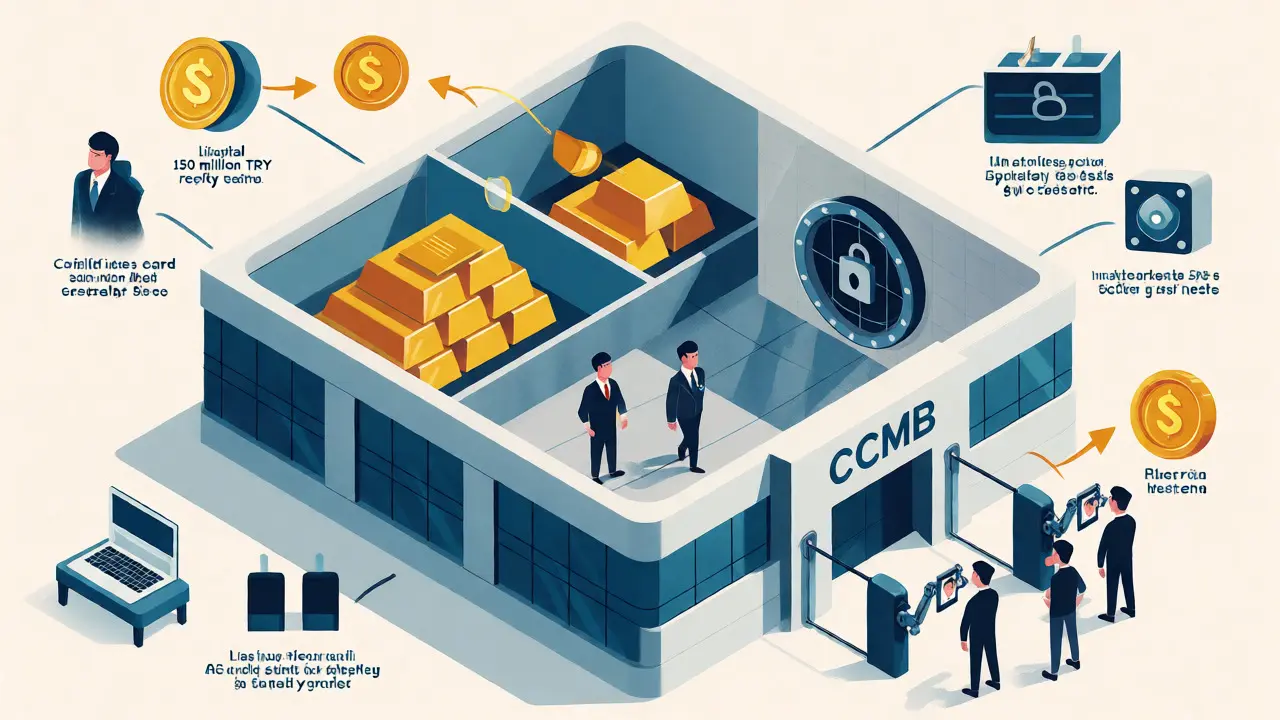
In March 2025, the regulatory landscape shifted from informal oversight to formal licensing. The CMB introduced strict requirements for Crypto Asset Service Providers (CASPs). These are the exchanges and platforms where you trade. They can no longer operate with minimal capital or loose compliance standards.
To stay in business, an exchange must now meet hefty financial thresholds. If you are running a trading platform, you need a minimum capital of 150 million Turkish Lira (roughly $4.1 million). If you want to offer custody services-holding customers' coins-you need 500 million Turkish Lira (about $13.7 million). This isn't just bureaucratic red tape; it's a filter. It pushes out smaller, less secure platforms and favors established players with deep pockets.
Furthermore, these companies must be structured as joint-stock companies with shares registered by name. This ensures transparency. Regulators know exactly who owns the exchange. For users, this means fewer fly-by-night operations popping up overnight and disappearing with user funds. The era of unregulated chaos is ending, replaced by a corporate structure that mirrors traditional banking.
Anti-Money Laundering: The KYC Reality
Privacy purists might dislike this next part, but it's unavoidable. Turkey enforces rigorous Anti-Money Laundering (AML) rules. The Financial Crimes Investigation Board (MASAK) is the watchdog here. They don't play around.
Any transaction exceeding 15,000 Turkish Lira (approximately $425) triggers mandatory identity verification. You will need to provide government-issued ID, proof of address, and potentially source-of-funds documentation. This applies to both fiat deposits and withdrawals. MASAK monitors patterns closely. If you suddenly move large sums without explanation, expect questions.
The stakes are high. In a recent enforcement action, MASAK fined Binance TR, the local arm of the global giant, 8 million Turkish Lira (around $750,000) for AML breaches. This wasn't a warning shot; it was a statement. Even the biggest players must comply. For you, this means your account activity is visible. Anonymity, as known in the early days of Bitcoin, is largely dead in the Turkish regulated space.
Foreign Exchanges and Offshore Risks
Here is where things get tricky. Many Turkish traders prefer using foreign exchanges like Binance Global or Kraken because they offer more pairs and lower fees. However, the new rules restrict how these foreign entities can serve Turkish residents. Foreign CASPs face barriers to active marketing and local presence. They cannot easily advertise on Turkish TV or sponsor local events without navigating complex legal hurdles.
While you can still access these offshore platforms, you do so at your own risk. If a foreign exchange decides to block Turkish IPs due to regulatory pressure, your funds could be stuck. Additionally, banks may flag transfers to unknown foreign crypto entities. Reporting obligations kick in for foreign exchange conversions above $50,000 equivalent. Banks must report these to regulators, creating a paper trail that links your bank account to your crypto activity.
Some users circumvent local oversight by using peer-to-peer (P2P) methods or offshore wallets. But remember: if you are moving significant amounts, the visibility increases. The goal of the regulator is to keep capital flows transparent, especially given Turkey's history of currency fluctuations.

The Digital Lira and Future Outlook
Amidst the restrictions, there is innovation. The CBRT is actively developing the Digital Lira, a Central Bank Digital Currency (CBDC). Unlike Bitcoin, which is decentralized, the Digital Lira will be fully centralized and issued by the state.
Think of it as a digital version of the cash in your wallet. It aims to streamline payments and reduce reliance on physical notes. While still in pilot phases, its eventual rollout could change how we think about "crypto" in Turkey. Will people prefer the stability of the Digital Lira over volatile private cryptocurrencies? Only time will tell.
Meanwhile, tokenization of real-world assets, like real estate and gold, is gaining momentum. Given Turkey's cultural affinity for gold and property, blockchain-based tokens representing these assets could become popular investment vehicles. The regulatory framework is preparing for this shift, aiming to balance innovation with stability.
| Requirement | Details | Impact on User |
|---|---|---|
| Payment Method | Direct crypto payments banned | Must convert to Lira before purchasing goods/services |
| Exchange Licensing | Min. 150M TRY capital for exchanges | Fewer, more secure local platforms available |
| KYC Threshold | ID required for transactions >15,000 TRY | Enhanced privacy checks for larger trades |
| Reporting | Banks report FX conversions >$50k | Large transfers are tracked by authorities |
Practical Tips for Navigating the System
So, how do you thrive in this environment? First, choose your platform wisely. Stick to licensed CASPs if you want peace of mind regarding fund security. Check the CMB registry to ensure your exchange is authorized. Second, keep detailed records. With MASAK watching closely, having a clear history of your transactions helps if you are ever audited. Third, be mindful of tax implications. While specific crypto tax laws are still evolving, general income tax principles apply to profits. Consult a local accountant familiar with digital assets.
Finally, understand the economic context. Buying crypto in Turkey is often a defensive move against inflation. Keep your long-term perspective. Short-term volatility matters less if your primary goal is preserving purchasing power. The restrictions might feel annoying, but they also signal that the sector is maturing. You are no longer in the Wild West; you are in a regulated financial market.
Is Bitcoin legal in Turkey?
Yes, buying, selling, and holding Bitcoin is legal. However, it is not recognized as legal tender. You cannot use it directly to pay for goods and services under current CBRT regulations.
Can I pay for groceries with crypto in Turkey?
No. Direct payments using cryptocurrencies are prohibited. You must convert your crypto to Turkish Lira through a regulated exchange before making a purchase.
Which authority regulates crypto exchanges in Turkey?
The Capital Markets Board (CMB) oversees licensing and operational standards for Crypto Asset Service Providers. The Financial Crimes Investigation Board (MASAK) handles anti-money laundering compliance.
What is the minimum capital requirement for crypto exchanges?
As of the 2025 regulations, exchanges require a minimum capital of 150 million Turkish Lira, while custodial service providers require 500 million Turkish Lira.
Do I need to verify my identity for small trades?
Identity verification is mandatory for transactions exceeding 15,000 Turkish Lira. Smaller transactions may have lighter requirements, but full KYC is standard for most registered accounts.