
Turkey Crypto Payment Ban: 2021 Regulations and Current Rules Explained

If you are trying to buy coffee or pay for groceries with Bitcoin in Istanbul, you will hit a wall. But if you want to trade Ethereum on an exchange, the doors are wide open. This contradiction defines the current landscape of digital assets in Türkiye. The confusion stems from a specific regulatory move made years ago that is still in effect today. Understanding this split between crypto payments and crypto trading is essential for anyone operating in or investing in the Turkish market.
The 2021 Ban: What Actually Happened?
To understand where things stand now, we have to look back at April 2021. On April 16, 2021, the Central Bank of the Republic of Turkey (CBRT) issued a regulation that took effect on April 30. This rule explicitly prohibited merchants, payment processors, and electronic money issuers from accepting cryptocurrency as a means of payment for goods and services.
This was not a total ban on owning crypto. It was a targeted restriction. The CBRT published five specific reasons for this decision:
- Cryptoassets lack central regulatory authority or supervision mechanisms.
- Market values show excessive volatility, posing risks to consumers.
- Anonymous structures can facilitate illegal activities.
- Digital wallets can be stolen or used without authorization.
- Transactions are irrevocable, meaning there is no way to reverse a fraudulent transfer.
The regulation stated clearly that "cryptoassets will not be used for payments, directly or indirectly." However, it simultaneously clarified that buying, selling, holding, or transferring crypto via licensed platforms remained legal. This created the "trade but don't spend" model that persists today.
From Wild West to Regulated Market: The 2024-2025 Shift
While the payment ban stayed in place, the rest of the crypto ecosystem underwent a massive transformation. For years, exchanges operated in a gray area. That changed with the implementation of the "Law on Amendments to the Capital Markets Law" in July 2024. This law brought all Crypto Asset Service Providers (CASPs) under the strict oversight of the Capital Markets Board (CMB).
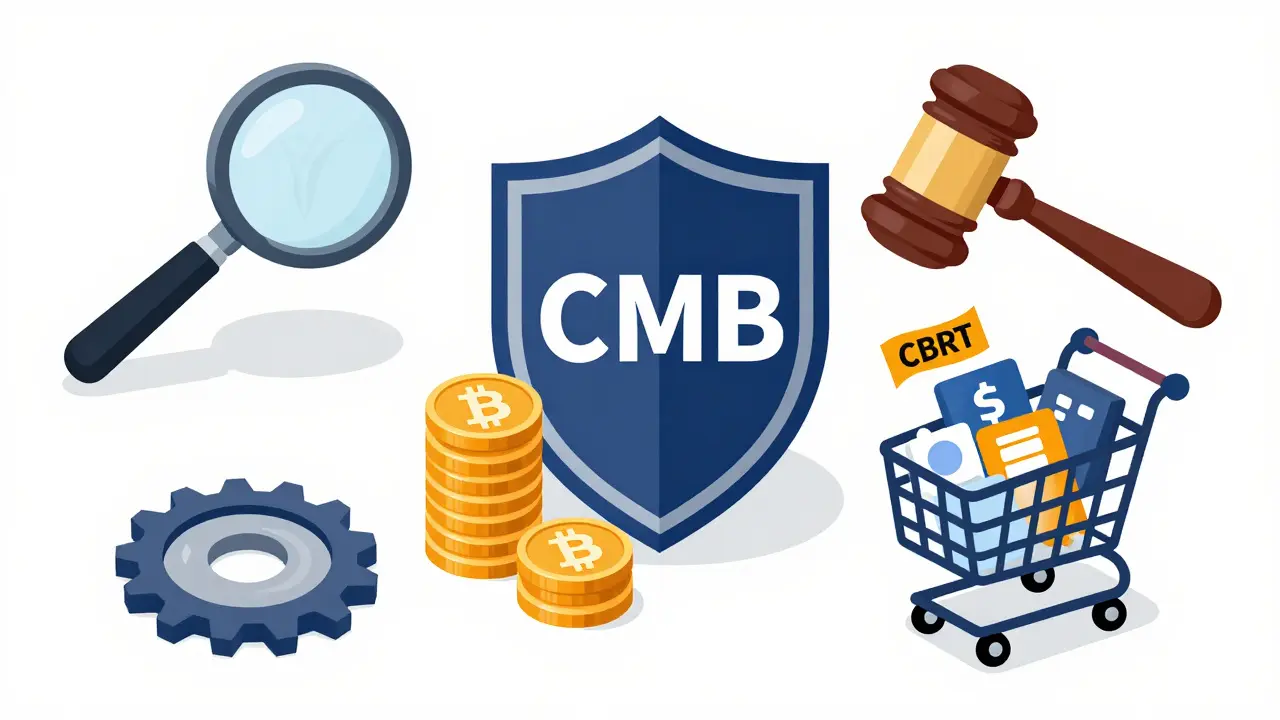
Now, any entity acting as an exchange, custodian, or wallet provider must obtain a license from the CMB. The requirements are steep. Exchanges need a minimum capital of TRY 150 million (approximately $4.1 million), while custodians require TRY 500 million (about $13.7 million). These rules, detailed in compliance guides from firms like Lightspark and Sumsub, were designed to professionalize the industry and protect investors.
| Regulatory Body | Primary Responsibility | Key Action/Requirement |
|---|---|---|
| Capital Markets Board (CMB) | Licensing and Market Oversight | Issues CASP licenses; blocks non-compliant platforms (e.g., PancakeSwap in March 2025) |
| Central Bank of Turkey (CBRT) | Monetary Policy & Payment Systems | Enforces the ban on using crypto for retail payments |
| MASAK | Financial Crimes Investigation | Enforces Anti-Money Laundering (AML) rules and tracks suspicious flows |
| TÜBİTAK | Technical Standards | Oversees technical compliance and security standards for platforms |
New AML Rules and the 15,000 Lira Threshold
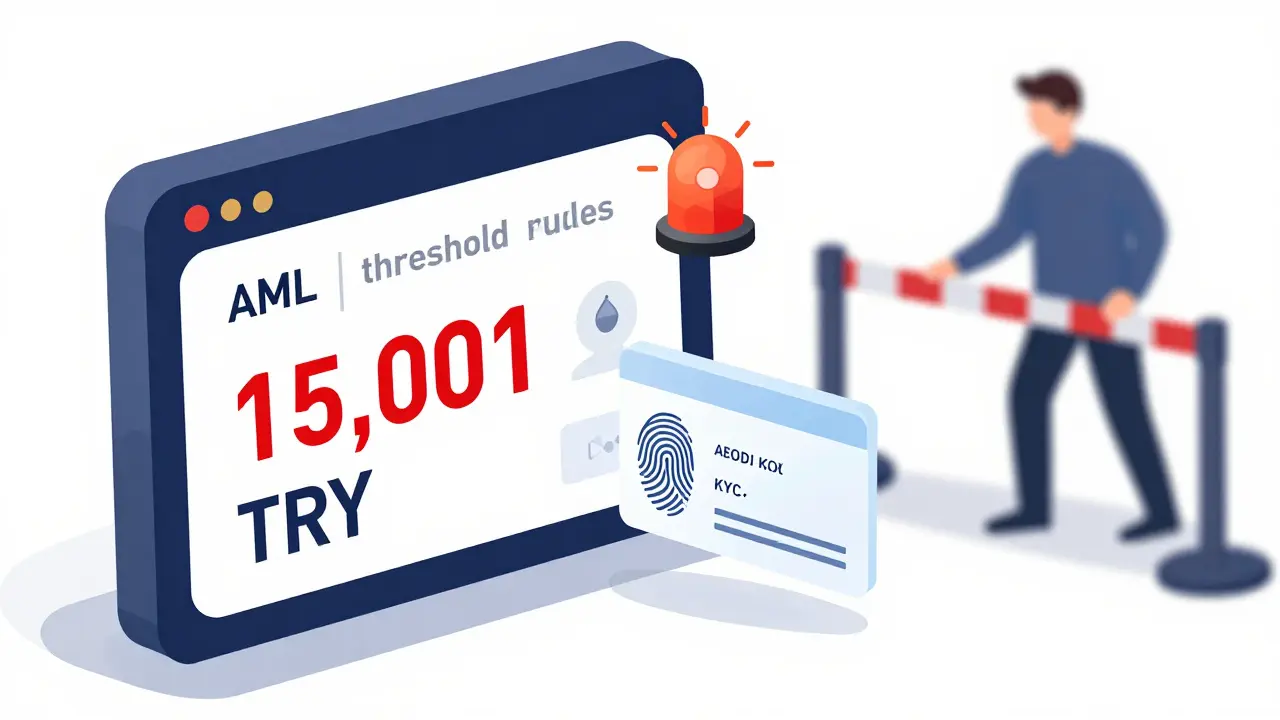
Regulation didn't stop at licensing. In December 2024, new Anti-Money Laundering (AML) regulations were published in the Official Gazette, taking effect on February 25, 2025. These rules introduced a critical threshold: 15,000 Turkish lira (roughly $425).
Any transaction exceeding this amount requires mandatory identity verification. If you try to send more than 15,000 lira to an unregistered wallet address, the transaction may be flagged as "risky" and suspended. This targets anonymous transfers and forces greater transparency. Exchanges reported a 30-40% increase in compliance staffing needs to handle these new reporting obligations, according to Deloitte Turkey's January 2025 report.
Why the Payment Ban Persists: Risks vs. Reality
You might wonder why the government allows trading but bans spending. The answer lies in consumer protection and monetary policy. Turkey has faced high inflation, which drove many citizens to crypto as a hedge. However, allowing crypto payments would further erode the value of the Turkish Lira in daily commerce. By banning payments, the state ensures that official currency remains the primary medium of exchange for goods and services.
Additionally, the irrevocable nature of blockchain transactions poses a significant risk for retail consumers. If you accidentally send funds to the wrong address, or if a merchant fails to deliver goods after receiving Bitcoin, there is no chargeback mechanism. Traditional banking systems offer recourse; blockchain does not. The CBRT views this lack of consumer protection as unacceptable for everyday retail transactions.
Legal Challenges and Future Outlook
The status quo is not set in stone. Sima Baktaş, founding partner of GlobalB law firm, launched a landmark legal challenge against the payment ban. Scheduled for May 28, 2025, in Ankara, this case argues that lifting the ban would foster financial sector development and make Turkey more attractive for blockchain businesses.
Baktaş cites survey data showing that 19.3% of Turkey's population actively uses cryptocurrencies. Despite the payment ban, the market grew to an estimated $170 billion by late 2024. The argument is simple: if people are already using crypto extensively, regulating payments could generate tax revenue and innovation rather than pushing activity underground.
However, the regulatory trend suggests tightening, not loosening. In March 2025, the CMB blocked 46 decentralized finance (DeFi) platforms, including PancakeSwap, citing non-compliance with local registration and AML rules. This indicates that authorities prioritize control and transparency over unrestricted access.
Impact on Users and Businesses
For the average user, the experience is mixed. You can easily buy USDT or Bitcoin on licensed exchanges like Binance Turkey (which holds a 3.8/5 rating on Trustpilot as of early 2025). But you cannot use those assets to pay your electricity bill or buy dinner. Users frequently complain about the "Turkish crypto paradox": being able to trade freely but unable to utilize their assets for daily expenses.
For businesses, the implications are clear. Only 2% of Turkish businesses accept cryptocurrency, compared to 14% in neighboring Georgia. Merchants must avoid processing crypto payments to remain compliant with CBRT rules. Instead, they focus on traditional fiat channels. Crypto-related businesses, such as exchanges and custodians, face heavy compliance burdens but operate within a clear, albeit strict, legal framework.
Key Takeaways for Navigating the System
If you are operating in Turkey's crypto space, keep these points in mind:
- No Payments: Never attempt to use crypto directly for retail purchases. It is illegal for merchants to accept it.
- Licensed Platforms Only: Use only CMB-licensed exchanges. Unlicensed platforms are increasingly being blocked.
- Watch the Thresholds: Transactions over 15,000 TRY require KYC verification. Unverified wallets may trigger suspensions.
- Expect Scrutiny: The system is designed to track large movements and prevent money laundering. Keep records of your source of funds.
- Stay Updated: The legal landscape is evolving, especially with ongoing court cases challenging the payment ban.
Turkey's approach is unique. It is neither a full ban like China nor a full embrace like El Salvador. It is a controlled environment where trading is encouraged under strict supervision, but spending is prohibited to protect the national currency and consumer interests. As the May 2025 court case unfolds, watch for potential shifts that could redefine what it means to hold and use digital assets in one of the world's most active crypto markets.
Is cryptocurrency illegal in Turkey?
No, cryptocurrency itself is not illegal. You can legally buy, sell, hold, and trade crypto assets on licensed platforms. However, using cryptocurrency as a direct payment method for goods and services is prohibited by the Central Bank of Turkey.
When did the crypto payment ban start?
The ban on using crypto for payments was announced by the CBRT on April 16, 2021, and officially took effect on April 30, 2021. It prohibits merchants and payment processors from accepting digital currencies.
What is the 15,000 lira rule?
Effective February 25, 2025, any crypto transaction exceeding 15,000 Turkish lira (approx. $425) requires mandatory identity verification. Transfers to unregistered wallets above this amount may be flagged as risky and suspended.
Can I use DeFi platforms in Turkey?
Access to many DeFi platforms is restricted. In March 2025, the Capital Markets Board (CMB) blocked 46 platforms, including PancakeSwap, for failing to meet local registration and AML compliance requirements. Using unlicensed DeFi services carries legal and technical risks.
Who regulates crypto in Turkey?
The primary regulator is the Capital Markets Board (CMB), which issues licenses to exchanges and custodians. The Central Bank of Turkey (CBRT) enforces payment restrictions, MASAK handles anti-money laundering investigations, and TÜBİTAK oversees technical standards.
Is there a lawsuit challenging the payment ban?
Yes. Sima Baktaş of GlobalB law firm filed a case scheduled for May 28, 2025, arguing that the ban hinders financial innovation. A successful outcome could lead to revised regulations allowing limited crypto payments.