
Taiwan's Crypto Banking Restrictions: Regulations, Impact, and Future Changes
Over two million Taiwanese citizens hold cryptocurrencies today, even though local banks can't touch crypto transactions. How does this work? Taiwan's approach isn't about banning crypto-it's about strict separation between traditional banking and digital assets. The country's banking restrictions on cryptocurrency have created a unique market environment where regulated exchanges operate independently from the banking system. This article explains the rules, their real-world impact, and what's changing in 2026.
Regulatory History and Current Framework
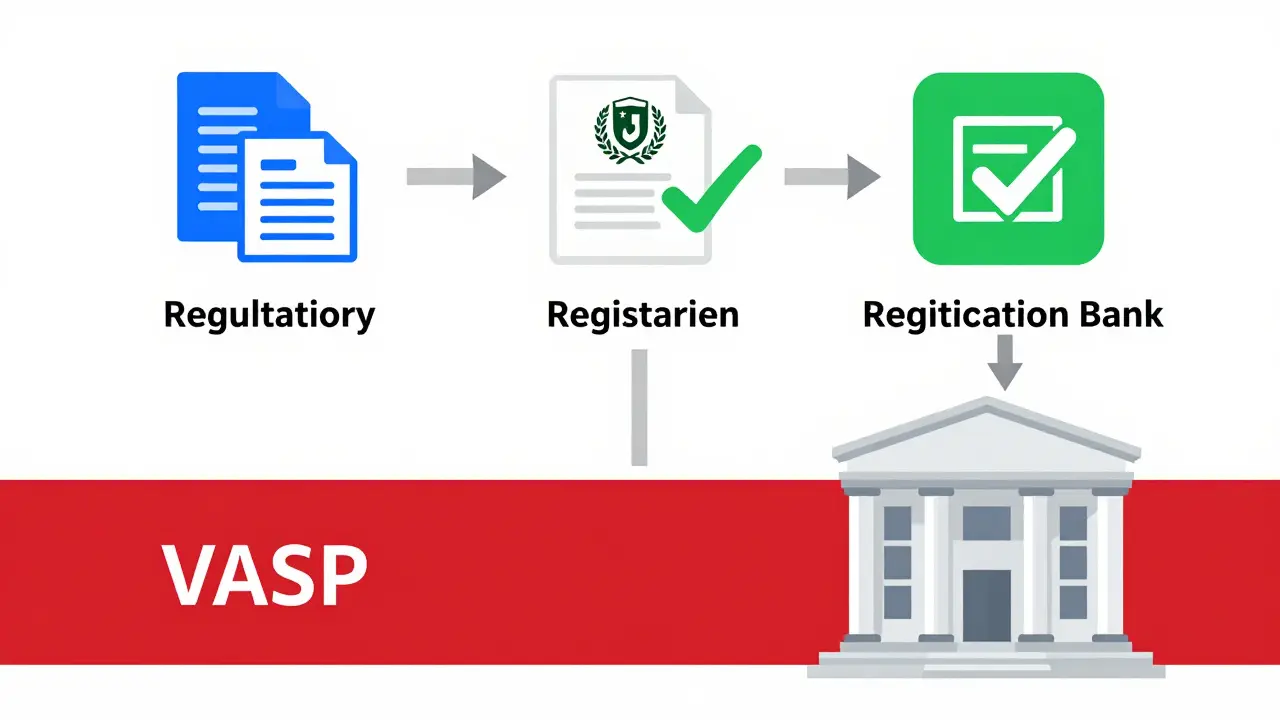
Financial Supervisory Commission (FSC) and Central Bank of the Republic of China (CBC) first classified Bitcoin as a "virtual commodity" in 2013, not currency. This foundational stance evolved into stricter rules after 2021. Starting January 1, 2025, all crypto businesses must register as Virtual Asset Service Providers (VASPs) to operate legally. Non-compliance risks fines up to NT$5 million ($155,900) or two years in jail. As of late 2024, only 23 VASPs completed registration, with MaiCoin handling $70 million daily in trades and planning Taiwan's first crypto IPO.
Banking Sector Restrictions Explained
The FSC's 2014 directive banned all local banks from accepting Bitcoin or offering fiat-to-crypto exchange services. This was reinforced in July 2022 when credit card companies were prohibited from processing crypto purchases, treating them like online gambling transactions. Banks cannot hold crypto assets, facilitate conversions, or provide merchant services for digital assets. This creates a hard wall between traditional finance and crypto-no bank accounts for exchanges, no direct deposits for users. The CBC confirmed in 2024 that this separation prevents systemic risks, as crypto volatility could destabilize Taiwan's banking sector.
| Regulation | Effective Date | Key Impact |
|---|---|---|
| Banking prohibition on Bitcoin services | 2014 | Banks cannot accept Bitcoin or provide fiat conversion services |
| Credit card ban for crypto purchases | July 2022 | Prevents using credit cards for crypto transactions |
| Mandatory VASP registration | January 2025 | 23 registered firms; fines up to NT$5 million for non-compliance |
| Stablecoin regulations | June 2025 (draft) | Government-backed stablecoins will be regulated; unregulated stablecoins like USDT restricted |
How Users Navigate the Restrictions
Taiwanese crypto holders rely on workarounds due to banking barriers. Peer-to-peer platforms like LocalBitcoins and international exchanges with VASP registration (e.g., Binance Taiwan) dominate trading. Reddit users on r/Taiwan report using cash deposits at convenience stores or third-party payment processors like LINE Pay for crypto purchases. MaiCoin's user reviews average 3.8/5 for limited banking integration, while global exchanges score 4.2/5 for functionality despite regulatory constraints. The FSC estimates 15% year-over-year growth in registered users, showing restrictions haven't stopped adoption-just reshaped how it happens.
Future Developments and Regulatory Changes
Taiwan's next move focuses on stablecoins and digital currency. In June 2025, the FSC will launch regulations for New Taiwan Dollar (TWD)-pegged stablecoins, allowing licensed financial institutions to issue them. This could soften banking restrictions for government-backed digital assets while keeping unregulated options like USDC or USDT banned. Separately, the CBC completed a CBDC feasibility study in December 2023 and began prototype testing in late 2024 using existing digital voucher infrastructure. Experts like PwC Taiwan note this signals a path toward regulated digital asset integration without compromising banking stability.
Expert Perspectives on Taiwan's Approach
Compliance specialists praise Taiwan's clear boundaries. PwC's 2025 financial guide states the VASP registration system reduces money laundering risks while giving legitimate businesses oversight. However, crypto advocates argue banking restrictions stifle innovation-many startups struggle to secure payroll accounts or vendor payments due to financial institutions' reluctance. Global Legal Insights analysts confirm Taiwan's stance is "cautious but not prohibitive," allowing crypto ownership but blocking banking integration to prevent systemic risks. The Securities and Exchange Act treats security tokens separately from general cryptocurrencies, showing nuanced regulation for different asset types.
Can I use my bank account to buy cryptocurrency in Taiwan?
No. Local banks are completely prohibited from handling cryptocurrency transactions. This includes deposits, withdrawals, or any fiat-to-crypto conversions. Users must rely on alternative methods like peer-to-peer trading, cash deposits at convenience stores, or third-party payment processors that comply with VASP regulations.
What happens if a crypto exchange operates without FSC registration?
Unregistered exchanges face severe penalties. The FSC can impose fines up to NT$5 million ($155,900), freeze assets, and pursue criminal charges leading to up to two years in prison for operators. All registered VASPs must display their license number publicly, so users should verify this before trading.
How do Taiwanese traders access international crypto exchanges?
Many use international platforms with VASP registration, like Binance Taiwan or Bybit's local entity. These exchanges comply with Taiwan's AML rules and offer fiat gateways through approved payment processors. However, users must verify each platform's registration status with the FSC, as unregistered foreign exchanges operate illegally in Taiwan.
Are security tokens treated differently than Bitcoin in Taiwan?
Yes. Security tokens fall under the Securities and Exchange Act and require separate licensing from the FSC. General cryptocurrencies like Bitcoin remain classified as virtual commodities, with different compliance rules. This distinction means security token offerings face stricter investor protection requirements than standard crypto trading.
What's next for Taiwan's crypto regulations in 2026?
The FSC's stablecoin regulations in June 2025 will likely expand banking involvement for government-backed digital assets. Meanwhile, the CBC's Central Bank Digital Currency (CBDC) prototype testing may lead to limited banking integration for digital currencies. However, experts expect strict separation to remain for speculative cryptocurrencies like Bitcoin, with no plans to allow direct bank-crypto transactions in the near term.
14 Comments
Taiwan's approach here is a total win-win. Keepin banks away from crypto avoids systemic risks, but the VASP registration keeps exchanges legit. MaiCoin's $70M daily trades and IPO plans? That's legit traction! Even with the bankin wall, users are growin 15% yearly. Solid move, really. 💯
Crypto is freedom. 💥
Interesting how Taiwan's handling this. Separating banking and crypto makes sense for stability, but it's cool to see how people adapt. P2P trading and third-party processors like LINE Pay are smart workarounds. Shows resilience. 🌏
The FSC's regulations are dangerously naive. Allowing crypto to exist without banking integration creates a black market for illicit activities. This is just enabling money laundering and tax evasion. They need to either fully ban it or integrate it properly. Half measures are worse than nothing. 🔥
This is awesome! 🚀
Wow, the way Taiwan's handling crypto is really smart. Separating banking and digital assets keeps things safe while still allowing growth. MaiCoin's IPO is a huge step forward. It's all about finding the right balance. Keep it up! 😊
Crypto should be free. 🤷
Interesting approach. It makes sense to keep banks separate to avoid risks. The VASP system seems effective. Good to see regulated exchanges growing. 👍
This is all a setup by central banks. They're using regulations to control crypto and eventually eliminate it. The VASP registration is just a way to track users. Don't fall for it-this is how governments take over your assets. Stay vigilant! 💀
It is commendable that Taiwan has established a clear regulatory framework for virtual asset service providers. This approach ensures financial stability while fostering innovation within the cryptocurrency sector. The separation of traditional banking and digital assets is a prudent measure to mitigate systemic risks. Well done. 🌟
Why are they making it so hard? Crypto should be free. Banks are outdated anyway. This regulation is just holding people back. They should just let it happen. 😒
Oh, sure. Let's separate banking and crypto like it's some kind of holy grail. Because clearly, the solution to innovation is... doing nothing. Classic. 🙄
Crypto is freedom. But banks and governments will always try to control it. Taiwan's 'separation' is just another way to keep it contained. It's a trap. You can't have true decentralization with regulations. Wake up! 😤
banks and government are trying to control crypto. it's all a scam. they don't want real freedom. taiwan's rules are just a way to keep us in check. 🤡