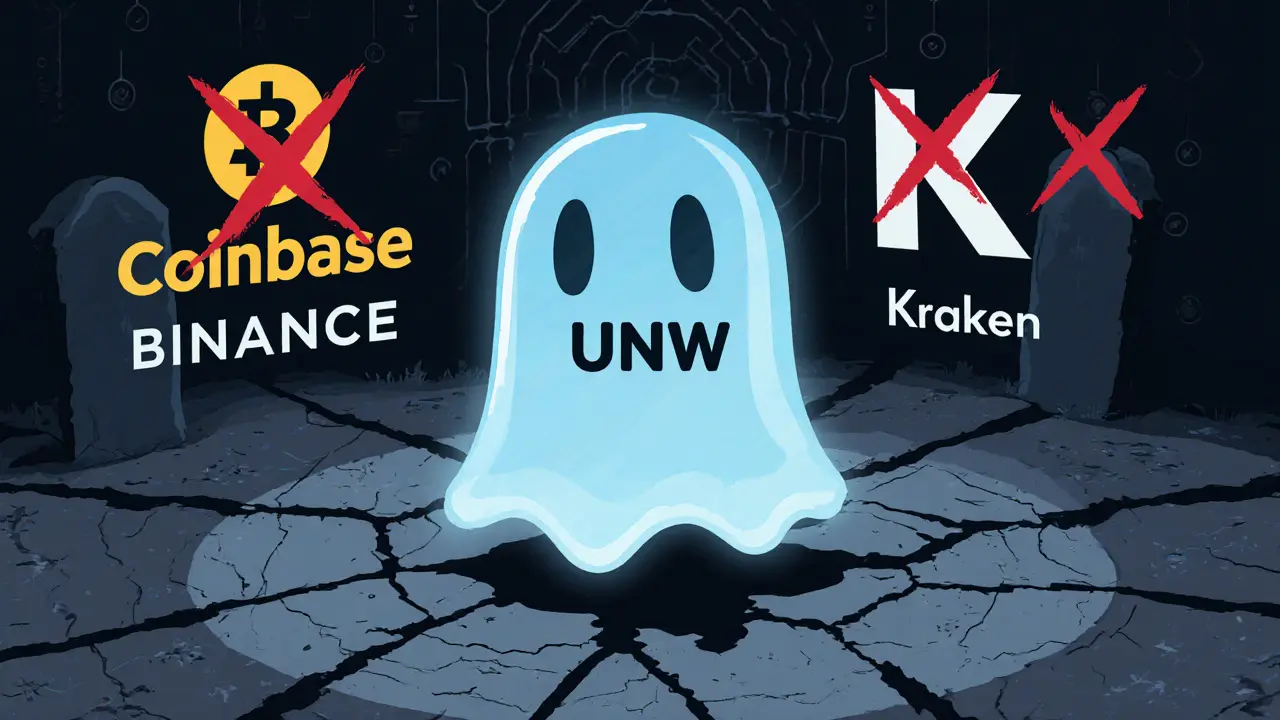
Zombie Coin: What It Is, Why It Kills Portfolios, and How to Avoid It
When you hear zombie coin, a cryptocurrency that’s technically still on the blockchain but has no active development, community, or trading volume. Also known as dead coin, it’s not just inactive—it’s a financial ghost haunting wallets and forums with false hope. These aren’t coins that took a nap. They’re coins that died months or years ago, yet somehow still show up on price trackers, social media hype posts, and shady airdrop lists. People buy them thinking they’re getting in early, only to find out the liquidity vanished, the team disappeared, and the smart contract is a digital tombstone.
Zombie coins often start as meme tokens or rushed projects with no real purpose. Take Paco (PACO), a joke token with a $17K market cap, zero team, and no liquidity—it’s not even trying to be useful. Or look at GCOX, a crypto exchange that shut down completely, with no trading, no support, and no future. These aren’t outliers. They’re textbook examples of what happens when hype outpaces substance. And when the hype dies, the coin becomes a zombie: still listed, still mentioned, but completely lifeless. You’ll see them in posts about airdrops, token swaps, or "undervalued gems"—but behind the flashy graphics is a project that hasn’t been updated in over a year, if ever.
Why do people still chase them? Because the market is full of bots, shills, and pump groups pretending these coins are coming back to life. They’ll use fake volume, fake Twitter accounts, and even fake YouTube videos to make a dead coin look alive. But real trading activity? Nonexistent. Real utility? Gone. Real team? Missing. If you’re holding a coin with no exchange listings, no audit, no whitepaper update in 18 months, and a market cap under $100K, you’re not investing—you’re burying money in a digital grave.
That’s why this collection of posts matters. You’ll find deep dives into zombie coin patterns like GDEX, Almeedex, and GCOX—all platforms that looked promising but collapsed under their own weight. You’ll see how airdrops like MTLX and B2M were legitimate, while others like APAD bot giveaways are often traps for the unwary. You’ll learn how to check if a coin is truly dead or just sleeping, how to spot fake liquidity, and why some "low-cap gems" are actually tombstones with a ticker symbol.
There’s no magic formula to avoid zombie coins, but there are clear red flags—and you’ll find them all here, laid out plainly. No fluff. No hype. Just what you need to know before you click "buy" on another coin that’s already dead.
UniWorld (UNW) is a dead cryptocurrency with zero trading volume, no circulating supply, and no active blockchain. Despite fake market caps, it's not listed on any major exchange and has been abandoned since 2021. Avoid it.
Read More