
Tapbit Crypto Exchange Review 2025: Fees, Security & Liquidity
An in‑depth 2025 review of Tapbit crypto exchange covering fees, liquidity, security, and whether it’s worth using.
Read MoreWhen you hear about Tapbit crypto exchange, a relatively new platform that offers spot and derivatives trading with a focus on low‑latency execution. Also known as Tapbit, it aims to blend user‑friendly design with advanced order types. The platform positions itself as a middle ground between heavyweight services and beginner‑friendly apps. It supports major coins like Bitcoin, Ethereum, and a handful of emerging altcoins, while also providing futures contracts for those who like leverage. Because it’s built on a modular matching engine, Tapbit can handle high‑volume bursts without slowing down, which matters if you trade during volatile news events. In short, Tapbit tries to give you the speed of a professional desk and the simplicity of a mobile app.
If you’re searching for a reliable Tapbit crypto exchange review, you’re in the right place.
At its core, a crypto exchange, a platform that lets you buy, sell, and trade digital assets is the gateway to the whole market. Tapbit’s interface reflects that gateway mindset: the dashboard groups market data, order entry, and portfolio stats in a single view, so you don’t need to jump between tabs. This design mirrors what you’d find on big names, but Tapbit adds a customizable layout that lets you pin the charts you care about. The result is a workspace that scales from a casual user checking Bitcoin price to a day trader monitoring dozens of pairs.
When you start moving money, exchange fees, the charges applied to deposits, withdrawals, and trades become the first performance metric you’ll notice. Tapbit charges a maker‑taker model that starts at 0.10% for makers and 0.15% for takers on spot trades, which sits below many industry averages. Withdrawal fees are flat‑rate for most coins, and the platform offers fee discounts for users who hold its native token. Because lower fees directly boost your net profit, many traders consider fee structure before committing capital.
Security is the second pillar that separates reputable platforms from risky ones. Tapbit employs exchange security, a mix of cold‑storage, two‑factor authentication, and regular penetration testing to protect user assets. Around 95% of funds sit offline in multi‑signature vaults, and the hot wallet is continuously monitored for abnormal activity. In addition, the platform supports hardware wallet withdrawals and offers an optional insurance policy for large balances. These safeguards aim to reduce the likelihood of hacks, which is crucial in a market where headlines about stolen coins still surface.
Beyond the basics of trading, the articles you’ll find on this page cover a wide range of side‑topics that often affect your experience on Tapbit or any exchange. For example, a series of airdrop walkthroughs explains how to claim free tokens, a practice that can boost your portfolio without any upfront cost. There are also deep dives into margin‑trading strategies, platform‑token investment fundamentals, and regulatory updates that may change how a service operates in your country. By connecting exchange fees, security measures, and these ancillary opportunities, you get a 360‑degree view of what it’s like to trade on Tapbit today.
Now that you understand how Tapbit fits into the larger ecosystem of crypto exchanges, fees, and security, you can explore the detailed reviews, airdrop guides, and strategy pieces below. Each article builds on the concepts introduced here, so you’ll be ready to make informed decisions whether you’re opening your first account or fine‑tuning an existing portfolio.
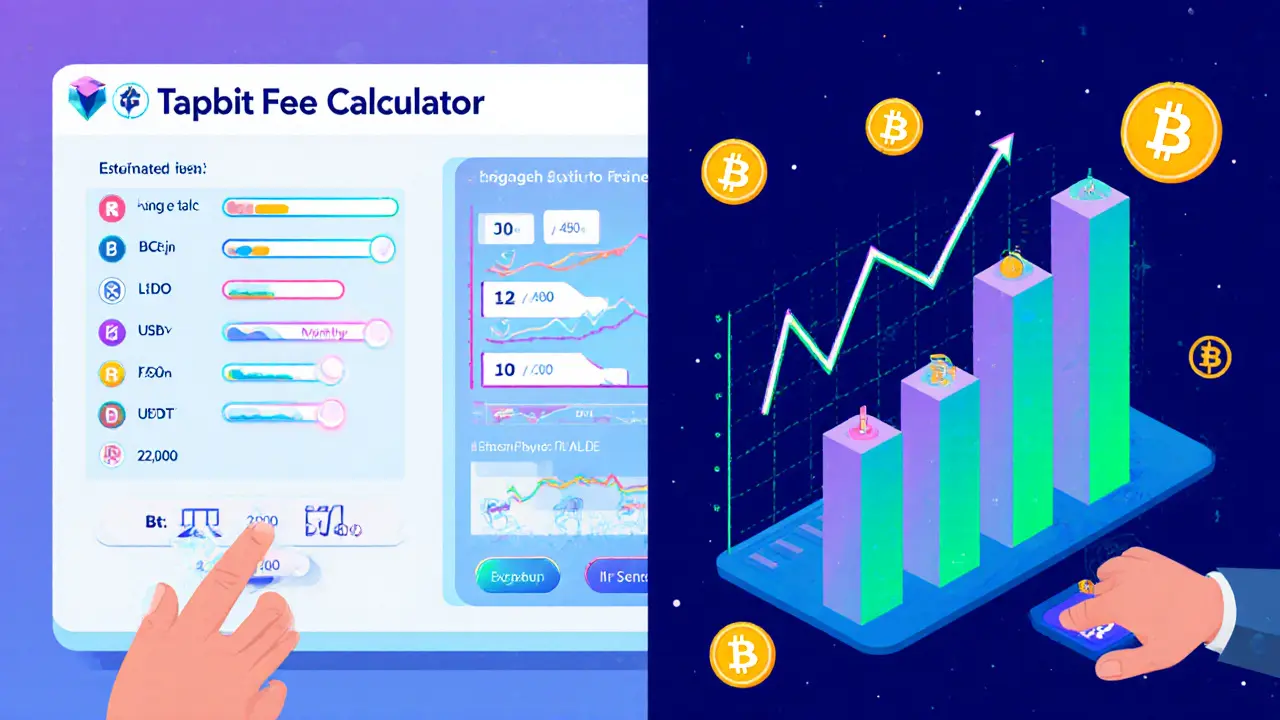
An in‑depth 2025 review of Tapbit crypto exchange covering fees, liquidity, security, and whether it’s worth using.
Read More