Sanctions Evasion in the Crypto World
When you hear the term sanctions evasion, you probably think of people finding loopholes to move money past government blocks. Sanctions evasion is the practice of deliberately bypassing financial sanctions imposed by authorities, often using cryptocurrency to hide the trail. Also known as sanction circumvention, it creates legal risk for users, exchanges, and regulators alike.
One of the biggest forces behind these rules is OFAC sanctions, a U.S. Treasury program that targets countries, entities, and individuals. The Office of Foreign Assets Control (OFAC) maintains a list of prohibited parties and requires strict screening. When a crypto platform fails to screen against OFAC, it opens the door for evasion, money‑laundering, and hefty fines. In short, sanctions evasion ↔ OFAC compliance forms a direct legal link.
Why crypto exchange compliance matters
Every exchange that wants to stay legit must embed compliance checks into its onboarding flow. Crypto exchange compliance covers KYC, AML, and real‑time sanctions screening. A weak compliance program becomes a playground for evaders, letting illicit actors move tokens across borders without detection. The recent BitParax shutdown and the JPEX scandal illustrate how poor compliance fuels evasion and erodes user trust.
At the same time, some traders dodge official channels altogether. Underground crypto trading refers to off‑exchange, peer‑to‑peer deals that operate in the shadows. In places like China, underground markets moved an estimated $86 billion in 2024, using P2P platforms, mixers, and VPNs to hide the source and destination of funds. This activity shows a clear semantic triple: sanctions evasion → requires → underground trading networks.
Geographic restrictions add another layer. Platforms such as dYdX claim decentralization, yet they block users from many countries to stay within legal borders. When a service enforces a regional block, evaders often turn to unregulated exchanges or VPNs, creating a cat‑and‑mouse game between regulators and bad actors.
The posts in this collection pull all these threads together. You’ll find in‑depth reviews of exchanges that either strengthen compliance or expose risky shortcuts, analyses of how airdrop schemes can be abused for evasion, and a look at how OFAC relief for Syrian users reshapes the landscape. By understanding the mechanics of evasion—from official blocklists to hidden P2P markets—you’ll be better equipped to spot red flags and make safer choices. Below, the articles break down real‑world examples, practical tips, and the latest regulatory moves.
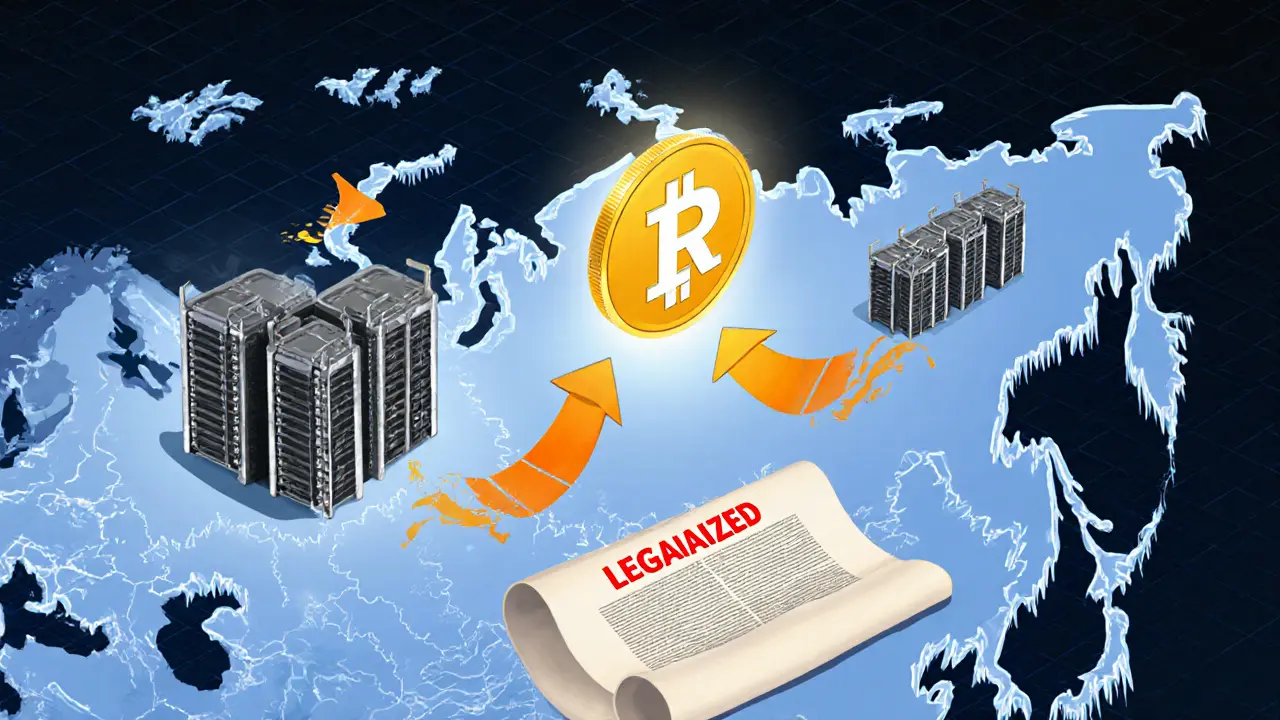
Russia's new crypto mining law lets the state generate digital currency revenue, supporting sanctions evasion via the A7A5 stablecoin and a network of sanctioned exchanges. Western sanctions target miners, exchanges, and the financial bridges enabling the scheme.
Read More