
How Bitcoin Powers Iran’s Import Trade Amid Sanctions
Explore how Iran uses Bitcoin to bypass sanctions for imports, the regulatory maze, mining boom, and the challenges facing crypto-enabled trade.
Read MoreWhen dealing with Sanctions Circumvention, the practice of using financial tools to sidestep government‑imposed trade or financial bans. Also known as sanction evasion, it often leans on the borderless nature of digital assets. One major driver is OFAC, the U.S. Office of Foreign Assets Control that enforces economic sanctions. When OFAC tightens rules, crypto miners in Russia see a chance to crypto mining evasion, using locally generated hash power to generate untraceable coins that can fund restricted entities. In China, underground crypto trading, a hidden P2P market that moves billions despite official bans, shows how traders exploit peer networks to stay afloat. Platforms like dYdX, a decentralized derivatives exchange that still blocks users from certain jurisdictions, illustrate the tug‑of‑war between compliance teams and users looking for loopholes. sanctions circumvention therefore sits at the intersection of technology, law, and market ingenuity.
The first semantic link is clear: Sanctions circumvention ↠ relies on ↠ crypto mining evasion to generate revenue outside sanctioned channels. A second triple shows that underground crypto trading ↠ acts as ↠ a conduit for moving value across borders when official exchanges are blocked. A third connection makes OFAC ↠ the regulator that ↠ forces platforms like dYdX to implement geographic restrictions, which in turn spurs users to seek alternatives. Fourth, the law‑driven regulatory compliance ↠ shapes the design of exchange policies, prompting creative workarounds such as VPN usage or off‑chain settlements. Finally, the emergence of crypto‑backed tokenized assets ↠ offers a layer of abstraction that helps shield transactions from direct scrutiny, adding another vector for evasion.
Take Russia’s 2025 mining law as a case study: the state officially licenses mining farms, yet many operators funnel output to offshore wallets that finance entities on the U.S. sanctions list. This dual‑track system shows how legal frameworks can be twisted to serve evasion goals. In China, the $86 billion underground volume reported last year demonstrates that even severe bans cannot crush demand; traders simply move to P2P platforms, use stablecoins, or barter on encrypted messengers. Meanwhile, dYdX’s country‑blocking policy—while marketed as “decentralized”—still requires KYC checks, prompting users in restricted regions to employ mixers or layer‑2 solutions to keep their activity hidden. Each of these examples feeds back into the broader narrative of how financial innovation both challenges and adapts to sanctions regimes.
Below you’ll find a curated collection of articles that break down these dynamics. From deep‑dives into OFAC’s evolving licensing approach for Syrian users, to step‑by‑step guides on spotting risky exchanges that facilitate evasion, the posts give you a practical toolbox. Whether you’re a trader curious about compliance risks or a regulator looking for patterns, the lineup ahead offers concrete insights, real‑world data, and actionable tips to understand and navigate the complex world of sanctions circumvention.
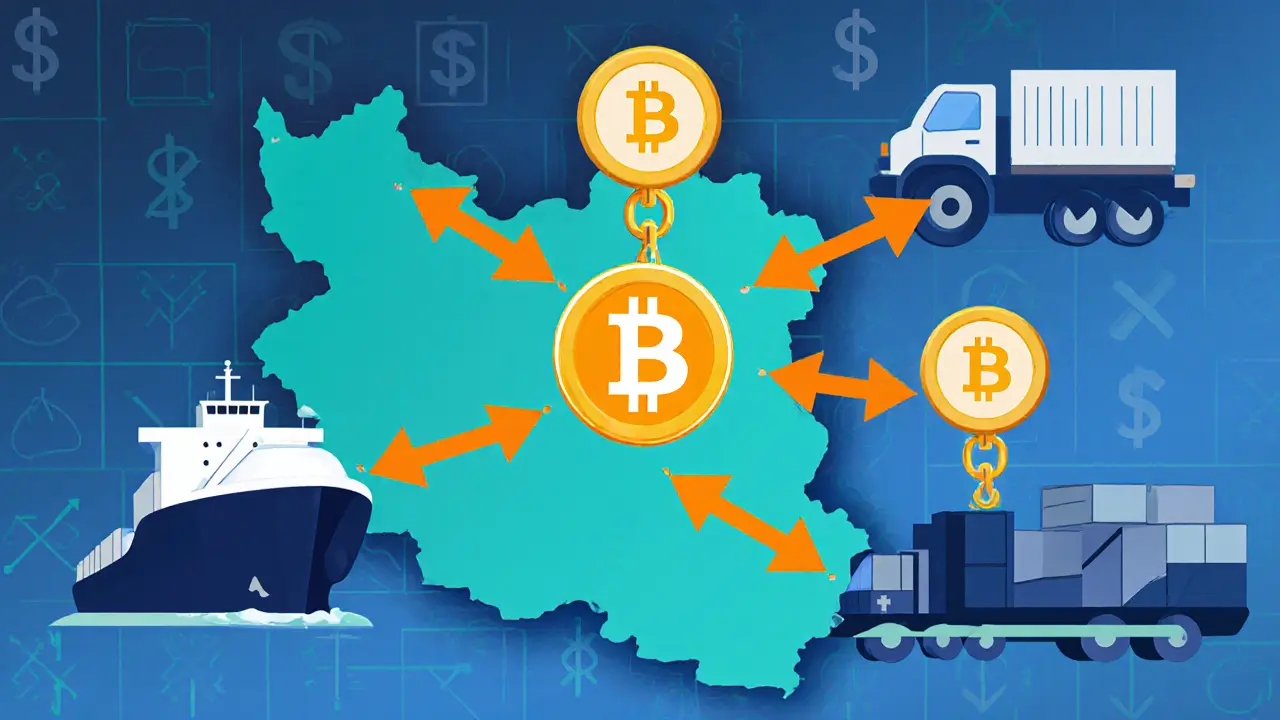
Explore how Iran uses Bitcoin to bypass sanctions for imports, the regulatory maze, mining boom, and the challenges facing crypto-enabled trade.
Read More